

 搜索
搜索
第67页
- 第1页
- 第2页
- 第3页
- 第4页
- 第5页
- 第6页
- 第7页
- 第8页
- 第9页
- 第10页
- 第11页
- 第12页
- 第13页
- 第14页
- 第15页
- 第16页
- 第17页
- 第18页
- 第19页
- 第20页
- 第21页
- 第22页
- 第23页
- 第24页
- 第25页
- 第26页
- 第27页
- 第28页
- 第29页
- 第30页
- 第31页
- 第32页
- 第33页
- 第34页
- 第35页
- 第36页
- 第37页
- 第38页
- 第39页
- 第40页
- 第41页
- 第42页
- 第43页
- 第44页
- 第45页
- 第46页
- 第47页
- 第48页
- 第49页
- 第50页
- 第51页
- 第52页
- 第53页
- 第54页
- 第55页
- 第56页
- 第57页
- 第58页
- 第59页
- 第60页
- 第61页
- 第62页
- 第63页
- 第64页
- 第65页
- 第66页
- 第67页
- 第68页
- 第69页
- 第70页
- 第71页
- 第72页
- 第73页
- 第74页
- 第75页
- 第76页
- 第77页
- 第78页
- 第79页
- 第80页
- 第81页
- 第82页
- 第83页
- 第84页
- 第85页
- 第86页
- 第87页
- 第88页
- 第89页
- 第90页
- 第91页
- 第92页
- 第93页
- 第94页
- 第95页
- 第96页
- 第97页
- 第98页
- 第99页
- 第100页
- 第101页
- 第102页
- 第103页
- 第104页
一、请仿照示例,将下列句子中的连读部分标注出来。
Example: Wake ~ up! Wake ~ up!
1. Why do you like it?
2. What time is it now?
3. It’s time to get up.
4. Linda is good at English.
5. It is Saturday today.
Example: Wake ~ up! Wake ~ up!
1. Why do you like it?
2. What time is it now?
3. It’s time to get up.
4. Linda is good at English.
5. It is Saturday today.
答案:
1. Why do you like it? 2. What time is it now? 3. It's time to get up. 4. Linda is good at English. 5. It is Saturday today.
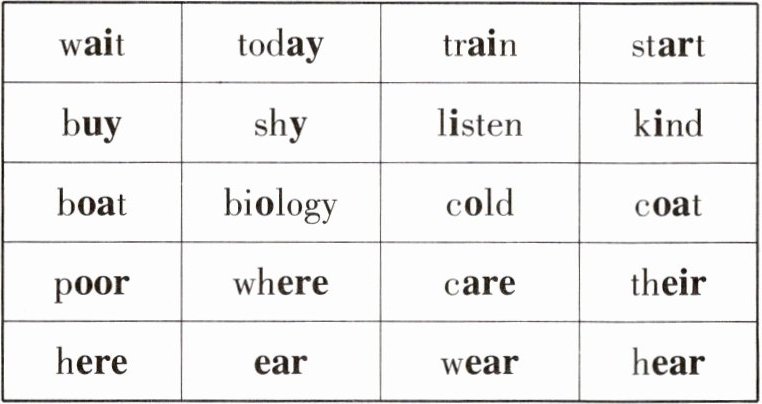
二、朗读下面的单词,在每一行中找出粗体部分读音不一样的单词,并将其圈出来。
| wait | today | train | start |
| buy | shy | listen | kind |
| boat | biology | cold | coat |
| poor | where | care | their |
| here | ear | wear | hear |
| wait | today | train | start |
| buy | shy | listen | kind |
| boat | biology | cold | coat |
| poor | where | care | their |
| here | ear | wear | hear |
答案:
画圈的单词是:start listen biology poor wear
三、根据汉语提示填写单词。
1. We like history because it’s fun to learn about the
2. I’m not good with
3. Does Emma think maths is
4. Geography is not
5. The
1. We like history because it’s fun to learn about the
past
(过去).2. I’m not good with
numbers
(数字). Can you help me with my maths?3. Does Emma think maths is
difficult / hard
(困难的) to learn?4. Geography is not
easy
(容易的), so we must study it hard.5. The
reason
(原因) is that he is not good at singing.
答案:
1. past 2. numbers 3. difficult / hard 4. easy 5. reason
四、根据要求完成下列各题,每空一词。
1. My favourite subject is biology. (对画线部分提问)
2. We have music on Thursday. (对画线部分提问)
3. She likes art. (改为一般疑问句,并作否定回答)
—
—
4. I think PE is exciting. (改为否定句)
I
5. John likes IT because it’s useful. (对画线部分提问)
1. My favourite subject is biology. (对画线部分提问)
What's
your
favourite subject?2. We have music on Thursday. (对画线部分提问)
When
do
you have music?3. She likes art. (改为一般疑问句,并作否定回答)
—
Does
she like
art?—
No
, she
doesn't
.4. I think PE is exciting. (改为否定句)
I
don't
think PE is
exciting.5. John likes IT because it’s useful. (对画线部分提问)
Why
does
John like
IT?
答案:
1. What's your 2. When do 3. Does; like; No; she doesn't 4. don't; is 5. Why does; like
五、根据汉语意思翻译下列句子,每空一词。
1. ——你的朋友为什么喜欢地理?
——因为它有用。
—
—Because it is
2. 我哥哥喜欢所有的科目,但他最喜欢的是音乐。
My brother likes
3. 他很友好,经常帮助我学习数学。
He is very nice, and he often
4. ——你们下一节课是什么?
——英语。它是安娜最喜欢的科目。
—
—English. It’s Anna’s favourite subject.
5. 你认为你们学校的科目怎么样?
1. ——你的朋友为什么喜欢地理?
——因为它有用。
—
Why
does
your friend like geography?—Because it is
useful
.2. 我哥哥喜欢所有的科目,但他最喜欢的是音乐。
My brother likes
all
the
subjects
, but his
favourite
is music.3. 他很友好,经常帮助我学习数学。
He is very nice, and he often
helps
me
with
my maths.4. ——你们下一节课是什么?
——英语。它是安娜最喜欢的科目。
—
What
is your next
class
?—English. It’s Anna’s favourite subject.
5. 你认为你们学校的科目怎么样?
What
do
you
think
of
your school subjects?
答案:
1. Why does; useful 2. all the subjects; his favourite 3. helps me with 4. What; next class 5. What do you think of / about
查看更多完整答案,请扫码查看

