

 搜索
搜索
第114页
- 第1页
- 第2页
- 第3页
- 第4页
- 第5页
- 第6页
- 第7页
- 第8页
- 第9页
- 第10页
- 第11页
- 第12页
- 第13页
- 第14页
- 第15页
- 第16页
- 第17页
- 第18页
- 第19页
- 第20页
- 第21页
- 第22页
- 第23页
- 第24页
- 第25页
- 第26页
- 第27页
- 第28页
- 第29页
- 第30页
- 第31页
- 第32页
- 第33页
- 第34页
- 第35页
- 第36页
- 第37页
- 第38页
- 第39页
- 第40页
- 第41页
- 第42页
- 第43页
- 第44页
- 第45页
- 第46页
- 第47页
- 第48页
- 第49页
- 第50页
- 第51页
- 第52页
- 第53页
- 第54页
- 第55页
- 第56页
- 第57页
- 第58页
- 第59页
- 第60页
- 第61页
- 第62页
- 第63页
- 第64页
- 第65页
- 第66页
- 第67页
- 第68页
- 第69页
- 第70页
- 第71页
- 第72页
- 第73页
- 第74页
- 第75页
- 第76页
- 第77页
- 第78页
- 第79页
- 第80页
- 第81页
- 第82页
- 第83页
- 第84页
- 第85页
- 第86页
- 第87页
- 第88页
- 第89页
- 第90页
- 第91页
- 第92页
- 第93页
- 第94页
- 第95页
- 第96页
- 第97页
- 第98页
- 第99页
- 第100页
- 第101页
- 第102页
- 第103页
- 第104页
- 第105页
- 第106页
- 第107页
- 第108页
- 第109页
- 第110页
- 第111页
- 第112页
- 第113页
- 第114页
- 第115页
- 第116页
五、任务型阅读
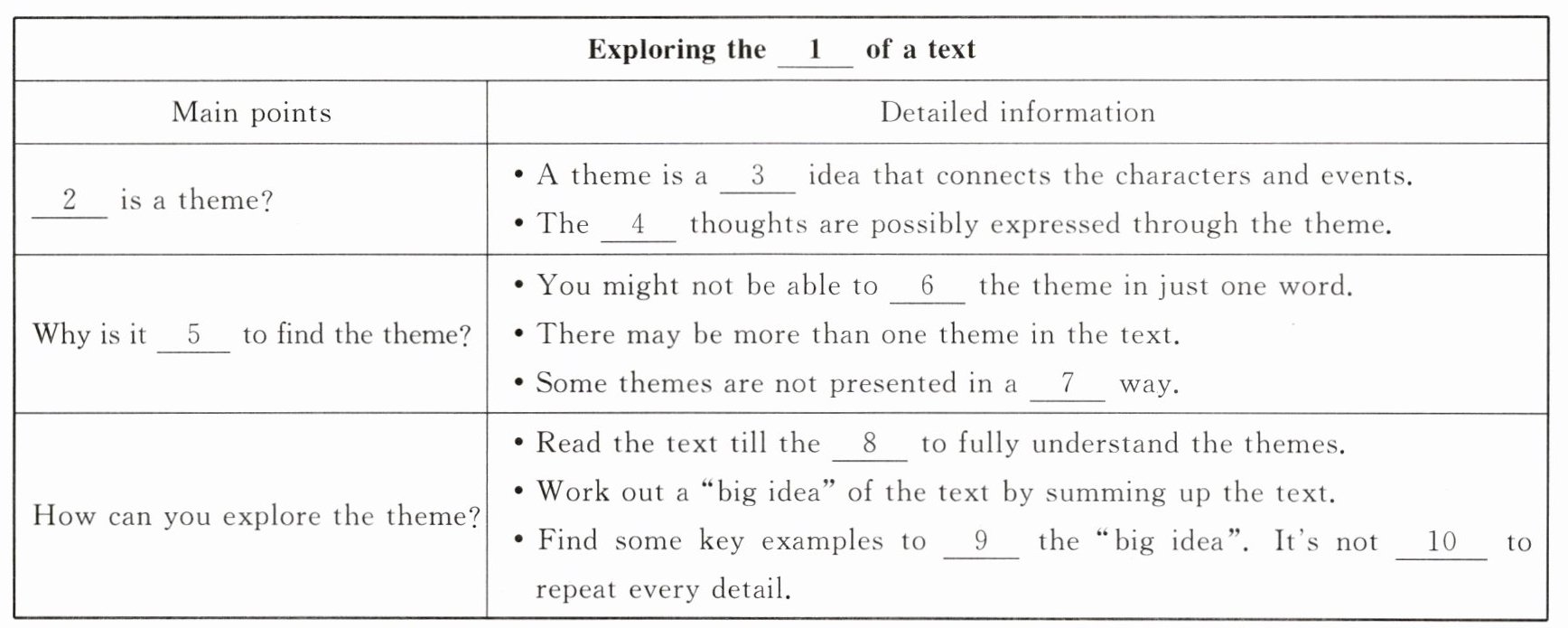
Reading is fun! You can also analyze texts to learn more from and about them. One way you can do this with fiction books, passages, or poems is by exploring their themes.
A theme is a central idea running throughout a text, connecting the characters and events. The writer may express his or her thoughts about humanity or a world view through a theme. Themes can be ideas like friendship, bravery, love, honesty or family. Make sure you know what the writer is saying.
Sometimes, themes are hard to find out. First, the theme of a text cannot always be summarized in just one word like the examples above. There may also be more than one theme in a text. What's more, some themes are not presented in words directly. You have to use clues in the texts to find them.
To start exploring the theme, first you need to make sure you've read the whole text. Since themes develop over time, you may not fully understand the underlying themes until the end of the text. Then, ask yourself to sum up(概括) the text and try to work out a "big idea". For example, did many characters resolve problems with their families? If there is only one small problem with a character's family, then "family" may not be the theme of the text. Finally, after finding out a "big idea", go through the text to find examples that support this idea. You needn't repeat every detail of the story—a few key examples will be fine.
Now you are ready to explore the theme of a text!
1.
6.
Reading is fun! You can also analyze texts to learn more from and about them. One way you can do this with fiction books, passages, or poems is by exploring their themes.
A theme is a central idea running throughout a text, connecting the characters and events. The writer may express his or her thoughts about humanity or a world view through a theme. Themes can be ideas like friendship, bravery, love, honesty or family. Make sure you know what the writer is saying.
Sometimes, themes are hard to find out. First, the theme of a text cannot always be summarized in just one word like the examples above. There may also be more than one theme in a text. What's more, some themes are not presented in words directly. You have to use clues in the texts to find them.
To start exploring the theme, first you need to make sure you've read the whole text. Since themes develop over time, you may not fully understand the underlying themes until the end of the text. Then, ask yourself to sum up(概括) the text and try to work out a "big idea". For example, did many characters resolve problems with their families? If there is only one small problem with a character's family, then "family" may not be the theme of the text. Finally, after finding out a "big idea", go through the text to find examples that support this idea. You needn't repeat every detail of the story—a few key examples will be fine.
Now you are ready to explore the theme of a text!
1.
theme
2. What
3. central
4. writer's
5. hard/difficult
6.
summarize
7. direct
8. end
9. support
10. necessary
答案:
1. theme 2. What 3. central 4. writer's 5. hard/difficult 6. summarize 7. direct 8. end 9. support 10. necessary
查看更多完整答案,请扫码查看

