

 搜索
搜索
第108页
- 第1页
- 第2页
- 第3页
- 第4页
- 第5页
- 第6页
- 第7页
- 第8页
- 第9页
- 第10页
- 第11页
- 第12页
- 第13页
- 第14页
- 第15页
- 第16页
- 第17页
- 第18页
- 第19页
- 第20页
- 第21页
- 第22页
- 第23页
- 第24页
- 第25页
- 第26页
- 第27页
- 第28页
- 第29页
- 第30页
- 第31页
- 第32页
- 第33页
- 第34页
- 第35页
- 第36页
- 第37页
- 第38页
- 第39页
- 第40页
- 第41页
- 第42页
- 第43页
- 第44页
- 第45页
- 第46页
- 第47页
- 第48页
- 第49页
- 第50页
- 第51页
- 第52页
- 第53页
- 第54页
- 第55页
- 第56页
- 第57页
- 第58页
- 第59页
- 第60页
- 第61页
- 第62页
- 第63页
- 第64页
- 第65页
- 第66页
- 第67页
- 第68页
- 第69页
- 第70页
- 第71页
- 第72页
- 第73页
- 第74页
- 第75页
- 第76页
- 第77页
- 第78页
- 第79页
- 第80页
- 第81页
- 第82页
- 第83页
- 第84页
- 第85页
- 第86页
- 第87页
- 第88页
- 第89页
- 第90页
- 第91页
- 第92页
- 第93页
- 第94页
- 第95页
- 第96页
- 第97页
- 第98页
- 第99页
- 第100页
- 第101页
- 第102页
- 第103页
- 第104页
- 第105页
- 第106页
- 第107页
- 第108页
- 第109页
- 第110页
- 第111页
- 第112页
- 第113页
- 第114页
- 第115页
- 第116页
六、任务型阅读
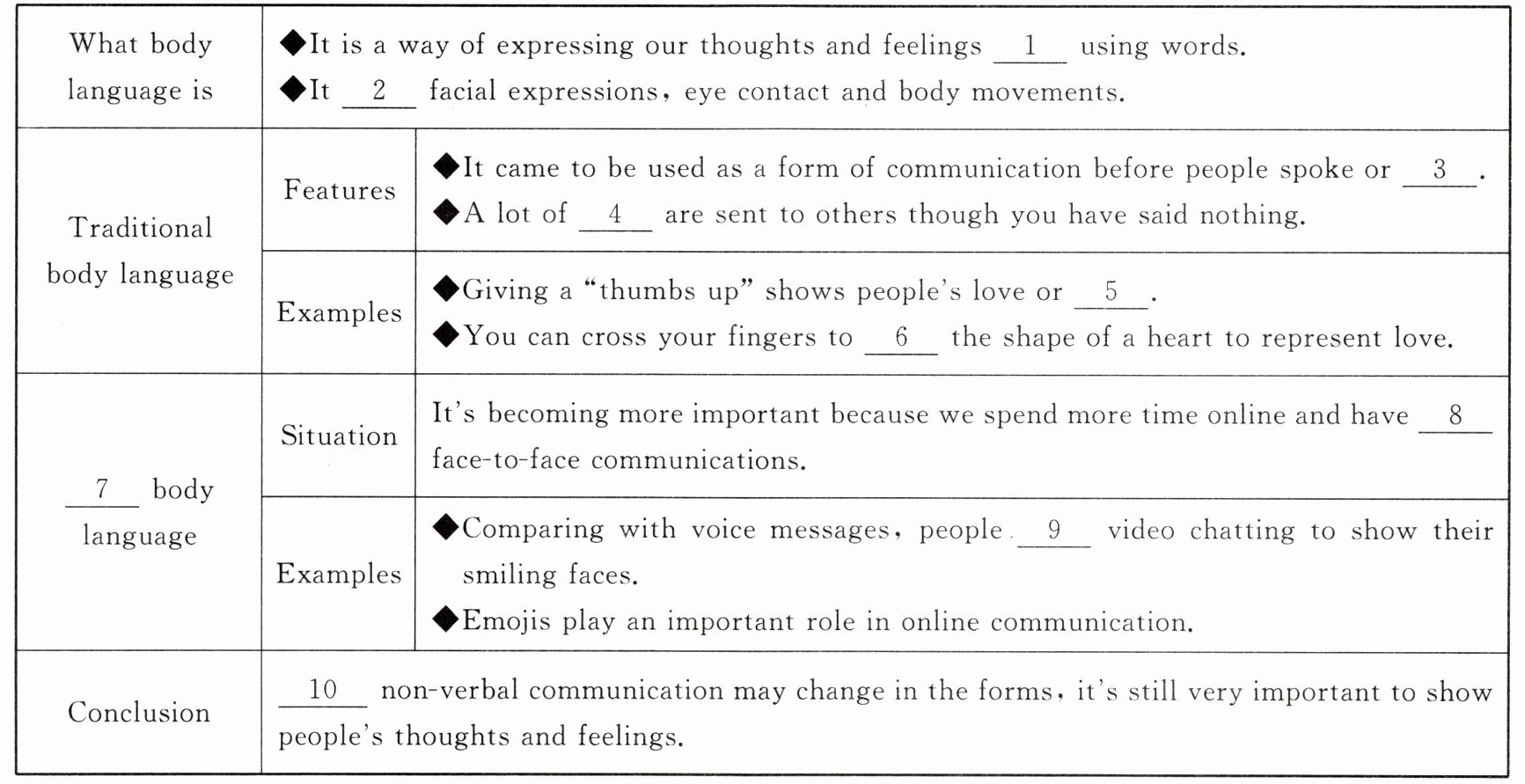
Humans live in a society. Not only verbal(言语的) communication, we also use our bodies to help us better express our thoughts and feelings. This non-verbal communication is known as body language.
Body language is made up of things like facial expressions(面部表情), eye contact and body movements. In fact, it came to be used as a form of communication before humans could speak or write. We can tell a lot about what a person is thinking or feeling just by looking at them.
Body language is so widely used that you may not realize that you are sending many messages to others, though you haven't said anything.
For example, you might move your head from side to side to express the word "no" instead of saying the word. You might give a "thumbs up" to show that you like or agree with something. You might cross your fingers in the shape of a heart if you want to show love.
But since we are spending more time online, we may not have as many face-to-face communications as before. Because of this, our ways of non-verbal communication have changed, but it is still an important way to show our thoughts.
Our "digital body language" is becoming increasingly important as we change how we communicate. For example, instead of using voice messages, you can video chat with your friends to show them your smiling face.
Another way to express your feelings digitally is using emojis(表情符号).
"When we are communicating online, we are only showing the content and leaving out voices and facial expressions," Moitree Banerjee, a researcher at the University of Chichester in England, told Digital Trends. That's why emojis can help much in communication.
Whether using video chat to show your expression or sending an emoji, don't forget the importance of digital body language and non-verbal communication.
1.
6.
Humans live in a society. Not only verbal(言语的) communication, we also use our bodies to help us better express our thoughts and feelings. This non-verbal communication is known as body language.
Body language is made up of things like facial expressions(面部表情), eye contact and body movements. In fact, it came to be used as a form of communication before humans could speak or write. We can tell a lot about what a person is thinking or feeling just by looking at them.
Body language is so widely used that you may not realize that you are sending many messages to others, though you haven't said anything.
For example, you might move your head from side to side to express the word "no" instead of saying the word. You might give a "thumbs up" to show that you like or agree with something. You might cross your fingers in the shape of a heart if you want to show love.
But since we are spending more time online, we may not have as many face-to-face communications as before. Because of this, our ways of non-verbal communication have changed, but it is still an important way to show our thoughts.
Our "digital body language" is becoming increasingly important as we change how we communicate. For example, instead of using voice messages, you can video chat with your friends to show them your smiling face.
Another way to express your feelings digitally is using emojis(表情符号).
"When we are communicating online, we are only showing the content and leaving out voices and facial expressions," Moitree Banerjee, a researcher at the University of Chichester in England, told Digital Trends. That's why emojis can help much in communication.
Whether using video chat to show your expression or sending an emoji, don't forget the importance of digital body language and non-verbal communication.
1.
without
2. includes/covers
3. wrote
4. messages
5. agreement
6.
form
7. Digital
8. fewer
9. prefer
10. Though/Although
答案:
1. without 2. includes/covers 3. wrote 4. messages 5. agreement 6. form 7. Digital 8. fewer 9. prefer 10. Though/Although
查看更多完整答案,请扫码查看

