

 搜索
搜索
第11页
- 第1页
- 第2页
- 第3页
- 第4页
- 第5页
- 第6页
- 第7页
- 第8页
- 第9页
- 第10页
- 第11页
- 第12页
- 第13页
- 第14页
- 第15页
- 第16页
- 第17页
- 第18页
- 第19页
- 第20页
- 第21页
- 第22页
- 第23页
- 第24页
- 第25页
- 第26页
- 第27页
- 第28页
- 第29页
- 第30页
- 第31页
- 第32页
- 第33页
- 第34页
- 第35页
- 第36页
- 第37页
- 第38页
- 第39页
- 第40页
- 第41页
- 第42页
- 第43页
- 第44页
- 第45页
- 第46页
- 第47页
- 第48页
- 第49页
- 第50页
- 第51页
- 第52页
- 第53页
- 第54页
- 第55页
- 第56页
- 第57页
- 第58页
- 第59页
- 第60页
- 第61页
- 第62页
- 第63页
- 第64页
- 第65页
- 第66页
- 第67页
- 第68页
- 第69页
- 第70页
- 第71页
- 第72页
- 第73页
- 第74页
- 第75页
- 第76页
- 第77页
- 第78页
- 第79页
- 第80页
- 第81页
- 第82页
- 第83页
- 第84页
- 第85页
- 第86页
- 第87页
一、新素养 行为导向 表彰大会开始前,莉莉老师首先为同学们列举了一些问候用语,请你根据材料内容,判断对(√)错(×)。
主题:人与自我——生活与学习
话题:问候用语知多少
体裁:应用文
难度:★★★
|Formal(正式的) greetings|Informal(非正式的) greetings|
|Hello. Good morning. Good afternoon. Good evening. How do you do? How are you?|Hi. What's going on? Hey! How are things going? What's up? How is it going?|
When(在……时候) you greet a teacher or when you meet a person(人) for the first time(第一次), it's good to use formal greetings. When you greet a friend, you can use informal greetings.
( )1. 开学第一天,亮亮见到新的数学老师王老师,他对王老师说:“Hey!”。
( )2. 图图见到新同学后,用“What's up?”和他打招呼。
( )3. 点点和图图正在用非正式的问候用语打招呼。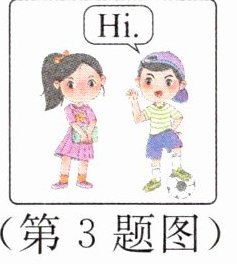
( )4. 亮亮和点点是好朋友,他们可以用“How is it going?”打招呼。
主题:人与自我——生活与学习
话题:问候用语知多少
体裁:应用文
难度:★★★
|Formal(正式的) greetings|Informal(非正式的) greetings|
|Hello. Good morning. Good afternoon. Good evening. How do you do? How are you?|Hi. What's going on? Hey! How are things going? What's up? How is it going?|
When(在……时候) you greet a teacher or when you meet a person(人) for the first time(第一次), it's good to use formal greetings. When you greet a friend, you can use informal greetings.
( )1. 开学第一天,亮亮见到新的数学老师王老师,他对王老师说:“Hey!”。
( )2. 图图见到新同学后,用“What's up?”和他打招呼。
( )3. 点点和图图正在用非正式的问候用语打招呼。
( )4. 亮亮和点点是好朋友,他们可以用“How is it going?”打招呼。
答案:
1. × 解析·由材料中“When you greet a teacher ... it's good to use formal greetings.”可知,和老师打招呼时,应该使用正式的问候用语,“Hey!”属于非正式问候用语,故填×。
2. × 3. √ 4. √
2. × 3. √ 4. √
二、“礼貌之星”图图写了一首诗来描述自己在一天中和身边事物打招呼的有趣故事。请你根据小诗内容,选择正确的答案。
主题:人与自我——生活与学习
话题:“礼貌之星”的一天
体裁:诗歌
难度:★★★★
Good morning, good morning, Mr Sun,
I go to school and meet my friends.
Good afternoon, good afternoon, Mr Sun,
I play football(踢足球) and run(跑步).
Good evening, good evening, Miss Moon,
I talk with my friends on the phone.
Good night, good night, Miss Moon,
I go to bed very soon(很快).
( )1. Tutu meets his friends ______.
A. in the morning
B. in the afternoon
C. in the evening
( )2. Tutu ______ in the afternoon.

( )3. Tutu talks to ______ on the phone.
A. his friends
B. his teacher
C. his mum
( )4. ______ is NOT mentioned(未提到).
A. Noon
B. Evening
C. Night
主题:人与自我——生活与学习
话题:“礼貌之星”的一天
体裁:诗歌
难度:★★★★
Good morning, good morning, Mr Sun,
I go to school and meet my friends.
Good afternoon, good afternoon, Mr Sun,
I play football(踢足球) and run(跑步).
Good evening, good evening, Miss Moon,
I talk with my friends on the phone.
Good night, good night, Miss Moon,
I go to bed very soon(很快).
( )1. Tutu meets his friends ______.
A. in the morning
B. in the afternoon
C. in the evening
( )2. Tutu ______ in the afternoon.
( )3. Tutu talks to ______ on the phone.
A. his friends
B. his teacher
C. his mum
( )4. ______ is NOT mentioned(未提到).
A. Noon
B. Evening
C. Night
答案:
1. A 2. B 3. A
4. A 解析·通读小诗可知,早上、下午、晚上和夜里都有提到,并没有提到正午时分,故选 A。
4. A 解析·通读小诗可知,早上、下午、晚上和夜里都有提到,并没有提到正午时分,故选 A。
查看更多完整答案,请扫码查看

