

 搜索
搜索
2025年黄冈状元成才路状元大课堂七年级英语下册通用版
注:目前有些书本章节名称可能整理的还不是很完善,但都是按照顺序排列的,请同学们按照顺序仔细查找。练习册 2025年黄冈状元成才路状元大课堂七年级英语下册通用版 答案主要是用来给同学们做完题方便对答案用的,请勿直接抄袭。
第156页
- 第1页
- 第2页
- 第3页
- 第4页
- 第5页
- 第6页
- 第7页
- 第8页
- 第9页
- 第10页
- 第11页
- 第12页
- 第13页
- 第14页
- 第15页
- 第16页
- 第17页
- 第18页
- 第19页
- 第20页
- 第21页
- 第22页
- 第23页
- 第24页
- 第25页
- 第26页
- 第27页
- 第28页
- 第29页
- 第30页
- 第31页
- 第32页
- 第33页
- 第34页
- 第35页
- 第36页
- 第37页
- 第38页
- 第39页
- 第40页
- 第41页
- 第42页
- 第43页
- 第44页
- 第45页
- 第46页
- 第47页
- 第48页
- 第49页
- 第50页
- 第51页
- 第52页
- 第53页
- 第54页
- 第55页
- 第56页
- 第57页
- 第58页
- 第59页
- 第60页
- 第61页
- 第62页
- 第63页
- 第64页
- 第65页
- 第66页
- 第67页
- 第68页
- 第69页
- 第70页
- 第71页
- 第72页
- 第73页
- 第74页
- 第75页
- 第76页
- 第77页
- 第78页
- 第79页
- 第80页
- 第81页
- 第82页
- 第83页
- 第84页
- 第85页
- 第86页
- 第87页
- 第88页
- 第89页
- 第90页
- 第91页
- 第92页
- 第93页
- 第94页
- 第95页
- 第96页
- 第97页
- 第98页
- 第99页
- 第100页
- 第101页
- 第102页
- 第103页
- 第104页
- 第105页
- 第106页
- 第107页
- 第108页
- 第109页
- 第110页
- 第111页
- 第112页
- 第113页
- 第114页
- 第115页
- 第116页
- 第117页
- 第118页
- 第119页
- 第120页
- 第121页
- 第122页
- 第123页
- 第124页
- 第125页
- 第126页
- 第127页
- 第128页
- 第129页
- 第130页
- 第131页
- 第132页
- 第133页
- 第134页
- 第135页
- 第136页
- 第137页
- 第138页
- 第139页
- 第140页
- 第141页
- 第142页
- 第143页
- 第144页
- 第145页
- 第146页
- 第147页
- 第148页
- 第149页
- 第150页
- 第151页
- 第152页
- 第153页
- 第154页
- 第155页
- 第156页
- 第157页
- 第158页
- 第159页
- 第160页
- 第161页
- 第162页
- 第163页
- 第164页
- 第165页
- 第166页
- 第167页
- 第168页
- 第169页
- 第170页
- 第171页
- 第172页
- 第173页
- 第174页
- 第175页
- 第176页
- 第177页
- 第178页
- 第179页
- 第180页
- 第181页
- 第182页
- 第183页
- 第184页
- 第185页
- 第186页
- 第187页
- 第188页
- 第189页
- 第190页
- 第191页
- 第192页
- 第193页
- 第194页
- 第195页
- 第196页
- 第197页
- 第198页
- 第199页
- 第200页
- 第201页
- 第202页
- 第203页
- 第204页
- 第205页
- 第206页
- 第207页
- 第208页
- 第209页
- 第210页
- 第211页
- 第212页
- 第213页
- 第214页
- 第215页
- 第216页
- 第217页
- 第218页
- 第219页
- 第220页
- 第221页
- 第222页
- 第223页
- 第224页
- 第225页
- 第226页
- 第227页
- 第228页
- 第229页
- 第230页
- 第231页
- 第232页
- 第233页
- 第234页
- 第235页
- 第236页
- 第237页
- 第238页
- 第239页
- 第240页
- 第241页
- 第242页
- 第243页
- 第244页
- 第245页
- 第246页
1 Listen and repeat. Add one more word to each group.
听录音并跟读。为每组添加一个单词。
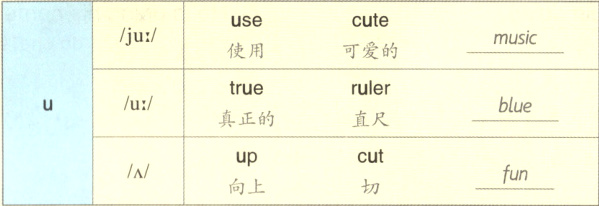
参考答案 见表格中
听录音并跟读。为每组添加一个单词。
参考答案 见表格中
答案:
2 Which words do you think are stressed? Underline them. Then listen and check.
你认为哪些词要重读? 在它们下方画线。然后听录音并核对。
句子重音(Ⅱ)
(见单元大归纳P173)
A:What are you doing? 你正在做什么?
B:I’m walking my dog. 我正在遛狗。
A:Would you like to play football with me at the sports park?
你想和我一起去体育公园踢足球吗?
B:Yes, I’d love to. When shall we meet?
好的,我很乐意。我们什么时候见面?
A:Let’s meet at three o’clock. 我们三点钟见面吧。
B:Sure. 好的。
参考答案 见文中
你认为哪些词要重读? 在它们下方画线。然后听录音并核对。
句子重音(Ⅱ)
(见单元大归纳P173)
A:What are you doing? 你正在做什么?
B:I’m walking my dog. 我正在遛狗。
A:Would you like to play football with me at the sports park?
你想和我一起去体育公园踢足球吗?
B:Yes, I’d love to. When shall we meet?
好的,我很乐意。我们什么时候见面?
A:Let’s meet at three o’clock. 我们三点钟见面吧。
B:Sure. 好的。
参考答案 见文中
答案:
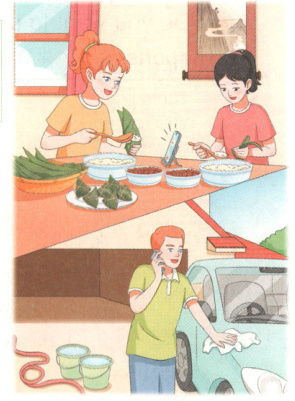
2a Listen to the conversation between Jane and her family back in the UK. Fill in the blanks. 听简和她在英国的家人之间的对话。填空。
Jane:Hi, Dad. ________ (1) ________?
喂,爸爸。你好吗?
Dad:Hi, Jane! I’m fine. ________ (2) ________?
喂,简!我很好。广州的生活怎么样?
Jane:We’re having a holiday here. Hao Yi and I are making zongzi! 我们这里在休假。我和郝怡正在包粽子!
have a holiday=take a holiday 度假
holiday/ˈhɒlədeɪ; ˈhɒlədi/(名词) 假期
搭配:on holiday 在休假 summer/winter holidays 暑假/寒假
go (to...) for holidays 去(……)度假
Dad:That sounds great! Are you making them for the Dragon Boat Festival?
听起来不错! 你们是在为端午节包粽子吗?
Jane:That’s right! What about you? What are you doing?
没错! 那您呢? 您在做什么?
What about...?=How about...? ……怎么样?
常用于询问情况或征求意见。
◇ I like coffee. What about you?
我喜欢咖啡。你呢?
wash the car 洗车
Dad:I’m washing the car right now.
我现在正在洗车。
=now/at the moment 现在
常与一般现在时或现在进行时连用。
Jane:Is Mum there too? ________ (3) ________?
妈妈也在吗? 她感觉好些了吗?
◇ Emma is riding a bike right now.
埃玛现在在骑自行车。
/ɡɒn/(形容词) 不复存在;一去不复返 别挂断电话;等一等
Dad:Yes, her cold is gone. She’s gardening. Hold on. Here’s Mum.
是的,她的感冒好了。她正在做园艺。等一下。妈妈来了。
here引导的倒装句
当副词here、there等位于句首且主语为名词时,句子要用完全倒装,即谓语动词放在主语之前。
◇ Here is a book for you. 这是给你的书。
◇ Here comes the taxi! 出租车来了!
Jane:Hi, Mum! ________ (4) ________?
嗨,妈妈! 您过得怎么样?
Mum:Good, thanks. It’s great to hear your voice!
很好,谢谢。听到你的声音真好!
Yours指代“Your voice”,完整句子是“It’s great to hear your voice too!”。
Jane:Yours too! I’m happy you’re feeling better!
我也很高兴听到您的声音! 我很高兴您感觉好多了!
have fun 玩得高兴
Mum:Thanks! Are you having fun in China?
谢谢! 你在中国玩得开心吗?
在电视上
on在此处意为“通过;使用;借助于”。表示在电视上、在电脑上、在广播里时,要在名词前加定冠词the。
◇ on the computer 在电脑上
◇ on the radio 在广播里
Jane:Yes, I am. Hao Yi and I are making zongzi and watching dragon boat races on TV. Oh, I have to go now. Let’s talk later.
是的,我很开心。我和郝怡正在一边包粽子一边观看电视上的龙舟赛。哦,我得挂电话了。我们待会儿再聊。 /ˈdɑːlɪŋ/(名词)
意为“你过得怎么样?/你还好吗?”,常用来询问对方最近的生活、工作或事情进展的情况。常用答语如下:
Good/Great! 很好! Not bad! 还不错!
Terrible! 糟透了! Just so - so. 一般。
Everything is going well. 一切进展顺利。
参考答案 (1)How are you (2)How’s life in Guangzhou (3)Is she feeling better (4)How are you doing
Jane:Hi, Dad. ________ (1) ________?
喂,爸爸。你好吗?
Dad:Hi, Jane! I’m fine. ________ (2) ________?
喂,简!我很好。广州的生活怎么样?
Jane:We’re having a holiday here. Hao Yi and I are making zongzi! 我们这里在休假。我和郝怡正在包粽子!
have a holiday=take a holiday 度假
holiday/ˈhɒlədeɪ; ˈhɒlədi/(名词) 假期
搭配:on holiday 在休假 summer/winter holidays 暑假/寒假
go (to...) for holidays 去(……)度假
Dad:That sounds great! Are you making them for the Dragon Boat Festival?
听起来不错! 你们是在为端午节包粽子吗?
Jane:That’s right! What about you? What are you doing?
没错! 那您呢? 您在做什么?
What about...?=How about...? ……怎么样?
常用于询问情况或征求意见。
◇ I like coffee. What about you?
我喜欢咖啡。你呢?
wash the car 洗车
Dad:I’m washing the car right now.
我现在正在洗车。
=now/at the moment 现在
常与一般现在时或现在进行时连用。
Jane:Is Mum there too? ________ (3) ________?
妈妈也在吗? 她感觉好些了吗?
◇ Emma is riding a bike right now.
埃玛现在在骑自行车。
/ɡɒn/(形容词) 不复存在;一去不复返 别挂断电话;等一等
Dad:Yes, her cold is gone. She’s gardening. Hold on. Here’s Mum.
是的,她的感冒好了。她正在做园艺。等一下。妈妈来了。
here引导的倒装句
当副词here、there等位于句首且主语为名词时,句子要用完全倒装,即谓语动词放在主语之前。
◇ Here is a book for you. 这是给你的书。
◇ Here comes the taxi! 出租车来了!
Jane:Hi, Mum! ________ (4) ________?
嗨,妈妈! 您过得怎么样?
Mum:Good, thanks. It’s great to hear your voice!
很好,谢谢。听到你的声音真好!
Yours指代“Your voice”,完整句子是“It’s great to hear your voice too!”。
Jane:Yours too! I’m happy you’re feeling better!
我也很高兴听到您的声音! 我很高兴您感觉好多了!
have fun 玩得高兴
Mum:Thanks! Are you having fun in China?
谢谢! 你在中国玩得开心吗?
在电视上
on在此处意为“通过;使用;借助于”。表示在电视上、在电脑上、在广播里时,要在名词前加定冠词the。
◇ on the computer 在电脑上
◇ on the radio 在广播里
Jane:Yes, I am. Hao Yi and I are making zongzi and watching dragon boat races on TV. Oh, I have to go now. Let’s talk later.
是的,我很开心。我和郝怡正在一边包粽子一边观看电视上的龙舟赛。哦,我得挂电话了。我们待会儿再聊。 /ˈdɑːlɪŋ/(名词)
意为“你过得怎么样?/你还好吗?”,常用来询问对方最近的生活、工作或事情进展的情况。常用答语如下:
Good/Great! 很好! Not bad! 还不错!
Terrible! 糟透了! Just so - so. 一般。
Everything is going well. 一切进展顺利。
参考答案 (1)How are you (2)How’s life in Guangzhou (3)Is she feeling better (4)How are you doing
答案:
查看更多完整答案,请扫码查看

