

 搜索
搜索
2025年黄冈状元成才路状元大课堂七年级英语下册通用版
注:目前有些书本章节名称可能整理的还不是很完善,但都是按照顺序排列的,请同学们按照顺序仔细查找。练习册 2025年黄冈状元成才路状元大课堂七年级英语下册通用版 答案主要是用来给同学们做完题方便对答案用的,请勿直接抄袭。
第117页
- 第1页
- 第2页
- 第3页
- 第4页
- 第5页
- 第6页
- 第7页
- 第8页
- 第9页
- 第10页
- 第11页
- 第12页
- 第13页
- 第14页
- 第15页
- 第16页
- 第17页
- 第18页
- 第19页
- 第20页
- 第21页
- 第22页
- 第23页
- 第24页
- 第25页
- 第26页
- 第27页
- 第28页
- 第29页
- 第30页
- 第31页
- 第32页
- 第33页
- 第34页
- 第35页
- 第36页
- 第37页
- 第38页
- 第39页
- 第40页
- 第41页
- 第42页
- 第43页
- 第44页
- 第45页
- 第46页
- 第47页
- 第48页
- 第49页
- 第50页
- 第51页
- 第52页
- 第53页
- 第54页
- 第55页
- 第56页
- 第57页
- 第58页
- 第59页
- 第60页
- 第61页
- 第62页
- 第63页
- 第64页
- 第65页
- 第66页
- 第67页
- 第68页
- 第69页
- 第70页
- 第71页
- 第72页
- 第73页
- 第74页
- 第75页
- 第76页
- 第77页
- 第78页
- 第79页
- 第80页
- 第81页
- 第82页
- 第83页
- 第84页
- 第85页
- 第86页
- 第87页
- 第88页
- 第89页
- 第90页
- 第91页
- 第92页
- 第93页
- 第94页
- 第95页
- 第96页
- 第97页
- 第98页
- 第99页
- 第100页
- 第101页
- 第102页
- 第103页
- 第104页
- 第105页
- 第106页
- 第107页
- 第108页
- 第109页
- 第110页
- 第111页
- 第112页
- 第113页
- 第114页
- 第115页
- 第116页
- 第117页
- 第118页
- 第119页
- 第120页
- 第121页
- 第122页
- 第123页
- 第124页
- 第125页
- 第126页
- 第127页
- 第128页
- 第129页
- 第130页
- 第131页
- 第132页
- 第133页
- 第134页
- 第135页
- 第136页
- 第137页
- 第138页
- 第139页
- 第140页
- 第141页
- 第142页
- 第143页
- 第144页
- 第145页
- 第146页
- 第147页
- 第148页
- 第149页
- 第150页
- 第151页
- 第152页
- 第153页
- 第154页
- 第155页
- 第156页
- 第157页
- 第158页
- 第159页
- 第160页
- 第161页
- 第162页
- 第163页
- 第164页
- 第165页
- 第166页
- 第167页
- 第168页
- 第169页
- 第170页
- 第171页
- 第172页
- 第173页
- 第174页
- 第175页
- 第176页
- 第177页
- 第178页
- 第179页
- 第180页
- 第181页
- 第182页
- 第183页
- 第184页
- 第185页
- 第186页
- 第187页
- 第188页
- 第189页
- 第190页
- 第191页
- 第192页
- 第193页
- 第194页
- 第195页
- 第196页
- 第197页
- 第198页
- 第199页
- 第200页
- 第201页
- 第202页
- 第203页
- 第204页
- 第205页
- 第206页
- 第207页
- 第208页
- 第209页
- 第210页
- 第211页
- 第212页
- 第213页
- 第214页
- 第215页
- 第216页
- 第217页
- 第218页
- 第219页
- 第220页
- 第221页
- 第222页
- 第223页
- 第224页
- 第225页
- 第226页
- 第227页
- 第228页
- 第229页
- 第230页
- 第231页
- 第232页
- 第233页
- 第234页
- 第235页
- 第236页
- 第237页
- 第238页
- 第239页
- 第240页
- 第241页
- 第242页
- 第243页
- 第244页
- 第245页
- 第246页
1 Listen and repeat. Add one more word to each group.
听录音并跟读。为每组添加一个单词。
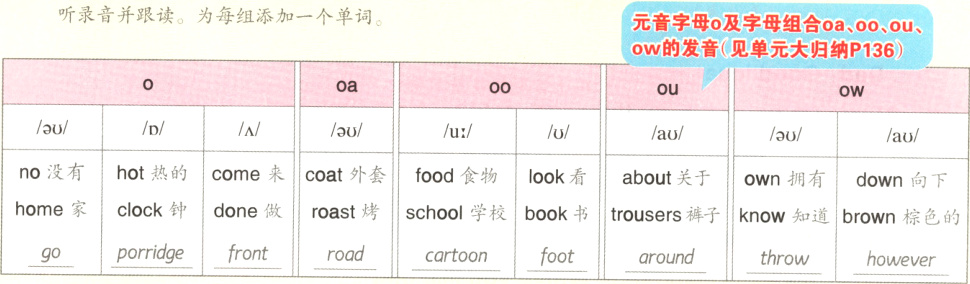
参考答案 见表格中

听录音并跟读。为每组添加一个单词。
参考答案 见表格中
答案:
2a Listen to the conversation and circle the coloured words you hear.
听对话,圈出你听到的上色单词。
order的用法见本书P38
Waiter—服务员
Tom—汤姆
Dad—爸爸
Mum—妈妈
Waiter: Hello! What would you like to /eat?
/eat?
您好! 您想要点/吃些什么?
Tom: What about Gongbao chicken? We often have it in America, but it may
=How about...? ……怎么样?
用于提出建议或征求意见。后接名词、代词或动词 -ing形式。
What about watching a movie? 看电影怎么样?
taste different here. I’d like to try it.
宫保鸡丁怎么样? 我们在美国经常吃,但这里的味道可能会不同。我想尝尝。
感官
系动词
taste (有……味道)
sound (听起来)
smell (有……气味) +形容词
look (看起来) 作表语
feel (感觉;摸起来)
Dad: Good idea! 好主意!
常用于否定句或疑问句中
Mum: Do you have anything with tofu? 你们有带豆腐的菜吗?
Waiter: Yes. Would you like a hot tofu dish or a cold one?
有。您想要热的豆腐菜还是凉的?
Mum: A hot tofu dish, please. 请来一份热的豆腐菜。
Waiter: We have Mapo tofu. Would you like that?
我们有麻婆豆腐。您想要吗?
vegetable/ˈvedʒtəbl/(名词) 蔬菜
Eating many vegetables helps you keep fit. 多吃蔬菜帮助你保持健康。
should+动词原形 应该……
Mum: Yes, please. We should also order some vegetables/ .
.
好的,谢谢。我们还应该点一些蔬菜/一份沙拉。
此处用作可数名词,表示“一份沙拉”
Dad: How about a chicken and cabbage salad? 鸡肉卷心菜沙拉怎么样?
soup/suːp/(不可数名词) 汤
搭配: make soup 做汤 eat soup 喝汤
I like eating soup because my mother can make delicious soup. 我爱喝汤,因为我妈妈会做美味的汤。
表示赞同对方所提的建议。
类似的表达: That sounds like a
good idea./Sounds good/great./
That’s a good idea./Good idea.
Tom: That sounds good. Can we /get soup too?
听起来不错。我们可以点/买汤吗?

注意:“喝汤”不用drink。
Dad: OK. Let’s see... Which soup would you like, chicken or fish?
好的。让我们看看……你们想要哪种汤,鸡汤还是鱼汤?
Mum: Fish, please!
鱼汤吧,谢谢!
/rɪs/(不可数名词) 米饭;大米
搭配: a bowl of rice 一碗饭
noodle (名词) 面条 用法: 常用复数形式。
Long noodles are a symbol of long life. 长长的面条是长寿的象征。
Dad: Sure. Now, would you like rice or dumplings/ ?
?
当然可以。现在,你们想要米饭还是饺子/面条?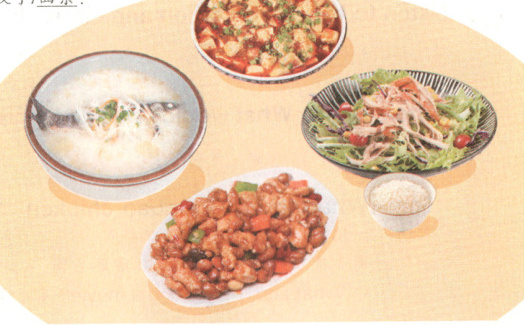
Tom: Rice, please.
米饭,谢谢。
Mum: OK. Let’s get that.
好的。那就这样吧。
参考答案 见文中
听对话,圈出你听到的上色单词。
order的用法见本书P38
Waiter—服务员
Tom—汤姆
Dad—爸爸
Mum—妈妈
Waiter: Hello! What would you like to
/eat?您好! 您想要点/吃些什么?
Tom: What about Gongbao chicken? We often have it in America, but it may
=How about...? ……怎么样?
用于提出建议或征求意见。后接名词、代词或动词 -ing形式。
What about watching a movie? 看电影怎么样?
taste different here. I’d like to try it.
宫保鸡丁怎么样? 我们在美国经常吃,但这里的味道可能会不同。我想尝尝。
感官
系动词
taste (有……味道)
sound (听起来)
smell (有……气味) +形容词
look (看起来) 作表语
feel (感觉;摸起来)
Dad: Good idea! 好主意!
常用于否定句或疑问句中
Mum: Do you have anything with tofu? 你们有带豆腐的菜吗?
Waiter: Yes. Would you like a hot tofu dish or a cold one?
有。您想要热的豆腐菜还是凉的?
Mum: A hot tofu dish, please. 请来一份热的豆腐菜。
Waiter: We have Mapo tofu. Would you like that?
我们有麻婆豆腐。您想要吗?
vegetable/ˈvedʒtəbl/(名词) 蔬菜
Eating many vegetables helps you keep fit. 多吃蔬菜帮助你保持健康。
should+动词原形 应该……
Mum: Yes, please. We should also order some vegetables/
.好的,谢谢。我们还应该点一些蔬菜/一份沙拉。
此处用作可数名词,表示“一份沙拉”
Dad: How about a chicken and cabbage salad? 鸡肉卷心菜沙拉怎么样?
soup/suːp/(不可数名词) 汤
搭配: make soup 做汤 eat soup 喝汤
I like eating soup because my mother can make delicious soup. 我爱喝汤,因为我妈妈会做美味的汤。
表示赞同对方所提的建议。
类似的表达: That sounds like a
good idea./Sounds good/great./
That’s a good idea./Good idea.
Tom: That sounds good. Can we
/get soup too?听起来不错。我们可以点/买汤吗?
注意:“喝汤”不用drink。
Dad: OK. Let’s see... Which soup would you like, chicken or fish?
好的。让我们看看……你们想要哪种汤,鸡汤还是鱼汤?
Mum: Fish, please!
鱼汤吧,谢谢!
/rɪs/(不可数名词) 米饭;大米
搭配: a bowl of rice 一碗饭
noodle (名词) 面条 用法: 常用复数形式。
Long noodles are a symbol of long life. 长长的面条是长寿的象征。
Dad: Sure. Now, would you like rice or dumplings/
?当然可以。现在,你们想要米饭还是饺子/面条?
Tom: Rice, please.
米饭,谢谢。
Mum: OK. Let’s get that.
好的。那就这样吧。
参考答案 见文中
答案:
查看更多完整答案,请扫码查看

