

 搜索
搜索
2025年PASS教材搭档六年级英语上册鲁教版五四制
注:目前有些书本章节名称可能整理的还不是很完善,但都是按照顺序排列的,请同学们按照顺序仔细查找。练习册 2025年PASS教材搭档六年级英语上册鲁教版五四制 答案主要是用来给同学们做完题方便对答案用的,请勿直接抄袭。
第12页
- 第1页
- 第2页
- 第3页
- 第4页
- 第5页
- 第6页
- 第7页
- 第8页
- 第9页
- 第10页
- 第11页
- 第12页
- 第13页
- 第14页
- 第15页
- 第16页
- 第17页
- 第18页
- 第19页
- 第20页
- 第21页
- 第22页
- 第23页
- 第24页
- 第25页
- 第26页
- 第27页
- 第28页
- 第29页
- 第30页
- 第31页
- 第32页
- 第33页
- 第34页
- 第35页
- 第36页
- 第37页
- 第38页
- 第39页
- 第40页
- 第41页
- 第42页
- 第43页
- 第44页
- 第45页
- 第46页
- 第47页
- 第48页
- 第49页
- 第50页
- 第51页
- 第52页
- 第53页
- 第54页
- 第55页
- 第56页
- 第57页
- 第58页
- 第59页
- 第60页
- 第61页
- 第62页
- 第63页
- 第64页
- 第65页
- 第66页
- 第67页
- 第68页
- 第69页
- 第70页
- 第71页
- 第72页
- 第73页
- 第74页
- 第75页
- 第76页
- 第77页
- 第78页
- 第79页
- 第80页
- 第81页
- 第82页
- 第83页
- 第84页
- 第85页
- 第86页
- 第87页
- 第88页
- 第89页
- 第90页
- 第91页
- 第92页
- 第93页
- 第94页
- 第95页
- 第96页
- 第97页
- 第98页
- 第99页
- 第100页
- 第101页
- 第102页
- 第103页
- 第104页
- 第105页
- 第106页
- 第107页
- 第108页
- 第109页
- 第110页
- 第111页
- 第112页
- 第113页
- 第114页
- 第115页
- 第116页
- 第117页
1 How do you start ac on ver satti on?你怎样开始一段谈话?(教材 p.4标题)
(1)start 是动词,意为“开始;着手”。 start doing/todos th.意为“开始做某事”。
The kids start school next week.孩子们下星期开学。
☆ When do children Start to talk ?孩子们什么时候开始说话?
(2)conversation 是名词,意为“谈话;交谈”,常指非正式的谈话或交谈。常用的搭配有:
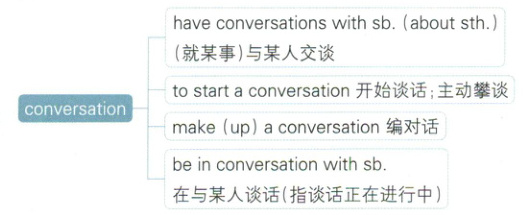
二
![ img ]
置2 Ho war re you?你好吗?(教材 p.41 a)
(1)这是熟人见面时常用的问候语,常用于询问身体状况。回答可以是“ Fine./I'm fine,thanks."或“ I'mOK,thankyou."等。同时,出于礼貌通常在答语后用“ How are you?"或“ And you?"进行回问,其答语为“ T'm fine,too.Thanks."等。
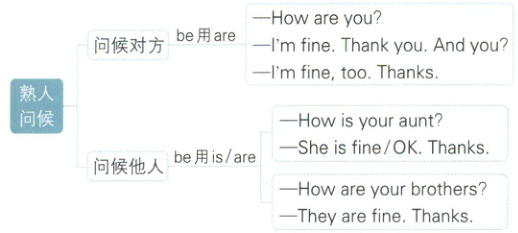
![ img ]
(2)are 是 be 的一种形式,用于人称代词 we 、 you 、 they 或复数名词之后。第一人称 I 与 am 连用,第三人称单数代词 he 、 she 、 it 或单数名词与 is 连用。
☆ You are my friend.你是我的朋友。
心 Iam a quiet boy.我是一个安静的男孩。 。含 be 动词的一般现在时详见 p.55
☆ It is a black cat.它是一只黑色的猫。
置3 May I have your name?请问你叫什么名字?((教材 p.41 b))
may 是情态动词,没有人称和数的变化,后接动词原形。“ May I..?"是表示
请求的句型,比“ Can...?"语气更委婉。其肯定回答为“ Yes,please/you can./Of course./Sure./Certainly."等;否定回答为“ Sorry/No,you can't./I'm afraid not."。
☆-May | come in?我可以进来吗?
-Yes,please.可以,请吧。
-May | put my bike here ?我能把我的自行车放在这里吗?
拓展 start 的同义词是 begin,
begin doing/todos th.意为“开
始做某事”;反义词是 end,意
为“结束”。

![ img ]
★熟人见面用“ How are you ?”
问候,初次见面用“ How do
you do ?”或“ Nice to meet
you,”问候。
(1)start 是动词,意为“开始;着手”。 start doing/todos th.意为“开始做某事”。
The kids start school next week.孩子们下星期开学。
☆ When do children Start to talk ?孩子们什么时候开始说话?
(2)conversation 是名词,意为“谈话;交谈”,常指非正式的谈话或交谈。常用的搭配有:
二
![ img ]
置2 Ho war re you?你好吗?(教材 p.41 a)
(1)这是熟人见面时常用的问候语,常用于询问身体状况。回答可以是“ Fine./I'm fine,thanks."或“ I'mOK,thankyou."等。同时,出于礼貌通常在答语后用“ How are you?"或“ And you?"进行回问,其答语为“ T'm fine,too.Thanks."等。
![ img ]
(2)are 是 be 的一种形式,用于人称代词 we 、 you 、 they 或复数名词之后。第一人称 I 与 am 连用,第三人称单数代词 he 、 she 、 it 或单数名词与 is 连用。
☆ You are my friend.你是我的朋友。
心 Iam a quiet boy.我是一个安静的男孩。 。含 be 动词的一般现在时详见 p.55
☆ It is a black cat.它是一只黑色的猫。
置3 May I have your name?请问你叫什么名字?((教材 p.41 b))
may 是情态动词,没有人称和数的变化,后接动词原形。“ May I..?"是表示
请求的句型,比“ Can...?"语气更委婉。其肯定回答为“ Yes,please/you can./Of course./Sure./Certainly."等;否定回答为“ Sorry/No,you can't./I'm afraid not."。
☆-May | come in?我可以进来吗?
-Yes,please.可以,请吧。
-May | put my bike here ?我能把我的自行车放在这里吗?
拓展 start 的同义词是 begin,
begin doing/todos th.意为“开
始做某事”;反义词是 end,意
为“结束”。
![ img ]
★熟人见面用“ How are you ?”
问候,初次见面用“ How do
you do ?”或“ Nice to meet
you,”问候。
答案:
1.
(1) start doing sth/start to do sth.
(2) have conversations with sb; to start a conversation; make (up) a conversation; be in conversation with sb.
2.
(1) “Fine./I'm fine, thanks.” or “I'm OK, thank you.” and then ask back “How are you?” or “And you?” with the answer “I'm fine, too. Thanks.”
(2) are is a form of be, used after personal pronouns we, you, they or plural nouns. The first - person I is used with am, and the third - person singular pronouns he, she, it or singular nouns are used with is.
3. May is a modal verb, with no changes in person and number, followed by the base form of the verb. “May I...?” is a pattern for making requests, more euphemistic than “Can I...?”. The positive answers are “Yes, please/you can./Of course./Sure./Certainly.” and the negative answers are “Sorry/No, you can't./I'm afraid not.”.
(1) start doing sth/start to do sth.
(2) have conversations with sb; to start a conversation; make (up) a conversation; be in conversation with sb.
2.
(1) “Fine./I'm fine, thanks.” or “I'm OK, thank you.” and then ask back “How are you?” or “And you?” with the answer “I'm fine, too. Thanks.”
(2) are is a form of be, used after personal pronouns we, you, they or plural nouns. The first - person I is used with am, and the third - person singular pronouns he, she, it or singular nouns are used with is.
3. May is a modal verb, with no changes in person and number, followed by the base form of the verb. “May I...?” is a pattern for making requests, more euphemistic than “Can I...?”. The positive answers are “Yes, please/you can./Of course./Sure./Certainly.” and the negative answers are “Sorry/No, you can't./I'm afraid not.”.
典例(济南莱芜期末)Our
English teacher ______(be)
MrLi.
解析:is 主语 Our English
teacher 是第三人称单数, be 动
词用is。

English teacher ______(be)
MrLi.
解析:is 主语 Our English
teacher 是第三人称单数, be 动
词用is。
答案:
is
解析:主语Our English teacher是第三人称单数,be动词用is。
解析:主语Our English teacher是第三人称单数,be动词用is。
查看更多完整答案,请扫码查看

