

 搜索
搜索
第72页
- 第1页
- 第2页
- 第3页
- 第4页
- 第5页
- 第6页
- 第7页
- 第8页
- 第9页
- 第10页
- 第11页
- 第12页
- 第13页
- 第14页
- 第15页
- 第16页
- 第17页
- 第18页
- 第19页
- 第20页
- 第21页
- 第22页
- 第23页
- 第24页
- 第25页
- 第26页
- 第27页
- 第28页
- 第29页
- 第30页
- 第31页
- 第32页
- 第33页
- 第34页
- 第35页
- 第36页
- 第37页
- 第38页
- 第39页
- 第40页
- 第41页
- 第42页
- 第43页
- 第44页
- 第45页
- 第46页
- 第47页
- 第48页
- 第49页
- 第50页
- 第51页
- 第52页
- 第53页
- 第54页
- 第55页
- 第56页
- 第57页
- 第58页
- 第59页
- 第60页
- 第61页
- 第62页
- 第63页
- 第64页
- 第65页
- 第66页
- 第67页
- 第68页
- 第69页
- 第70页
- 第71页
- 第72页
- 第73页
- 第74页
Ⅰ. 寒假到了,Mary 和 Tom 要去旅游。请帮他们选择要带上的衣物。



1.ABE 2.CF
答案:
1.ABE 2.CF
Ⅱ. 读一读 Mary 的旅行卡片,帮 Tom 补全他的旅行卡片。
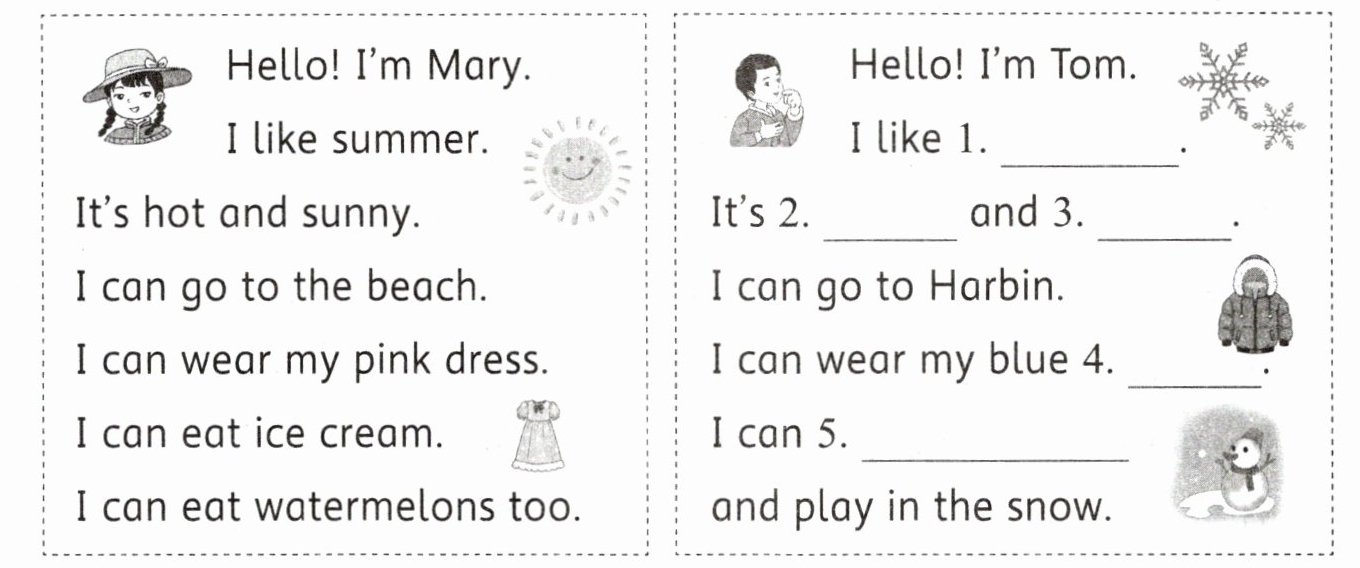
1.
2.
3.
4.
5.
1.
winter
2.
cold
3.
snowy
4.
coat
5.
make a snowman
答案:
1.winter 2.cold 3.snowy 4.coat 5.make a snowman
单元好句积累
1. —Whose sweater is this, Mum?
这是谁的毛衣,妈妈?
—It's
注意:Whose 是针对物体的主人提问的,回答时用名词性物主代词(形容词性物主代词 + 名词)或名词所有格。
2. —Can I wear this new shirt today?
我今天可以穿这件新衬衫吗?
—Yes, but wear a
可以,但是再穿一件外套吧。
注意:“Can I + 动词原形”可以用来表示请求或征求意见。
3. —Which season do you like? 你喜欢哪个季节?
—
注意:Which 针对多个中的某一个提问,意为“哪一个”,后接名词。
4. It snows a lot. 冬天经常下雪。
注意:a lot 用在动词后,表示“经常,总是”。
5. There are many festivals. (在冬天)有很多节日。
注意:many 修饰可数名词复数,意为“很多,大量”。
6. It's full of life. (春天)充满生机。
注意:be full of 意为“充满”,后接可数名词复数或不可数名词。
7. Then spring
注意:spring 是第三人称单数,作主语时,动词用第三人称单数形式。
1. —Whose sweater is this, Mum?
这是谁的毛衣,妈妈?
—It's
your dad's
. 是你爸爸的。注意:Whose 是针对物体的主人提问的,回答时用名词性物主代词(形容词性物主代词 + 名词)或名词所有格。
2. —Can I wear this new shirt today?
我今天可以穿这件新衬衫吗?
—Yes, but wear a
coat
too.可以,但是再穿一件外套吧。
注意:“Can I + 动词原形”可以用来表示请求或征求意见。
3. —Which season do you like? 你喜欢哪个季节?
—
Winter
. 冬天。注意:Which 针对多个中的某一个提问,意为“哪一个”,后接名词。
4. It snows a lot. 冬天经常下雪。
注意:a lot 用在动词后,表示“经常,总是”。
5. There are many festivals. (在冬天)有很多节日。
注意:many 修饰可数名词复数,意为“很多,大量”。
6. It's full of life. (春天)充满生机。
注意:be full of 意为“充满”,后接可数名词复数或不可数名词。
7. Then spring
comes
again. 接着春天又来了。注意:spring 是第三人称单数,作主语时,动词用第三人称单数形式。
答案:
1. your dad's 2. coat 3. Winter 7. comes
查看更多完整答案,请扫码查看

