

 搜索
搜索
第60页
- 第1页
- 第2页
- 第3页
- 第4页
- 第5页
- 第6页
- 第7页
- 第8页
- 第9页
- 第10页
- 第11页
- 第12页
- 第13页
- 第14页
- 第15页
- 第16页
- 第17页
- 第18页
- 第19页
- 第20页
- 第21页
- 第22页
- 第23页
- 第24页
- 第25页
- 第26页
- 第27页
- 第28页
- 第29页
- 第30页
- 第31页
- 第32页
- 第33页
- 第34页
- 第35页
- 第36页
- 第37页
- 第38页
- 第39页
- 第40页
- 第41页
- 第42页
- 第43页
- 第44页
- 第45页
- 第46页
- 第47页
- 第48页
- 第49页
- 第50页
- 第51页
- 第52页
- 第53页
- 第54页
- 第55页
- 第56页
- 第57页
- 第58页
- 第59页
- 第60页
- 第61页
- 第62页
- 第63页
- 第64页
- 第65页
- 第66页
- 第67页
- 第68页
- 第69页
- 第70页
- 第71页
- 第72页
- 第73页
- 第74页
判断下列句子与播报内容是(√)否(×)相符。
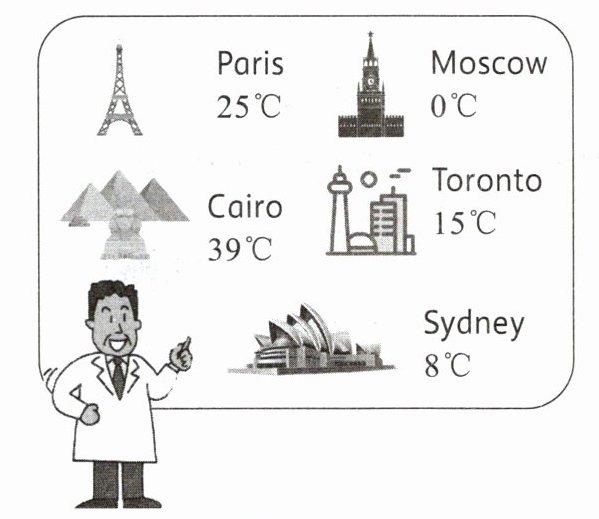
Hello, everyone. Here is the weather report about the world.
It's warm and rainy in Paris. You can't fly a kite. But you can stay at home (待在家). It's snowy and cold in Moscow. You can make a snowman. It's sunny and hot in Cairo. Don't go outside. You can go to the library. It's cold and cloudy in Sydney. It's rainy and cool in Toronto. You can draw pictures, see a film or read books at home.
(
(
(
(
(
Hello, everyone. Here is the weather report about the world.
It's warm and rainy in Paris. You can't fly a kite. But you can stay at home (待在家). It's snowy and cold in Moscow. You can make a snowman. It's sunny and hot in Cairo. Don't go outside. You can go to the library. It's cold and cloudy in Sydney. It's rainy and cool in Toronto. You can draw pictures, see a film or read books at home.
(
×
) 1. It's warm and sunny in Paris. People can fly kites.(
×
) 2. It's snowy and cold in Norilsk. People can make a snowman.(
√
) 3. It's sunny and hot in Cairo. People can stay at home.(
×
) 4. It's windy and warm in Sydney. People can play football.(
√
) 5. It's rainy and cool in Toronto. People can read books at home.
答案:
1.× 2.× 3.√ 4.× 5.√
1. —Hello! Mark speaking. 你好!我是马克。
—Hi, Mark! This is John.
嗨,马克!我是约翰。
注意:打电话时介绍自己用 “This is + 自己的名字”。
2. —What's the
悉尼的天气怎么样?
—Well, it's sunny today. 噢,今天是晴天。
注意:like 在本句中不是 “喜欢”,而是 “怎么样”。
3. It's only two degrees in Beijing.
北京只有两度。
注意:only 强调数量,意为 “只有”。
4. It's
注意:强调现在正在下雨用现在进行时。
5. We can't
我们不能在公园打篮球了。
注意:can't 后接动词原形,表示 “不能” 做某事。
6. On sunny days, we can play basketball.
晴天,我们可以打篮球。
注意:sunny days 属于特定类型的日子,其前用介词 on。
7. It's fun
跟我的新朋友们去公园是一件快乐的事情。
注意:“It's + 形容词 + to do sth” 是固定结构。
—Hi, Mark! This is John.
嗨,马克!我是约翰。
注意:打电话时介绍自己用 “This is + 自己的名字”。
2. —What's the
weather
like in Sydney?悉尼的天气怎么样?
—Well, it's sunny today. 噢,今天是晴天。
注意:like 在本句中不是 “喜欢”,而是 “怎么样”。
3. It's only two degrees in Beijing.
北京只有两度。
注意:only 强调数量,意为 “只有”。
4. It's
raining
now. 现在下雨了。注意:强调现在正在下雨用现在进行时。
5. We can't
play
basketball in the park.我们不能在公园打篮球了。
注意:can't 后接动词原形,表示 “不能” 做某事。
6. On sunny days, we can play basketball.
晴天,我们可以打篮球。
注意:sunny days 属于特定类型的日子,其前用介词 on。
7. It's fun
to
go
to the park with my new friends.跟我的新朋友们去公园是一件快乐的事情。
注意:“It's + 形容词 + to do sth” 是固定结构。
答案:
2. weather 4. raining 5. play 7. to go
查看更多完整答案,请扫码查看

