

 搜索
搜索
<题目>B
①One of the biggest mistakes a person can make is to try not to make mistakes. As you make decisions, you will probably make some mistakes. But making mistakes is a big part of how you get experience and learn.
②Here is a simple example. You do badly in a test because of your laziness. One bad test is not the end of the world, but it can quickly teach you that if you don’t study, you won’t do well.
③Mistakes sometimes lead to arguments(争吵) between people. This is true for people of all ages and it happens a lot—especially at work.
④There is a word in English called “empathy” (or “to empathise”). To empathise means to try and understand things from another person’s point of view. If you learn to empathise, you can learn quickly from the mistakes you have made and the mistakes you think other people have made. You can turn mistakes into opportunities(机会). For example, if you learn to empathise, you will understand the people you work with much better. Instead of getting angry, you will learn to talk about problems and be more patient with people you disagree with. This might stop you from giving up a job or losing a friend when you get frustrated(沮丧的) at someone—or they get frustrated at you.
⑤So next time you think you’ve made a mistake, stop and ask yourself what you’ve learnt from it, and what you will do differently in the future.
5. In Paragraph 2, the writer gives the example to tell us ______.
A. making mistakes is difficult
B. one bad test is not the end of the world
C. we can get experience and learn from mistakes
D. if you don’t study hard, you won’t do well in the exam
6. According to the writer, which of the following is NOT true?
A. Everyone makes mistakes.
B. We can turn mistakes into opportunities.
C. We should try to avoid making mistakes.
D. Mistakes sometimes cause arguments between people.
7. In Paragraph 4, the underlined word “This” means “______”.
A. Being more patient with others
B. Learning to empathise
C. Trying to talk about the problems
D. Understanding others better
8. What would be the best title for the passage?
A. Mistakes are great enemies
B. Mistakes are just part of life
C. Making mistakes is a good thing
D. Making mistakes is a terrible thing
5. In Paragraph 2, the writer gives the example to tell us (
6. According to the writer, which of the following is NOT true? (
7. In Paragraph 4, the underlined word “This” means “(
8. What would be the best title for the passage? (
①One of the biggest mistakes a person can make is to try not to make mistakes. As you make decisions, you will probably make some mistakes. But making mistakes is a big part of how you get experience and learn.
②Here is a simple example. You do badly in a test because of your laziness. One bad test is not the end of the world, but it can quickly teach you that if you don’t study, you won’t do well.
③Mistakes sometimes lead to arguments(争吵) between people. This is true for people of all ages and it happens a lot—especially at work.
④There is a word in English called “empathy” (or “to empathise”). To empathise means to try and understand things from another person’s point of view. If you learn to empathise, you can learn quickly from the mistakes you have made and the mistakes you think other people have made. You can turn mistakes into opportunities(机会). For example, if you learn to empathise, you will understand the people you work with much better. Instead of getting angry, you will learn to talk about problems and be more patient with people you disagree with. This might stop you from giving up a job or losing a friend when you get frustrated(沮丧的) at someone—or they get frustrated at you.
⑤So next time you think you’ve made a mistake, stop and ask yourself what you’ve learnt from it, and what you will do differently in the future.
5. In Paragraph 2, the writer gives the example to tell us ______.
A. making mistakes is difficult
B. one bad test is not the end of the world
C. we can get experience and learn from mistakes
D. if you don’t study hard, you won’t do well in the exam
6. According to the writer, which of the following is NOT true?
A. Everyone makes mistakes.
B. We can turn mistakes into opportunities.
C. We should try to avoid making mistakes.
D. Mistakes sometimes cause arguments between people.
7. In Paragraph 4, the underlined word “This” means “______”.
A. Being more patient with others
B. Learning to empathise
C. Trying to talk about the problems
D. Understanding others better
8. What would be the best title for the passage?
A. Mistakes are great enemies
B. Mistakes are just part of life
C. Making mistakes is a good thing
D. Making mistakes is a terrible thing
5. In Paragraph 2, the writer gives the example to tell us (
C
).6. According to the writer, which of the following is NOT true? (
C
)7. In Paragraph 4, the underlined word “This” means “(
B
)”.8. What would be the best title for the passage? (
B
)
答案:
5.C 6.C 7.B 8.B
C
In the late 19th century, indoor lighting came from candles, oil lamps, or gas lamps. None of them gave off enough light to do much after dark. Gas lamps made walls black and dirty. Sometimes its smell caused headaches. Still, gaslight was popular because it was the best light available(可获得的).
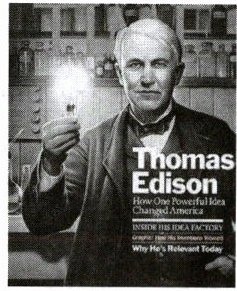
Edison was all fired up to work on the electric light. He knew that others around the world were working on this too. He wanted to be the first to succeed. But he knew that inventing a working light bulb was not enough. He had to invent one that people could afford. Edison wrote in his notebook: “The electric light is the light of the future, and it will be my light unless(除非) some others get a better one.”
Edison and his workers tried and tried. Six weeks came and went. Edison was still searching for the right filament(灯丝). The workers kept testing everything they could think of—over 3,000 materials in all. Edison knew that finding out what did not work was as important as finding out what did. A year and a half went by. Nothing. However, Edison did not give up, and one day he hit upon the answer. It was simply sewing thread(缝纫线) covered in carbon(碳).
On October 22, 1879, Edison’s light bulb glowed(发光) for thirteen and a half hours. The next one glowed for over a hundred hours. Edison and his team were ecstatic. They had done it. Edison was only 32 years old then.
9. What was Edison’s attitude(态度) towards the future of the electric light?
A. He was worried about his new invention.
B. He was quite pleased with the new idea.
C. He was not clear about what was happening.
D. He was confident that he could make it come true.
(
10. Which of the following can best describe Edison’s spirit?
A. Never laugh at others.
B. Never give up.
C. Always do the right thing.
D. Hope for the best.
(
11. The underlined word “ecstatic” in the last paragraph probably means “______”.
A. very excited
B. very moved
C. very surprised
D. very satisfied
(
12. From the passage, we know ______.
A. the history of indoor lighting
B. the advantage of the electric light
C. why Edison made the electric light
D. how Edison invented the electric light
(
In the late 19th century, indoor lighting came from candles, oil lamps, or gas lamps. None of them gave off enough light to do much after dark. Gas lamps made walls black and dirty. Sometimes its smell caused headaches. Still, gaslight was popular because it was the best light available(可获得的).
Edison was all fired up to work on the electric light. He knew that others around the world were working on this too. He wanted to be the first to succeed. But he knew that inventing a working light bulb was not enough. He had to invent one that people could afford. Edison wrote in his notebook: “The electric light is the light of the future, and it will be my light unless(除非) some others get a better one.”
Edison and his workers tried and tried. Six weeks came and went. Edison was still searching for the right filament(灯丝). The workers kept testing everything they could think of—over 3,000 materials in all. Edison knew that finding out what did not work was as important as finding out what did. A year and a half went by. Nothing. However, Edison did not give up, and one day he hit upon the answer. It was simply sewing thread(缝纫线) covered in carbon(碳).
On October 22, 1879, Edison’s light bulb glowed(发光) for thirteen and a half hours. The next one glowed for over a hundred hours. Edison and his team were ecstatic. They had done it. Edison was only 32 years old then.
9. What was Edison’s attitude(态度) towards the future of the electric light?
A. He was worried about his new invention.
B. He was quite pleased with the new idea.
C. He was not clear about what was happening.
D. He was confident that he could make it come true.
(
D
)10. Which of the following can best describe Edison’s spirit?
A. Never laugh at others.
B. Never give up.
C. Always do the right thing.
D. Hope for the best.
(
B
)11. The underlined word “ecstatic” in the last paragraph probably means “______”.
A. very excited
B. very moved
C. very surprised
D. very satisfied
(
A
)12. From the passage, we know ______.
A. the history of indoor lighting
B. the advantage of the electric light
C. why Edison made the electric light
D. how Edison invented the electric light
(
D
)
答案:
9.D 10.B 11.A 12.D
查看更多完整答案,请扫码查看

