

 搜索
搜索
第9页
- 第1页
- 第2页
- 第3页
- 第4页
- 第5页
- 第6页
- 第7页
- 第8页
- 第9页
- 第10页
- 第11页
- 第12页
- 第13页
- 第14页
- 第15页
- 第16页
- 第17页
- 第18页
- 第19页
- 第20页
- 第21页
- 第22页
- 第23页
- 第24页
- 第25页
- 第26页
- 第27页
- 第28页
- 第29页
- 第30页
- 第31页
- 第32页
- 第33页
- 第34页
- 第35页
- 第36页
- 第37页
- 第38页
- 第39页
- 第40页
- 第41页
- 第42页
- 第43页
- 第44页
- 第45页
- 第46页
- 第47页
- 第48页
- 第49页
- 第50页
- 第51页
- 第52页
- 第53页
- 第54页
- 第55页
- 第56页
- 第57页
- 第58页
- 第59页
- 第60页
- 第61页
- 第62页
- 第63页
- 第64页
- 第65页
- 第66页
- 第67页
- 第68页
四、I can choose. 选答展锋芒。从方框中选择合适的单词补全对话(有一项多余)。
A. PE B. subjects C. Music D. interesting E. subject
A: Today is Monday. What do we learn this morning?
B: English, Maths and Science.
A: I like playing football(踢足球). Do we have 1. ______ this afternoon?
B: Yes. And we have 2. ______ too.
A: Great! I like singing songs.
B: What 3. ______ do you like best?
A: I like Art best. It's 4. ______.
A. PE B. subjects C. Music D. interesting E. subject
A: Today is Monday. What do we learn this morning?
B: English, Maths and Science.
A: I like playing football(踢足球). Do we have 1. ______ this afternoon?
B: Yes. And we have 2. ______ too.
A: Great! I like singing songs.
B: What 3. ______ do you like best?
A: I like Art best. It's 4. ______.
答案:
1. A 2. C 3. E 4. D
五、(新考法)I can judge. 裁判辨真伪。阅读表格,判断句子正(T)误(F)。
| | Morning | Afternoon |
| Wang Bing | Aa Bb Cc | |
| Helen | | 语文 | |
| Lucy | | | |
| Bob | | Aa Bb Cc | |
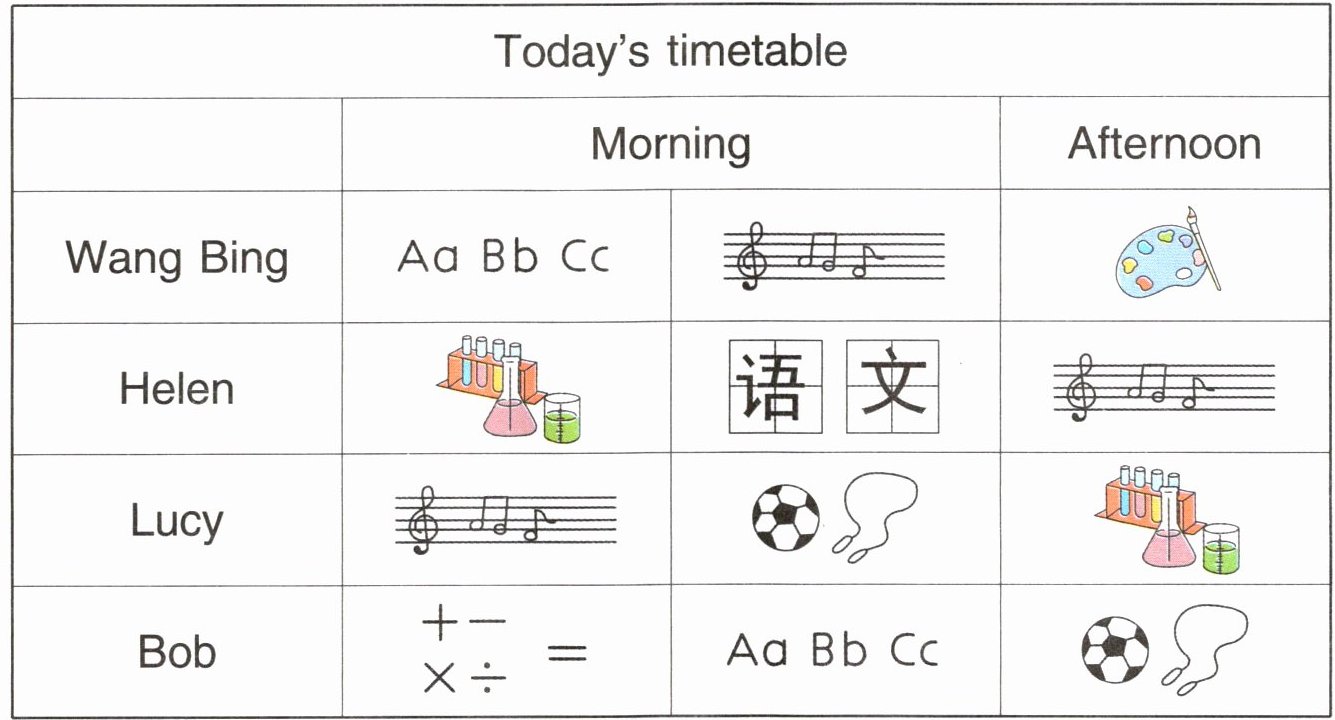
( )1. Wang Bing has Art in the afternoon.
( )2. Lucy and Helen have Chinese today.
( )3. Wang Bing and Bob have English in the morning.
( )4. Only(只有) one student has Science today.
( )5. From this timetable, we can know what subject they like best.
| | Morning | Afternoon |
| Wang Bing | Aa Bb Cc | |
| Helen | | 语文 | |
| Lucy | | | |
| Bob | | Aa Bb Cc | |
( )1. Wang Bing has Art in the afternoon.
( )2. Lucy and Helen have Chinese today.
( )3. Wang Bing and Bob have English in the morning.
( )4. Only(只有) one student has Science today.
( )5. From this timetable, we can know what subject they like best.
答案:
1. T 2. F 3. T 4. F 5. F
六、I can recognize. 辨别趣比拼。选择合适的内容补全句子或对话。
1. —What subject do you like ______ (best/good)? —Art. 易错题3
2. It's time ______ (for/to) History(历史课). Let's go to the classroom.
3. I like ______ (English/to English) best. I like ______ (read/reading) English stories. 易错题1
4. —I like IT. I want to chat on the Internet(在网上聊天).
—Me ______ (also/too). I ______ (also/too) like Music. 易错题2
5. I like Maths. I'm ______ (good/best) at it. 易错题3
1. —What subject do you like ______ (best/good)? —Art. 易错题3
2. It's time ______ (for/to) History(历史课). Let's go to the classroom.
3. I like ______ (English/to English) best. I like ______ (read/reading) English stories. 易错题1
4. —I like IT. I want to chat on the Internet(在网上聊天).
—Me ______ (also/too). I ______ (also/too) like Music. 易错题2
5. I like Maths. I'm ______ (good/best) at it. 易错题3
答案:
1. best 2. for 3. English; reading
4. too; also 妙招 also 和 too 都可以表示"也",also 通常位于系动词、助动词、情态动词之后,实义动词之前;too 常位于句末。
5. good 警示 be good at 为固定搭配,意为"擅长"。at 后面可接名词、代词或动词-ing形式。
4. too; also 妙招 also 和 too 都可以表示"也",also 通常位于系动词、助动词、情态动词之后,实义动词之前;too 常位于句末。
5. good 警示 be good at 为固定搭配,意为"擅长"。at 后面可接名词、代词或动词-ing形式。
查看更多完整答案,请扫码查看

