

 搜索
搜索
第4页
- 第1页
- 第2页
- 第3页
- 第4页
- 第5页
- 第6页
- 第7页
- 第8页
- 第9页
- 第10页
- 第11页
- 第12页
- 第13页
- 第14页
- 第15页
- 第16页
- 第17页
- 第18页
- 第19页
- 第20页
- 第21页
- 第22页
- 第23页
- 第24页
- 第25页
- 第26页
- 第27页
- 第28页
- 第29页
- 第30页
- 第31页
- 第32页
- 第33页
- 第34页
- 第35页
- 第36页
- 第37页
- 第38页
- 第39页
- 第40页
- 第41页
- 第42页
- 第43页
- 第44页
- 第45页
- 第46页
- 第47页
- 第48页
- 第49页
- 第50页
- 第51页
- 第52页
- 第53页
- 第54页
- 第55页
- 第56页
- 第57页
- 第58页
- 第59页
- 第60页
- 第61页
- 第62页
- 第63页
- 第64页
- 第65页
- 第66页
- 第67页
- 第68页
- 第69页
- 第70页
- 第71页
- 第72页
- 第73页
- 第74页
- 第75页
- 第76页
- 第77页
- 第78页
- 第79页
- 第80页
一、将下列单词按照首字母顺序排列,写在四线格上。(注意大小写)

1.
1.
bell fine how PRC spell
答案:
bell fine how PRC spell
二、将下列单词按照字典中的顺序排列,注意只填序号。
2.(1)jump (2)hungry (3)rabbit (4)rainy (5)age (6)window (7)journey (8)raise (9)wind (10)rainstorm
2.(1)jump (2)hungry (3)rabbit (4)rainy (5)age (6)window (7)journey (8)raise (9)wind (10)rainstorm
(5)
→(2)
→(7)
→(1)
→(3)
→(10)
→(4)
→(8)
→(9)
→(6)
答案:
(5)(2)(7)(1)(3)(10)(4)(8)(9)(6)
三、用括号内所给单词的适当形式填空。
3. Let's
4. It's time
5. —Please
—E-R-I-C, Eric.
6. Can you go to school with
7. May I
3. Let's
start
(start) Unit 1 today.4. It's time
to have
(have) lunch now.5. —Please
spell
(spell) your name, boy.—E-R-I-C, Eric.
6. Can you go to school with
me
(I)?7. May I
call
(call) you Lisa?
答案:
3. start 4. to have 5. spell 6. me 7. call
四、补全对话。(选项中有一项多余)
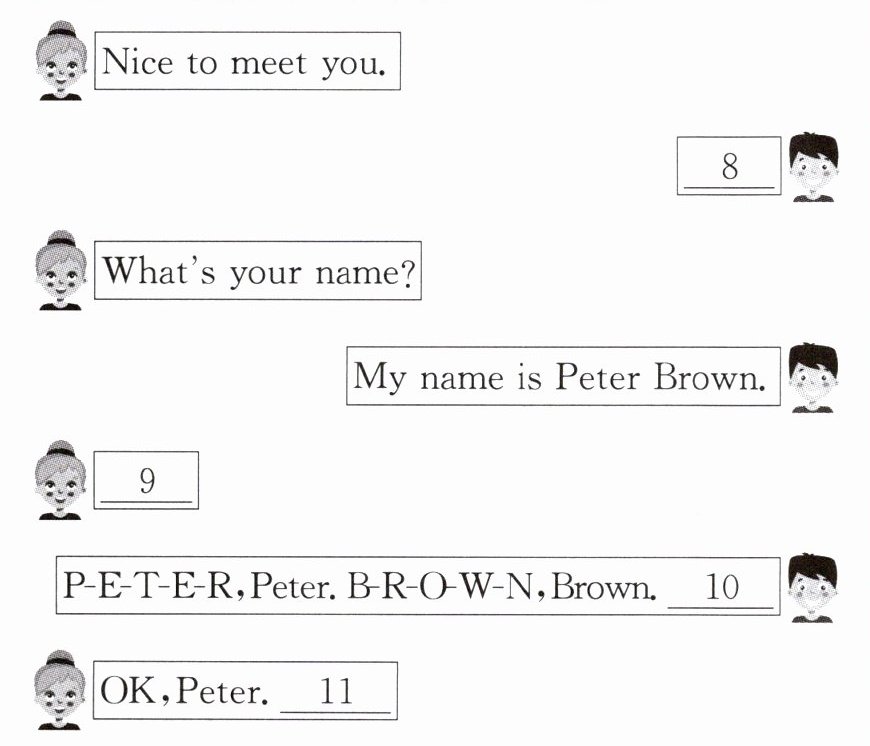
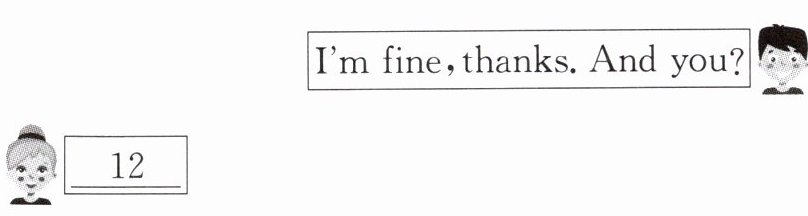
A. How are you?
B. I'm fine too.
C. Nice to meet you too.
D. How do you spell it?
E. May I have your name?
F. You can call me Peter.
8.
A. How are you?
B. I'm fine too.
C. Nice to meet you too.
D. How do you spell it?
E. May I have your name?
F. You can call me Peter.
8.
C
9. D
10. F
11. A
12. B
答案:
8~12.CDFAB
五、对话填空。
阅读对话,从方框中选出恰当的单词并用其适当形式填空,使对话通顺、意义完整。每空仅填一词,每词仅用一次。
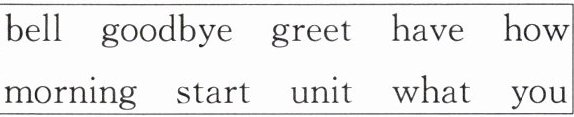
A:Mike,do you learn how to start a conversation in this___13___?
B: Of course. When we meet a new student at school in the___14___, we often ___15___ each other. We may say "Good morning! ___16___ is your name?"or" May I ___17___your name? Nice to meet___18___" and then ask "___19___ are you?" This is a nice way to ___20___ a conversation.
A:Great! Thanks. That's the ___21___. Let's go to class.
B: ___22___!
A:Bye!
13.
阅读对话,从方框中选出恰当的单词并用其适当形式填空,使对话通顺、意义完整。每空仅填一词,每词仅用一次。
A:Mike,do you learn how to start a conversation in this___13___?
B: Of course. When we meet a new student at school in the___14___, we often ___15___ each other. We may say "Good morning! ___16___ is your name?"or" May I ___17___your name? Nice to meet___18___" and then ask "___19___ are you?" This is a nice way to ___20___ a conversation.
A:Great! Thanks. That's the ___21___. Let's go to class.
B: ___22___!
A:Bye!
13.
unit
14. morning
15. greet
16. What
17. have
18. you
19. How
20. start
21. bell
22. Goodbye
答案:
13. unit 14. morning 15. greet 16. What 17. have 18. you 19. How 20. start 21. bell 22. Goodbye
查看更多完整答案,请扫码查看

