

 搜索
搜索
第20页
- 第1页
- 第2页
- 第3页
- 第4页
- 第5页
- 第6页
- 第7页
- 第8页
- 第9页
- 第10页
- 第11页
- 第12页
- 第13页
- 第14页
- 第15页
- 第16页
- 第17页
- 第18页
- 第19页
- 第20页
- 第21页
- 第22页
- 第23页
- 第24页
- 第25页
- 第26页
- 第27页
- 第28页
- 第29页
- 第30页
- 第31页
- 第32页
- 第33页
- 第34页
- 第35页
- 第36页
- 第37页
- 第38页
- 第39页
- 第40页
- 第41页
- 第42页
- 第43页
- 第44页
- 第45页
- 第46页
- 第47页
- 第48页
- 第49页
- 第50页
- 第51页
- 第52页
- 第53页
- 第54页
- 第55页
- 第56页
- 第57页
- 第58页
- 第59页
- 第60页
- 第61页
- 第62页
- 第63页
- 第64页
- 第65页
- 第66页
- 第67页
- 第68页
- 第69页
- 第70页
- 第71页
- 第72页
- 第73页
- 第74页
- 第75页
- 第76页
- 第77页
- 第78页
- 第79页
- 第80页
- 第81页
- 第82页
- 第83页
- 第84页
- 第85页
- 第86页
- 第87页
- 第88页
- 第89页
- 第90页
- 第91页
- 第92页
- 第93页
- 第94页
- 第95页
- 第96页
- 第97页
- 第98页
- 第99页
- 第100页
- 第101页
- 第102页
- 第103页
- 第104页
- 第105页
- 第106页
- 第107页
- 第108页
- 第109页
- 第110页
- 第111页
- 第112页
- 第113页
- 第114页
- 第115页
- 第116页
- 第117页
- 第118页
- 第119页
- 第120页
- 第121页
- 第122页
- 第123页
- 第124页
1. ... the celebration may take place at different times. ……庆典或许会发生在不同的时间。(P14)
take place
- 词义:发生(指有计划、有安排的发生)
- 注意:无被动语态
(1) 下次会议将在星期四举行。
The next meeting will ______ ______ on Thursday.
(2) ( )Great changes ______ in China since 1978.
A. take place
B. took place
C. have taken place
D. will take place
take place
- 词义:发生(指有计划、有安排的发生)
- 注意:无被动语态
(1) 下次会议将在星期四举行。
The next meeting will ______ ______ on Thursday.
(2) ( )Great changes ______ in China since 1978.
A. take place
B. took place
C. have taken place
D. will take place
答案:
(1)take place
(2)C
(1)take place
(2)C
2. In the UK, many people gather in London on December 31 to see the famous Big Ben clock tower and count down to midnight. 在英国,许多人在 12 月 31 日聚集在伦敦观看著名的大本钟塔,并在午夜进行倒计时。(P14)

gather
- 词义:v. 聚集;集合
- 用法:gather to do sth. 聚在一起做某事
(1) 人们会从四面八方聚起来。People would ______ from near and far.
(2) ( ) We gather ______ the New Year.
A. to celebrate
B. celebrate
C. celebrating
D. have celebrated
gather
- 词义:v. 聚集;集合
- 用法:gather to do sth. 聚在一起做某事
(1) 人们会从四面八方聚起来。People would ______ from near and far.
(2) ( ) We gather ______ the New Year.
A. to celebrate
B. celebrate
C. celebrating
D. have celebrated
答案:
(1)gather
(2)A
(1)gather
(2)A
3. Research suggests that millions also watch it on TV. 研究表明数百万人在电视上观看。(P14)

suggest
- 词义:v. 建议;表明
- 用法:suggest doing sth. 建议做某事
suggest + that sb. (should) do sth. 建议某人做某事
(1) 他建议去散步。He suggests ______ ______ for a walk.
(2) ( )She suggests that he ______ there tomorrow.
A. goes
B. should go
C. go to
D. will go
suggest
- 词义:v. 建议;表明
- 用法:suggest doing sth. 建议做某事
suggest + that sb. (should) do sth. 建议某人做某事
(1) 他建议去散步。He suggests ______ ______ for a walk.
(2) ( )She suggests that he ______ there tomorrow.
A. goes
B. should go
C. go to
D. will go
答案:
(1)going out
(2)B
(1)going out
(2)B
4. They also go out and enjoy picnics, dance, sing, and watch plays in the theater. 他们也外出享受野餐,舞蹈,唱歌以及在剧院看戏剧。(P14)
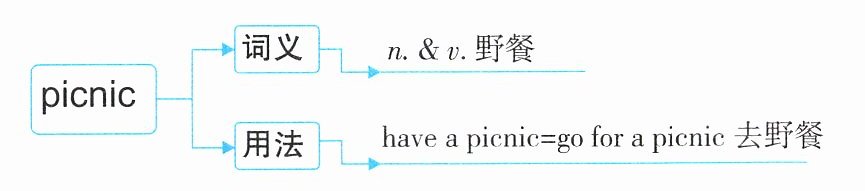
picnic
- 词义:n. & v. 野餐
- 用法:have a picnic= go for a picnic 去野餐
(1) 这个周末去野餐吧!
Let's ______ ______ ______ this weekend!
(2) ( ) We will go for ______ next Monday.
A. picnic
B. picnics
C. a picnic
D. picnicking
picnic
- 词义:n. & v. 野餐
- 用法:have a picnic= go for a picnic 去野餐
(1) 这个周末去野餐吧!
Let's ______ ______ ______ this weekend!
(2) ( ) We will go for ______ next Monday.
A. picnic
B. picnics
C. a picnic
D. picnicking
答案:
(1)have a picnic/go for a picnic
(2)C
(1)have a picnic/go for a picnic
(2)C
查看更多完整答案,请扫码查看

