

 搜索
搜索
()1. —I fell off my bike yesterday. I will not ride to school anymore!
—I don't think that's a good idea. That's just throwing out the baby with the bathwater.
What is the best Chinese meaning of the underlined expression?
A. 囫囵吞枣 B. 因噎废食 C. 自食其果
()2. On Children's Day, Tom, a junior middle school student, went to Children's Amusement Park with his mother and his 60-year-old grandparents. According to the price list, they paid ______ yuan for the tickets.
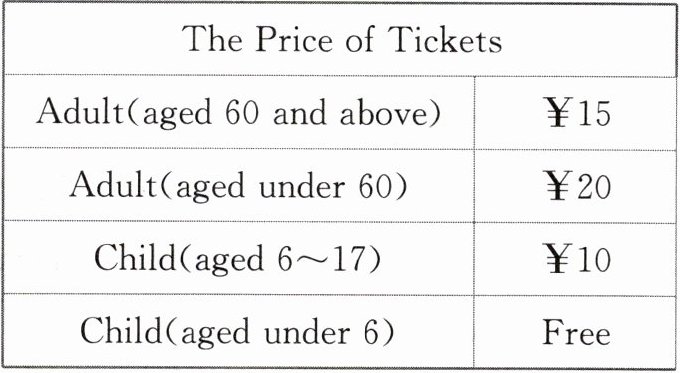
The Price of Tickets
Adult(aged 60 and above) ¥15
Adult(aged under 60) ¥20
Child(aged 6~17) ¥10
Child(aged under 6) Free
A. 60 B. 45 C. 80
—I don't think that's a good idea. That's just throwing out the baby with the bathwater.
What is the best Chinese meaning of the underlined expression?
A. 囫囵吞枣 B. 因噎废食 C. 自食其果
()2. On Children's Day, Tom, a junior middle school student, went to Children's Amusement Park with his mother and his 60-year-old grandparents. According to the price list, they paid ______ yuan for the tickets.
The Price of Tickets
Adult(aged 60 and above) ¥15
Adult(aged under 60) ¥20
Child(aged 6~17) ¥10
Child(aged under 6) Free
A. 60 B. 45 C. 80
答案:
1. B 考查谚语。句意:“我昨天从自行车上摔下来了,我再也不骑自行车上学了。”“我觉得这样不好,那简直就是因噎废食。”直接翻译这句英语习语“把婴儿和洗澡水一起倒掉”,但实际比喻的是不要因为想舍弃某物不好的地方而丢掉了宝贵的部分;切忌不可不分良莠、好坏一起丢掉,即因噎废食。故选 B。2. A 考查数字计算。在儿童节,汤姆——一名中学生和他的妈妈、祖父母去儿童游乐场玩。汤姆是一名中学生,他的祖父母六十岁了。题目中给出一个价格表,要求根据这个价格表计算他们共需要多少钱买票。根据表格中的具体年龄对照,共需要 60 元。故选 A。
Ⅰ. 完形填空(人与自我·情绪调节)(限时7分钟)
We feel angry or guilty(感到内疚的) about the things we did or did not achieve, about the things we cannot have, and many other things. It seems that everyone 1 their own bad emotions(情绪). But neither guilt nor anger can help us. Over time, they can be heavy weights on our 2.
These bad emotions don't do anything 3 for us at all. So you might ask yourself—is it possible to put down this heavy burden(负担) and give yourself a 4? It is quite possible. Start by actually looking at your feelings. How do they get inside of us? Why do we carry them for so long instead of putting them down? Can we live 5 them?
By thinking about our bad emotions, we can find healthy ways to 6 them. Unhealthy behaviour is not the way to do this. It provides no relief. Instead, there are better ways to handle them. One of the best ways is forgiveness(原谅).
Forgiveness is a powerful tool. We should forgive 7 first. We shouldn't keep bad emotions inside. We must also forgive others who have made us guilty or angry. This is not always easy. But when we learn to forgive ourselves, it becomes 8 to forgive others as well.
There is nothing good about carrying years of emotional burdens. By forgiving ourselves and others, we can put down our burdens and feel better about ourselves. 9 you do this, you will start to feel a lot lighter. Years of heaviness will be magically lifted! You'll start to feel like you have more 10 and you'll be much happier with your life.
()1. A. covers B. carries C. holds D. brings
()2. A. shoulders B. hands C. legs D. arms
()3. A. bad B. difficult C. good D. easy
()4. A. secret B. result C. pain D. break
()5. A. without B. in C. for D. with
()6. A. look after B. worry about C. deal with D. bring up
()7. A. yourself B. ourselves C. themselves D. myself
()8. A. happier B. better C. harder D. easier
()9. A. As soon as B. As well as C. As often as D. As far as
()10. A. pride B. difficulty C. energy D. knowledge
词汇积累
1. relief /rɪ'li:f/ n. ______
2. handle /'hændl/ v. ______
We feel angry or guilty(感到内疚的) about the things we did or did not achieve, about the things we cannot have, and many other things. It seems that everyone 1 their own bad emotions(情绪). But neither guilt nor anger can help us. Over time, they can be heavy weights on our 2.
These bad emotions don't do anything 3 for us at all. So you might ask yourself—is it possible to put down this heavy burden(负担) and give yourself a 4? It is quite possible. Start by actually looking at your feelings. How do they get inside of us? Why do we carry them for so long instead of putting them down? Can we live 5 them?
By thinking about our bad emotions, we can find healthy ways to 6 them. Unhealthy behaviour is not the way to do this. It provides no relief. Instead, there are better ways to handle them. One of the best ways is forgiveness(原谅).
Forgiveness is a powerful tool. We should forgive 7 first. We shouldn't keep bad emotions inside. We must also forgive others who have made us guilty or angry. This is not always easy. But when we learn to forgive ourselves, it becomes 8 to forgive others as well.
There is nothing good about carrying years of emotional burdens. By forgiving ourselves and others, we can put down our burdens and feel better about ourselves. 9 you do this, you will start to feel a lot lighter. Years of heaviness will be magically lifted! You'll start to feel like you have more 10 and you'll be much happier with your life.
()1. A. covers B. carries C. holds D. brings
()2. A. shoulders B. hands C. legs D. arms
()3. A. bad B. difficult C. good D. easy
()4. A. secret B. result C. pain D. break
()5. A. without B. in C. for D. with
()6. A. look after B. worry about C. deal with D. bring up
()7. A. yourself B. ourselves C. themselves D. myself
()8. A. happier B. better C. harder D. easier
()9. A. As soon as B. As well as C. As often as D. As far as
()10. A. pride B. difficulty C. energy D. knowledge
词汇积累
1. relief /rɪ'li:f/ n. ______
2. handle /'hændl/ v. ______
答案:
Ⅰ. 1—5 BACDA 6—10 CBDAC
词汇积累 1. 轻松;宽慰 2. 应付;处理
词汇积累 1. 轻松;宽慰 2. 应付;处理
Ⅱ. 阅读理解(人与自我·做人与做事)(限时10分钟)
On April 8, in Hangzhou, a young man called Andy ordered and packed his breakfast at a local noodle house and got much more than he expected.
Andy shared a video on the Internet about his experience at a noodle house in the morning. In the video, which had over 2.3 million views, Andy was shocked by what he found in his to-go bag instead of breakfast.
“Why? There's a couple of thousand yuan in my bag,” Andy said. “Why would they do this? Why would they give this to me?” Andy shared his shocking discovery on the Internet. He knew that he could just take the money, but finally, he said he knew what he needed to do.
“Now I have to return it because I'm a good person, I guess,” Andy said, putting the money back into the bag.
After he walked into the noodle house, he gave the bag to a worker at the door. The worker realised he was returning the money they had been looking for. With the grateful(感激的) smiles on their faces, one worker asked if they could give him a hug, which he accepted.
Back in the car, Andy reflected on what he had done. “The workers were just all hugging me and thanking me. I got such a great feeling of pride when I saw the look of joy on their faces,” he said.
“Honesty can lead me forward and make my future more colourful,” he wrote in his diary.
()11. What happened to Andy on the morning of April 8?
A. He picked up a to-go bag.
B. He lost a couple of thousand yuan.
C. He had a delicious breakfast at a noodle house.
D. He got some unexpected money at a noodle house.
()12. How did Andy feel when he found some money in his bag?
A. Excited. B. Shocked. C. Scared. D. Relaxed.
()13. According to the passage, Andy walked into the noodle house again because ______.
A. he wanted to make a video
B. he planned to return the money
C. he wanted to get his breakfast back
D. he hoped to get something as return
()14. According to the passage, which of the following is NOT true?
A. The workers were thankful to Andy.
B. Andy accepted the hugs from the workers.
C. Andy kept the money for himself in the end.
D. The video Andy shared online got tons of attention.
()15. Which of the following could be the best title for this passage?
A. A Man Honest for Returning the Money
B. A Shocking Discovery at a Noodle House
C. A Staff Person Friendly to the Customer
D. A Worker Good at Making Videos on the Internet
On April 8, in Hangzhou, a young man called Andy ordered and packed his breakfast at a local noodle house and got much more than he expected.
Andy shared a video on the Internet about his experience at a noodle house in the morning. In the video, which had over 2.3 million views, Andy was shocked by what he found in his to-go bag instead of breakfast.
“Why? There's a couple of thousand yuan in my bag,” Andy said. “Why would they do this? Why would they give this to me?” Andy shared his shocking discovery on the Internet. He knew that he could just take the money, but finally, he said he knew what he needed to do.
“Now I have to return it because I'm a good person, I guess,” Andy said, putting the money back into the bag.
After he walked into the noodle house, he gave the bag to a worker at the door. The worker realised he was returning the money they had been looking for. With the grateful(感激的) smiles on their faces, one worker asked if they could give him a hug, which he accepted.
Back in the car, Andy reflected on what he had done. “The workers were just all hugging me and thanking me. I got such a great feeling of pride when I saw the look of joy on their faces,” he said.
“Honesty can lead me forward and make my future more colourful,” he wrote in his diary.
()11. What happened to Andy on the morning of April 8?
A. He picked up a to-go bag.
B. He lost a couple of thousand yuan.
C. He had a delicious breakfast at a noodle house.
D. He got some unexpected money at a noodle house.
()12. How did Andy feel when he found some money in his bag?
A. Excited. B. Shocked. C. Scared. D. Relaxed.
()13. According to the passage, Andy walked into the noodle house again because ______.
A. he wanted to make a video
B. he planned to return the money
C. he wanted to get his breakfast back
D. he hoped to get something as return
()14. According to the passage, which of the following is NOT true?
A. The workers were thankful to Andy.
B. Andy accepted the hugs from the workers.
C. Andy kept the money for himself in the end.
D. The video Andy shared online got tons of attention.
()15. Which of the following could be the best title for this passage?
A. A Man Honest for Returning the Money
B. A Shocking Discovery at a Noodle House
C. A Staff Person Friendly to the Customer
D. A Worker Good at Making Videos on the Internet
答案:
Ⅱ. 11—15 DBBCA
查看更多完整答案,请扫码查看

