

 搜索
搜索
2024年全国重点高中提前招生同步强化全真试卷九年级英语全一册人教版
注:目前有些书本章节名称可能整理的还不是很完善,但都是按照顺序排列的,请同学们按照顺序仔细查找。练习册 2024年全国重点高中提前招生同步强化全真试卷九年级英语全一册人教版 答案主要是用来给同学们做完题方便对答案用的,请勿直接抄袭。
第21页
- 第1页
- 第2页
- 第3页
- 第4页
- 第5页
- 第6页
- 第7页
- 第8页
- 第9页
- 第10页
- 第11页
- 第12页
- 第13页
- 第14页
- 第15页
- 第16页
- 第17页
- 第18页
- 第19页
- 第20页
- 第21页
- 第22页
- 第23页
- 第24页
- 第25页
- 第26页
- 第27页
- 第28页
- 第29页
- 第30页
- 第31页
- 第32页
- 第33页
- 第34页
- 第35页
- 第36页
- 第37页
- 第38页
- 第39页
- 第40页
- 第41页
- 第42页
- 第43页
- 第44页
- 第45页
- 第46页
- 第47页
- 第48页
- 第49页
- 第50页
- 第51页
- 第52页
- 第53页
- 第54页
- 第55页
- 第56页
- 第57页
- 第58页
- 第59页
- 第60页
- 第61页
- 第62页
- 第63页
- 第64页
- 第65页
- 第66页
- 第67页
- 第68页
- 第69页
- 第70页
- 第71页
- 第72页
- 第73页
- 第74页
- 第75页
- 第76页
- 第77页
- 第78页
- 第79页
- 第80页
- 第81页
- 第82页
- 第83页
- 第84页
- 第85页
- 第86页
- 第87页
- 第88页
- 第89页
- 第90页
第二节 (共5小题,每小题2分,满分10分)
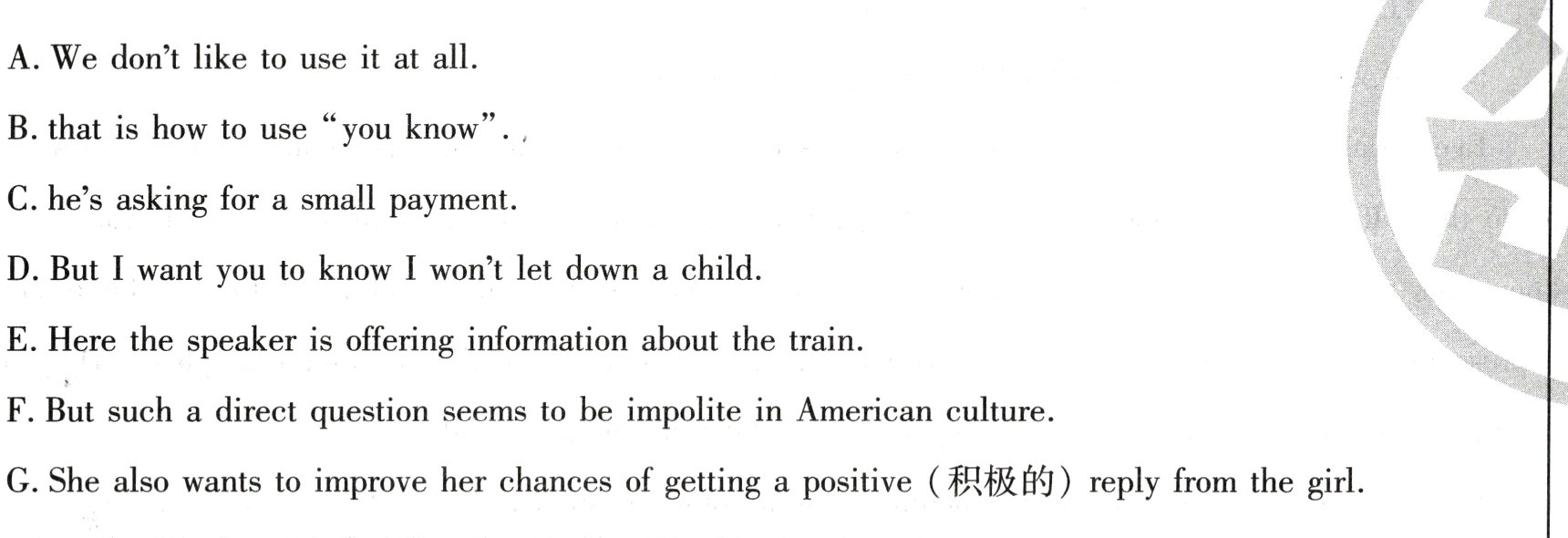
阅读短文,从方框内所给的选项中选出能填入空白处的最佳选项,使短文通顺、连贯。选项中有两项为多余选项。
The words “you know” is not a new form of slang (俚语). It has a long history and has many uses in popular culture. The situations tell you which words “you know” serves.
If someone says, “ How about a little something? You know, for the effort, you know,” he's asking for a small payment. When he says “you know” before and after the words “for the effort”, he wants you to know he has worked hard. He uses “you know” to make a request. He wants to improve his chances of getting the payment. In fact, it means “Can you give me a tip for helping you?” But such a direct question seems to be impolite in American culture. If a girl says, “My parents died in a car accident four weeks ago. It was terrible.” “You know, we didn't have the time to get to know one another. She also wants to improve her chances of getting a positive (积极的) reply from the girl. ” Here, the second speaker begins her sentence with “you know” to get the trust of the girl. She begins with “you know” so that it gives the girl the idea that they have a connection. She mainly wants to make her words sound familiar. that is how to use “you know”. Imagine two people are staying late at work. One person might tell the other person they need to go. She might say, “Hey, Jane, you know, the last train leaves in 15 minutes!” Here the speaker is offering information about the train. Jane probably doesn't know that the train is leaving soon. But her workmate wants to use language to show she does know the fact.
阅读短文,从方框内所给的选项中选出能填入空白处的最佳选项,使短文通顺、连贯。选项中有两项为多余选项。
The words “you know” is not a new form of slang (俚语). It has a long history and has many uses in popular culture. The situations tell you which words “you know” serves.
If someone says, “ How about a little something? You know, for the effort, you know,” he's asking for a small payment. When he says “you know” before and after the words “for the effort”, he wants you to know he has worked hard. He uses “you know” to make a request. He wants to improve his chances of getting the payment. In fact, it means “Can you give me a tip for helping you?” But such a direct question seems to be impolite in American culture. If a girl says, “My parents died in a car accident four weeks ago. It was terrible.” “You know, we didn't have the time to get to know one another. She also wants to improve her chances of getting a positive (积极的) reply from the girl. ” Here, the second speaker begins her sentence with “you know” to get the trust of the girl. She begins with “you know” so that it gives the girl the idea that they have a connection. She mainly wants to make her words sound familiar. that is how to use “you know”. Imagine two people are staying late at work. One person might tell the other person they need to go. She might say, “Hey, Jane, you know, the last train leaves in 15 minutes!” Here the speaker is offering information about the train. Jane probably doesn't know that the train is leaving soon. But her workmate wants to use language to show she does know the fact.
答案:
31 - 35 CFDGE
查看更多完整答案,请扫码查看

