

 搜索
搜索
第2页
- 第1页
- 第2页
- 第3页
- 第4页
- 第5页
- 第6页
- 第7页
- 第8页
- 第9页
- 第10页
- 第11页
- 第12页
- 第13页
- 第14页
- 第15页
- 第16页
- 第17页
- 第18页
- 第19页
- 第20页
- 第21页
- 第22页
- 第23页
- 第24页
- 第25页
- 第26页
- 第27页
- 第28页
- 第29页
- 第30页
- 第31页
- 第32页
- 第33页
- 第34页
- 第35页
- 第36页
- 第37页
- 第38页
- 第39页
- 第40页
- 第41页
- 第42页
- 第43页
- 第44页
- 第45页
- 第46页
- 第47页
- 第48页
- 第49页
- 第50页
- 第51页
- 第52页
- 第53页
- 第54页
- 第55页
- 第56页
- 第57页
- 第58页
- 第59页
- 第60页
- 第61页
- 第62页
- 第63页
- 第64页
- 第65页
- 第66页
- 第67页
- 第68页
- 第69页
- 第70页
- 第71页
- 第72页
- 第73页
- 第74页
五、按要求完成句子。
1. The farmer caught the wolf with a large net.(改为同义句)
The farmer ________ a large net ________ ________ the wolf.
2. The mouse made a big hole.(改为一般疑问句)
________ the mouse ________ a big hole?
3. The lion didn't laugh loudly.(改为肯定句)
The lion ________ ________.
4. The mouse woke the lion up.(对画线部分提问)
________ ________ the lion ________?
5. The boy is sad. The boy is crying.(合并为一句)
The boy is ________ ________.
1. The farmer caught the wolf with a large net.(改为同义句)
The farmer ________ a large net ________ ________ the wolf.
2. The mouse made a big hole.(改为一般疑问句)
________ the mouse ________ a big hole?
3. The lion didn't laugh loudly.(改为肯定句)
The lion ________ ________.
4. The mouse woke the lion up.(对画线部分提问)
________ ________ the lion ________?
5. The boy is sad. The boy is crying.(合并为一句)
The boy is ________ ________.
答案:
1. used; to catch 2. Did; make 3. laughed loudly 4. Who woke; up 5. crying sadly
六、[新素材]根据故事内容,完成任务。
An old man was selling a donkey. A young man came to the donkey and
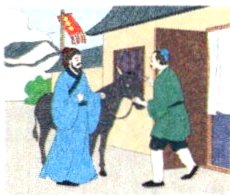 began to look at it carefully.
The old man: Don't say anything about the donkey before I sell it. Then I will
give you some meat.
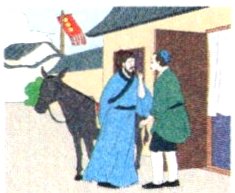 The young man: All right.
The old man: How did you know the leg of the donkey was bad?
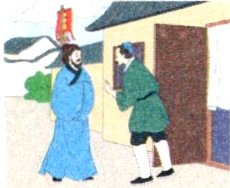 The young man: I didn't know it.
The old man: Then, why did you look at the donkey carefully?
The young man: I have never seen a donkey, so I want to know what it looks
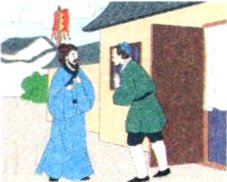 like.
like.
任务一:根据故事内容,判断正(T)误(F)。
( ) 1. The young man went to the old man and wanted to buy the donkey.
( ) 2. The young man got some meat from the old man.
( ) 3. The leg of the donkey was bad.
任务二:根据故事内容,选择正确的答案。
( ) 1. The underlined word “selling” means “________” in Chinese.
A. 买 B. 卖 C. 骑
( ) 2. What did the old man want to sell?
A. A rabbit. B. Some vegetables. C. A donkey.
An old man was selling a donkey. A young man came to the donkey and
began to look at it carefully.The old man: Don't say anything about the donkey before I sell it. Then I will
give you some meat.
The young man: All right.The old man: How did you know the leg of the donkey was bad?
The young man: I didn't know it.The old man: Then, why did you look at the donkey carefully?
The young man: I have never seen a donkey, so I want to know what it looks
like.任务一:根据故事内容,判断正(T)误(F)。
( ) 1. The young man went to the old man and wanted to buy the donkey.
( ) 2. The young man got some meat from the old man.
( ) 3. The leg of the donkey was bad.
任务二:根据故事内容,选择正确的答案。
( ) 1. The underlined word “selling” means “________” in Chinese.
A. 买 B. 卖 C. 骑
( ) 2. What did the old man want to sell?
A. A rabbit. B. Some vegetables. C. A donkey.
答案:
任务一:1. F 2. T 3. T
任务二:1. B 2. C
任务二:1. B 2. C
查看更多完整答案,请扫码查看

