

 搜索
搜索
第73页
- 第1页
- 第2页
- 第3页
- 第4页
- 第5页
- 第6页
- 第7页
- 第8页
- 第9页
- 第10页
- 第11页
- 第12页
- 第13页
- 第14页
- 第15页
- 第16页
- 第17页
- 第18页
- 第19页
- 第20页
- 第21页
- 第22页
- 第23页
- 第24页
- 第25页
- 第26页
- 第27页
- 第28页
- 第29页
- 第30页
- 第31页
- 第32页
- 第33页
- 第34页
- 第35页
- 第36页
- 第37页
- 第38页
- 第39页
- 第40页
- 第41页
- 第42页
- 第43页
- 第44页
- 第45页
- 第46页
- 第47页
- 第48页
- 第49页
- 第50页
- 第51页
- 第52页
- 第53页
- 第54页
- 第55页
- 第56页
- 第57页
- 第58页
- 第59页
- 第60页
- 第61页
- 第62页
- 第63页
- 第64页
- 第65页
- 第66页
- 第67页
- 第68页
- 第69页
- 第70页
- 第71页
- 第72页
- 第73页
- 第74页
- 第75页
- 第76页
- 第77页
- 第78页
- 第79页
- 第80页
- 第81页
- 第82页
- 第83页
- 第84页
- 第85页
- 第86页
- 第87页
- 第88页
- 第89页
- 第90页
- 第91页
- 第92页
Ⅰ. 根据句意及所给提示完成句子
1. Beijing is a place with many
2. My aunt is a
3. The No. 5 bus
4. Linda has been away from her house for two months. Her mother m
5. China has a long h
1. Beijing is a place with many
ancient
(古老的) buildings.2. My aunt is a
clerk
(职员) in this bank.3. The No. 5 bus
passes
(经过) the park.4. Linda has been away from her house for two months. Her mother m
isses
her very much.5. China has a long h
istory
of more than 5,000 years.
答案:
Ⅰ.1.ancient 2.clerk 3.passes 4.misses 5.history
Ⅱ. 根据句意填入一个适当的单词
6. Miss Li is a guide
7. It's too far
8. Walk across the street and the bookstore is
9. Li Ming is looking
10. Go
6. Miss Li is a guide
at
the Natural History Museum.7. It's too far
from
our home to the supermarket. Let's go there by bus.8. Walk across the street and the bookstore is
on
your right.9. Li Ming is looking
for
the gym. He wants to play football there.10. Go
down/along
the street and turn right at
the third turning.
答案:
Ⅱ.6.at 7.from 8.on 9.for 10.down/along;at
Ⅲ. 根据汉语意思完成句子
11. 李明,我们先去哪里?
Li Ming, where are we
12. 吉娜和她的同班同学在博物馆。
Gina and her classmates are
13. 走下楼梯,经过大厅。
14. 我等不及要再见到你了!
I
15. 我们正在寻找一家书店。
We
11. 李明,我们先去哪里?
Li Ming, where are we
going
first
?12. 吉娜和她的同班同学在博物馆。
Gina and her classmates are
at
the
museum
.13. 走下楼梯,经过大厅。
Go
down
the stairs and pass
the hall.14. 我等不及要再见到你了!
I
can't
wait
to
see you again!15. 我们正在寻找一家书店。
We
are
looking
for
a bookstore.
答案:
Ⅲ.11.going first 12.at the museum 13.Go down;pass 14.can't wait to 15.are looking for
Ⅳ. 阅读理解
① Liaoning Provincial Museum is a fun place for many students. They love to go there. Why? Let's find out.
② Many schools have their classes at the museum. “About 100 schools cooperate with us. They bring their students to our museum. Reciting (背诵) poems is often difficult and boring for students. To make it easy and fun, we give talks about poems and make shows to tell the stories of famous poets like Li Bai, Du Fu, and Lu You. We also teach students to write calligraphy (书法),” says Dong, a man from the museum.
③ Interestingly, the museum makes plays about those poets and asks students to act in them. Students recite poems in the plays and get to experience the lives of the poets.
④ The museum also cares about village students. It gives shows about the poets on a bus. The bus is like a moving museum and it travels to villages far from the museum.
⑤ The museum brings ▲ to students' lives and makes it so fun. That's why students have a great love for the museum. So do you want to visit it? You will love it after visiting it.
(
A. Have fun.
B. Work together.
C. Make friends.
D. Take a walk.
(
① Give talks about poems.
② Watch shows about poets.
③ Learn to write calligraphy.
④ Experience poets' lives in plays.
A. ①②③
B. ①②④
C. ①③④
D. ②③④
(
A. The museum is in the village.
B. The museum looks like a bus.
C. The museum gives love to village students.
D. The museum makes shows about village students.
(
A. history
B. music
C. English
D. maths
(
① Liaoning Provincial Museum is a fun place for many students. They love to go there. Why? Let's find out.
② Many schools have their classes at the museum. “About 100 schools cooperate with us. They bring their students to our museum. Reciting (背诵) poems is often difficult and boring for students. To make it easy and fun, we give talks about poems and make shows to tell the stories of famous poets like Li Bai, Du Fu, and Lu You. We also teach students to write calligraphy (书法),” says Dong, a man from the museum.
③ Interestingly, the museum makes plays about those poets and asks students to act in them. Students recite poems in the plays and get to experience the lives of the poets.
④ The museum also cares about village students. It gives shows about the poets on a bus. The bus is like a moving museum and it travels to villages far from the museum.
⑤ The museum brings ▲ to students' lives and makes it so fun. That's why students have a great love for the museum. So do you want to visit it? You will love it after visiting it.
(
B
)16. What does the underlined word “co - operate” in Paragraph ② mean in English?A. Have fun.
B. Work together.
C. Make friends.
D. Take a walk.
(
D
)17. What can students do in the museum?① Give talks about poems.
② Watch shows about poets.
③ Learn to write calligraphy.
④ Experience poets' lives in plays.
A. ①②③
B. ①②④
C. ①③④
D. ②③④
(
C
)18. What can we learn from Paragraph ④?A. The museum is in the village.
B. The museum looks like a bus.
C. The museum gives love to village students.
D. The museum makes shows about village students.
(
A
)19. The best word for “▲” in the last paragraph is ______.A. history
B. music
C. English
D. maths
(
B
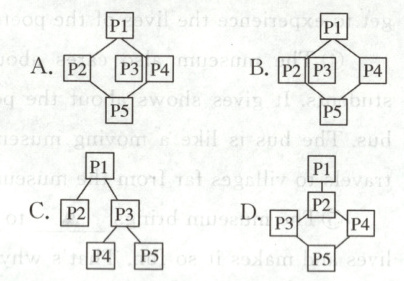
)20. Which shows the structure of the passage?
答案:
Ⅳ.16-20 BDCAB
查看更多完整答案,请扫码查看

