

 搜索
搜索
第68页
- 第1页
- 第2页
- 第3页
- 第4页
- 第5页
- 第6页
- 第7页
- 第8页
- 第9页
- 第10页
- 第11页
- 第12页
- 第13页
- 第14页
- 第15页
- 第16页
- 第17页
- 第18页
- 第19页
- 第20页
- 第21页
- 第22页
- 第23页
- 第24页
- 第25页
- 第26页
- 第27页
- 第28页
- 第29页
- 第30页
- 第31页
- 第32页
- 第33页
- 第34页
- 第35页
- 第36页
- 第37页
- 第38页
- 第39页
- 第40页
- 第41页
- 第42页
- 第43页
- 第44页
- 第45页
- 第46页
- 第47页
- 第48页
- 第49页
- 第50页
- 第51页
- 第52页
- 第53页
- 第54页
- 第55页
- 第56页
- 第57页
- 第58页
- 第59页
- 第60页
- 第61页
- 第62页
- 第63页
- 第64页
- 第65页
- 第66页
- 第67页
- 第68页
- 第69页
- 第70页
- 第71页
- 第72页
- 第73页
- 第74页
- 第75页
- 第76页
- 第77页
- 第78页
- 第79页
- 第80页
- 第81页
- 第82页
- 第83页
- 第84页
- 第85页
- 第86页
- 第87页
- 第88页
- 第89页
- 第90页
- 第91页
- 第92页
- 第93页
- 第94页
- 第95页
- 第96页
- 第97页
- 第98页
- 第99页
- 第100页
- 第101页
- 第102页
- 第103页
- 第104页
- 第105页
- 第106页
- 第107页
- 第108页
- 第109页
- 第110页
- 第111页
- 第112页
- 第113页
- 第114页
- 第115页
- 第116页
- 第117页
- 第118页
- 第119页
- 第120页
- 第121页
- 第122页
- 第123页
- 第124页
- 第125页
- 第126页
- 第127页
- 第128页
D
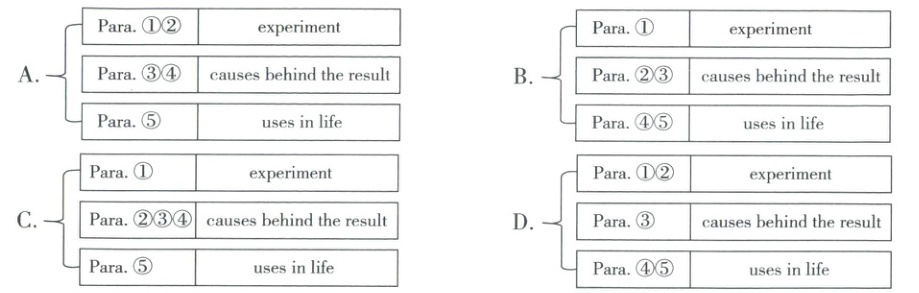
①Take a look at the two shapes in the picture. Which one do you think is "kiki" and which one is "bouba"? This is part of a famous bouba-kiki experiment done in both America and India.
②In the experiment, people were shown two drawings. One had a rounded shape, and the other had a star-like shape. People had to name each of them with "bouba" or "kiki". Both of these words were not real words in any language and had no meaning. However, 95% of people decided the rounded one was "bouba", and the star-like one was "kiki".
③The experiment shows our brains seem to connect sounds with shapes. The researchers believe the results have something to do with the mouth shapes we make when we say these words. Pronouncing "bouba" requires the mouth to make a rounded shape. Other examples of "rounded" sounds are oo in "room" and o in "wrote". An unrounded mouth shape is needed to make the sound of "kiki". "Unrounded" sounds require the lips (嘴唇) to be spread apart, like ee in "peek" or a in "had".
④Another explanation is that letters such as k or t are thought to have unrounded sounds because of their sharp (尖锐的) shapes. Letters like b or g have rounded shapes, so they are considered to have rounded and soft sounds.
⑤Understanding the bouba-kiki effect can lead to its possible use in fields like branding (品牌) and communication. For example, if a toy brand wants to show its softness and friendliness, it may follow the "bouba" effect and choose rounded shapes for the logo and rounded sounds for product names. Similarly, a technology company may turn to the "kiki" effect to show it's sharp and powerful. So next time you want to design a logo for a school event or name a product, consider whether it feels more like "bouba" or "kiki"!
27. How does the writer begin the text?
A. By listing numbers.
B. By telling a joke.
C. By giving examples.
D. By asking a question.
28. According to the text, what can you learn about the bouba-kiki experiment?
A. It was done in both America and England.
B. It shows connections between shapes and sounds.
C. "Bouba" and "kiki" come from Indian languages.
D. Most people connect "bouba" with star-like things.
29. Which brand best shows the "kiki" effect?
A. Loops.
B. Wubbo.
C. Teeki.
D. Bugaloo.
30. What is the correct structure of the text?
①Take a look at the two shapes in the picture. Which one do you think is "kiki" and which one is "bouba"? This is part of a famous bouba-kiki experiment done in both America
and India.②In the experiment, people were shown two drawings. One had a rounded shape, and the other had a star-like shape. People had to name each of them with "bouba" or "kiki". Both of these words were not real words in any language and had no meaning. However, 95% of people decided the rounded one was "bouba", and the star-like one was "kiki".
③The experiment shows our brains seem to connect sounds with shapes. The researchers believe the results have something to do with the mouth shapes we make when we say these words. Pronouncing "bouba" requires the mouth to make a rounded shape. Other examples of "rounded" sounds are oo in "room" and o in "wrote". An unrounded mouth shape is needed to make the sound of "kiki". "Unrounded" sounds require the lips (嘴唇) to be spread apart, like ee in "peek" or a in "had".
④Another explanation is that letters such as k or t are thought to have unrounded sounds because of their sharp (尖锐的) shapes. Letters like b or g have rounded shapes, so they are considered to have rounded and soft sounds.
⑤Understanding the bouba-kiki effect can lead to its possible use in fields like branding (品牌) and communication. For example, if a toy brand wants to show its softness and friendliness, it may follow the "bouba" effect and choose rounded shapes for the logo and rounded sounds for product names. Similarly, a technology company may turn to the "kiki" effect to show it's sharp and powerful. So next time you want to design a logo for a school event or name a product, consider whether it feels more like "bouba" or "kiki"!
27. How does the writer begin the text?
A. By listing numbers.
B. By telling a joke.
C. By giving examples.
D. By asking a question.
28. According to the text, what can you learn about the bouba-kiki experiment?
A. It was done in both America and England.
B. It shows connections between shapes and sounds.
C. "Bouba" and "kiki" come from Indian languages.
D. Most people connect "bouba" with star-like things.
29. Which brand best shows the "kiki" effect?
A. Loops.
B. Wubbo.
C. Teeki.
D. Bugaloo.
30. What is the correct structure of the text?
答案:
27 D 28 B 29 C 30 A
查看更多完整答案,请扫码查看

