

 搜索
搜索
第40页
- 第1页
- 第2页
- 第3页
- 第4页
- 第5页
- 第6页
- 第7页
- 第8页
- 第9页
- 第10页
- 第11页
- 第12页
- 第13页
- 第14页
- 第15页
- 第16页
- 第17页
- 第18页
- 第19页
- 第20页
- 第21页
- 第22页
- 第23页
- 第24页
- 第25页
- 第26页
- 第27页
- 第28页
- 第29页
- 第30页
- 第31页
- 第32页
- 第33页
- 第34页
- 第35页
- 第36页
- 第37页
- 第38页
- 第39页
- 第40页
- 第41页
- 第42页
- 第43页
- 第44页
- 第45页
- 第46页
- 第47页
- 第48页
- 第49页
- 第50页
- 第51页
- 第52页
- 第53页
- 第54页
- 第55页
- 第56页
- 第57页
- 第58页
- 第59页
- 第60页
- 第61页
- 第62页
- 第63页
- 第64页
- 第65页
- 第66页
- 第67页
- 第68页
- 第69页
- 第70页
- 第71页
- 第72页
- 第73页
- 第74页
- 第75页
- 第76页
- 第77页
- 第78页
- 第79页
- 第80页
- 第81页
- 第82页
Ⅲ.Read and complete. Amy对中国春节的美食很感兴趣,阅读Amy关于春节美食的分享,完成下列任务。
主题:人与自我——历史、社会与文化——文化体验 难易度:★★★★☆ 建议用时:9分钟
[中华优秀传统文化:春节美食]Chinese New Year is a happy time for Chinese people.Many families usually eat traditional food together.
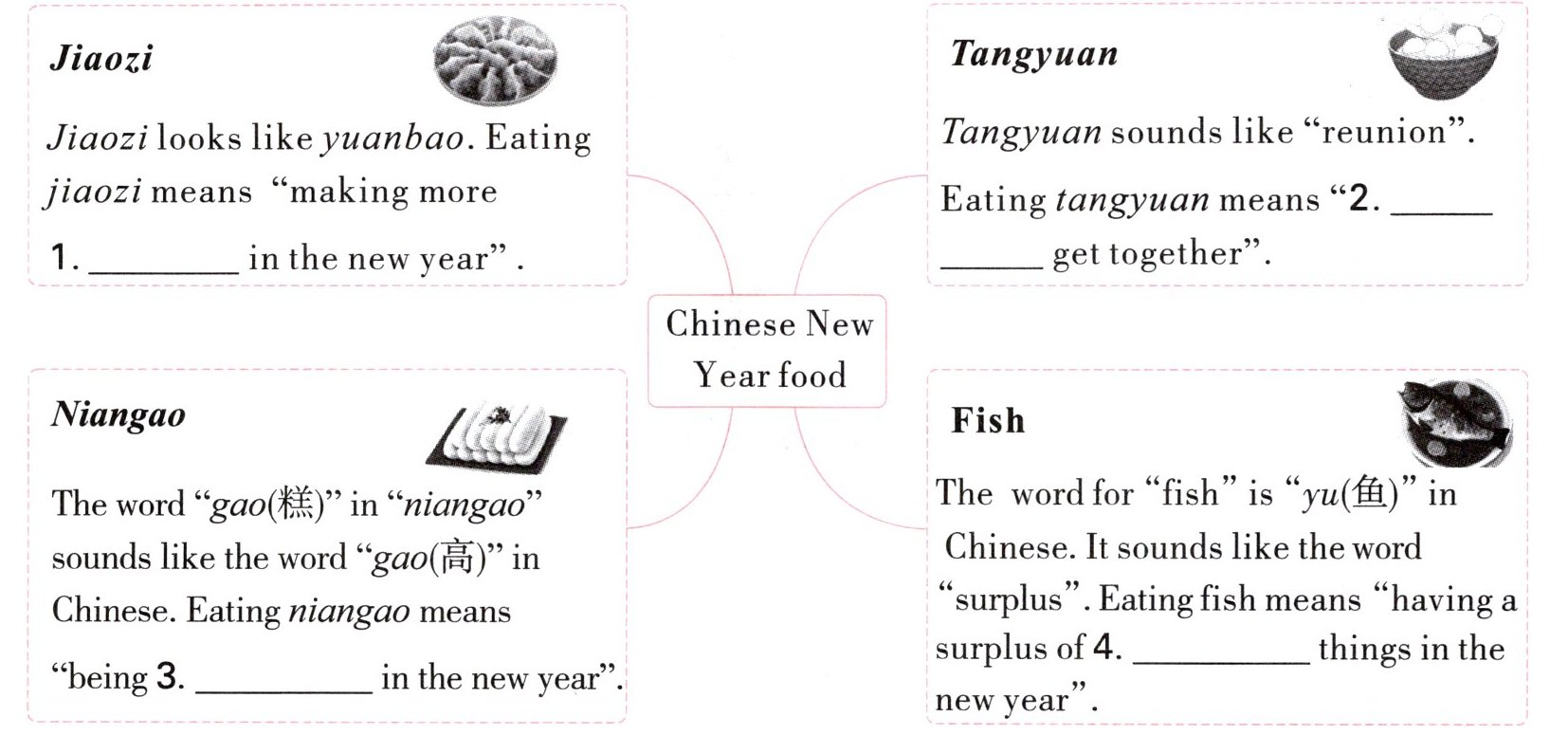
Jiaozi
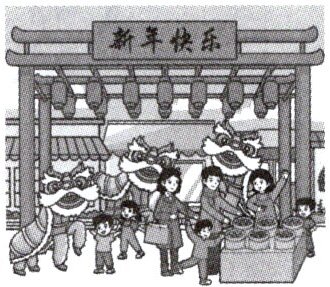
Jiaozi is more than 1,800 years old. It looks like yuanbao. Eating it means “making more money in the new year”.
Tangyuan
Tangyuan is sweet. It sounds like “reunion(团圆)” in Chinese. So eating tangyuan means “family get together”.
Niangao
Niangao is sweet, too. The word “gao(糕)” in “niangao” sounds like the word “gao(高)” in Chinese. So eating niangao means “being better in the new year”.
Fish
Many people like to eat fish. The word for “fish” is “yu(鱼)” in Chinese. It sounds like “surplus(盈余)”. So eating it means “having a surplus of good things in the new year”.
任务一:完成文章结构图,每空一词。
任务二:阅读短文,回答下列问题。
1. How old is jiaozi?______
2. Which foods are sweet according to the text?______
3. 新考法 开放性设问 What do you like to eat during Chinese New Year? Why?______
小·初衔接——初中词汇早积累
根据上面语篇的语境及下面的例句猜测以下词汇的意思并写在横线。
1. different /'dɪfrənt/ adj. ____
例:Lily and Zhang Ming come from different countries.
2. traditional /trə'dɪʃən(ə)l/ adj. ____
例:Many pupils in China like the traditional book Journey to the West.
任务一:1.
任务二:1.
2.
3.
小·初衔接——初中词汇早积累
1.
2.
主题:人与自我——历史、社会与文化——文化体验 难易度:★★★★☆ 建议用时:9分钟
[中华优秀传统文化:春节美食]Chinese New Year is a happy time for Chinese people.Many families usually eat traditional food together.
Jiaozi
Jiaozi is more than 1,800 years old. It looks like yuanbao. Eating it means “making more money in the new year”.
Tangyuan
Tangyuan is sweet. It sounds like “reunion(团圆)” in Chinese. So eating tangyuan means “family get together”.
Niangao
Niangao is sweet, too. The word “gao(糕)” in “niangao” sounds like the word “gao(高)” in Chinese. So eating niangao means “being better in the new year”.
Fish
Many people like to eat fish. The word for “fish” is “yu(鱼)” in Chinese. It sounds like “surplus(盈余)”. So eating it means “having a surplus of good things in the new year”.
任务一:完成文章结构图,每空一词。
任务二:阅读短文,回答下列问题。
1. How old is jiaozi?______
2. Which foods are sweet according to the text?______
3. 新考法 开放性设问 What do you like to eat during Chinese New Year? Why?______
小·初衔接——初中词汇早积累
根据上面语篇的语境及下面的例句猜测以下词汇的意思并写在横线。
1. different /'dɪfrənt/ adj. ____
例:Lily and Zhang Ming come from different countries.
2. traditional /trə'dɪʃən(ə)l/ adj. ____
例:Many pupils in China like the traditional book Journey to the West.
任务一:1.
money
2. family
3. better
4. good
任务二:1.
More than 1,800 years old.
2.
Tangyuan and niangao.
3.
I like to eat jiaozi. Because I think it is very delicious./I like to eat niangao. Because the word "gao" in "niangao" sounds like the word "gao" in Chinese. I hope I can do better in my studies in the new year. /...
小·初衔接——初中词汇早积累
1.
不同的
2.
传统的
答案:
任务一:1. money 2. family 3. better 4. good 任务二:1. More than 1,800 years old. 2. Tangyuan and niangao. 3. I like to eat jiaozi. Because I think it is very delicious./I like to eat niangao. Because the word "gao" in "niangao" sounds like the word "gao" in Chinese. I hope I can do better in my studies in the new year. /...
小·初衔接——初中词汇早积累 1. 不同的 2. 传统的
小·初衔接——初中词汇早积累 1. 不同的 2. 传统的
查看更多完整答案,请扫码查看

