

 搜索
搜索
第74页
- 第1页
- 第2页
- 第3页
- 第4页
- 第5页
- 第6页
- 第7页
- 第8页
- 第9页
- 第10页
- 第11页
- 第12页
- 第13页
- 第14页
- 第15页
- 第16页
- 第17页
- 第18页
- 第19页
- 第20页
- 第21页
- 第22页
- 第23页
- 第24页
- 第25页
- 第26页
- 第27页
- 第28页
- 第29页
- 第30页
- 第31页
- 第32页
- 第33页
- 第34页
- 第35页
- 第36页
- 第37页
- 第38页
- 第39页
- 第40页
- 第41页
- 第42页
- 第43页
- 第44页
- 第45页
- 第46页
- 第47页
- 第48页
- 第49页
- 第50页
- 第51页
- 第52页
- 第53页
- 第54页
- 第55页
- 第56页
- 第57页
- 第58页
- 第59页
- 第60页
- 第61页
- 第62页
- 第63页
- 第64页
- 第65页
- 第66页
- 第67页
- 第68页
- 第69页
- 第70页
- 第71页
- 第72页
- 第73页
- 第74页
- 第75页
- 第76页
- 第77页
- 第78页
- 第79页
- 第80页
训练 1 play 的用法
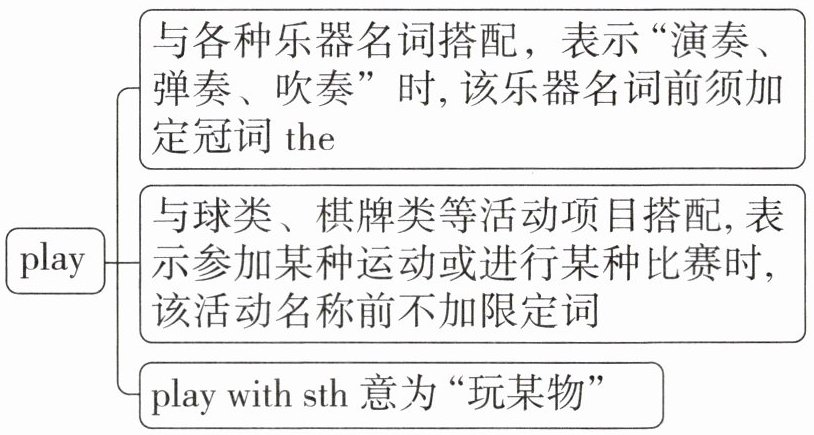
play
与各种乐器名词搭配,表示“演奏、弹奏、吹奏”时,该乐器名词前须加定冠词 the
与球类、棋牌类等活动项目搭配,表示参加某种运动或进行某种比赛时,该活动名称前不加限定词
play with sth 意为“玩某物”
用恰当的冠词或介词填空,不需要的填“/”。
1. Susan can play
2. Linda always plays
3. The boy likes playing
play
与各种乐器名词搭配,表示“演奏、弹奏、吹奏”时,该乐器名词前须加定冠词 the
与球类、棋牌类等活动项目搭配,表示参加某种运动或进行某种比赛时,该活动名称前不加限定词
play with sth 意为“玩某物”
用恰当的冠词或介词填空,不需要的填“/”。
1. Susan can play
the
guitar very well.2. Linda always plays
/
soccer with her good friends after school.3. The boy likes playing
with
his toy bear.
答案:
训练1
1.the 2./ 3.with
1.the 2./ 3.with
(
A.speak
B.say
C.talk
D.tell
B
)1.Tom can some easy words.A.speak
B.say
C.talk
D.tell
答案:
1.B
(
A.speaks
B.says
C.talks
D.tells
C
)2.Jill always to me about her family.A.speaks
B.says
C.talks
D.tells
答案:
2.C
(
A.say
B.tell
C.speak
D.talk
C
)3.Jenny is from the UK but she doesn't English well.A.say
B.tell
C.speak
D.talk
答案:
3.C
(
A.talks
B.speaks
C.says
D.tells
D
)4.My mother always me not to be late for school.A.talks
B.speaks
C.says
D.tells
答案:
4.D
训练 3 find、look、look for 与 discover 的辨析
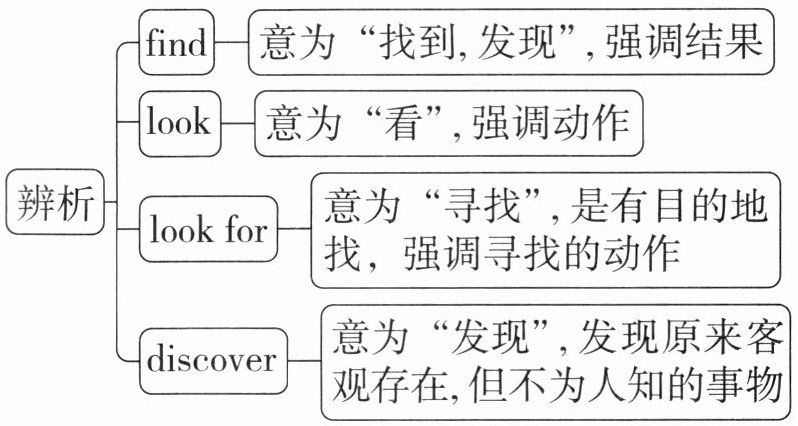
辨析
find:意为“找到,发现”,强调结果
look:意为“看”,强调动作
look for:意为“寻找”,是有目的地找,强调寻找的动作
discover:意为“发现”,发现原来客观存在,但不为人知的事物
根据句意,用 find、look、look for 或 discover 的适当形式填空。
1. I'm
2.
3. Do you know who
辨析
find:意为“找到,发现”,强调结果
look:意为“看”,强调动作
look for:意为“寻找”,是有目的地找,强调寻找的动作
discover:意为“发现”,发现原来客观存在,但不为人知的事物
根据句意,用 find、look、look for 或 discover 的适当形式填空。
1. I'm
looking for
my key, but I can't find
it.2.
Look
! The boy is sleeping.3. Do you know who
discovered
America?
答案:
训练3
1.looking for; find 2.Look 3.discovered
1.looking for; find 2.Look 3.discovered
训练 4 interest、interesting 与 interested 的辨析
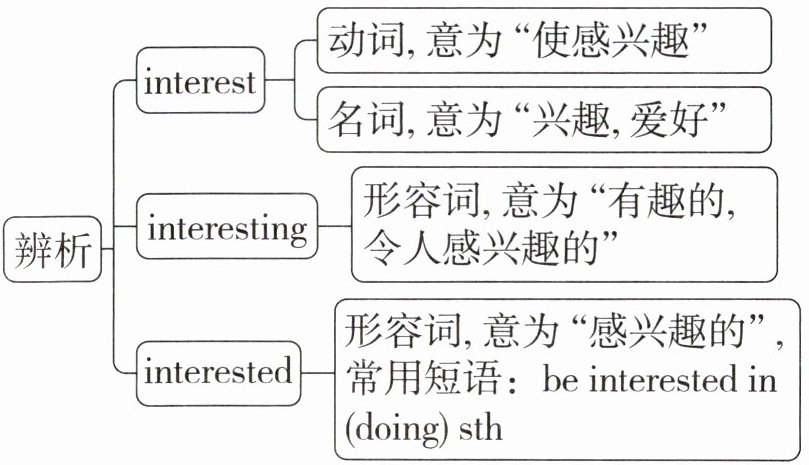
辨析
interest:动词,意为“使感兴趣”;名词,意为“兴趣,爱好”
interesting:形容词,意为“有趣的,令人感兴趣的”
interested:形容词,意为“感兴趣的”,常用短语:be interested in (doing) sth
根据句意,用 interest、interesting 或 interested 填空。
1. I like travelling because I can meet some
2. If you are
3. Jack takes a great
4. The drama club
辨析
interest:动词,意为“使感兴趣”;名词,意为“兴趣,爱好”
interesting:形容词,意为“有趣的,令人感兴趣的”
interested:形容词,意为“感兴趣的”,常用短语:be interested in (doing) sth
根据句意,用 interest、interesting 或 interested 填空。
1. I like travelling because I can meet some
interesting
people and things along the way.2. If you are
interested
in chess, you can join us.3. Jack takes a great
interest
in PE.4. The drama club
interests
Peter greatly.
答案:
训练4
1.interesting 2.interested 3.interest
4.interests
1.interesting 2.interested 3.interest
4.interests
查看更多完整答案,请扫码查看

