

 搜索
搜索
第11页
- 第1页
- 第2页
- 第3页
- 第4页
- 第5页
- 第6页
- 第7页
- 第8页
- 第9页
- 第10页
- 第11页
- 第12页
- 第13页
- 第14页
- 第15页
- 第16页
- 第17页
- 第18页
- 第19页
- 第20页
- 第21页
- 第22页
- 第23页
- 第24页
- 第25页
- 第26页
- 第27页
- 第28页
- 第29页
- 第30页
- 第31页
- 第32页
- 第33页
- 第34页
- 第35页
- 第36页
- 第37页
- 第38页
- 第39页
- 第40页
- 第41页
- 第42页
- 第43页
- 第44页
- 第45页
- 第46页
- 第47页
- 第48页
- 第49页
- 第50页
- 第51页
- 第52页
- 第53页
- 第54页
- 第55页
- 第56页
- 第57页
- 第58页
- 第59页
- 第60页
- 第61页
- 第62页
- 第63页
- 第64页
- 第65页
- 第66页
- 第67页
- 第68页
- 第69页
- 第70页
- 第71页
- 第72页
- 第73页
- 第74页
- 第75页
- 第76页
- 第77页
- 第78页
- 第79页
- 第80页
- 第81页
- 第82页
- 第83页
- 第84页
- 第85页
- 第86页
- 第87页
- 第88页
- 第89页
- 第90页
- 第91页
- 第92页
- 第93页
- 第94页
- 第95页
- 第96页
- 第97页
- 第98页
- 第99页
- 第100页
- 第101页
- 第102页
- 第103页
- 第104页
- 第105页
- 第106页
- 第107页
- 第108页
- 第109页
- 第110页
- 第111页
- 第112页
- 第113页
- 第114页
- 第115页
- 第116页
一、阅读理解
How do we know the time? A clock, a watch or a mobile phone can help us. However, many years ago there were no clocks and knowing the time was not so easy. Over the centuries people have developed different ways of telling the time.
About 5,500 years ago, the Egyptians invented the sun clock. This was a tall stone building. Its shadow (影子) showed the movement of the sun. So people were able to know midday(正午). The Egyptians made a sundial (日暑) about 3,500 years ago. It was smaller than the sun clock and could let people know the time for half a day. On cloudy days or at night it was impossible to tell the time with a sun clock or a sundial. Water clocks were the first clocks not to use the sun. The idea is simple. Water flows (流动) from one bottle to another. When the water reaches a certain level, it shows the hours. The Egyptians used water clocks about 3,400 years ago. These clocks were popular in the Middle East and China. But they failed to make people know the exact time.
In the 13th century, the mechanical clock was invented. This was more exact, but it was expensive to make one. Over the next few centuries, it was developed. For example, springs(发条) were added. This enabled people to get the exact time and allowed clocks to be smaller. In 1927, the first quartz (石英) watch was developed. Clocks became cheaper to make. It's also cheaper for ordinary people to own a clock. People began depending on them more and more to run businesses, markets and so on. More recently, in 1956, came the digital clock. And nowadays satellites send our mobile phones the time to the exact second.
There has been a lot of progress in timekeeping. Clocks are always changing but some things never change. Many of us still have trouble getting out of bed on time and not being late for school or work.
1. According to the passage, we can't use a ____ to tell the time on a rainy day.
A. water clock
B. sun clock
C. digital clock
D. mechanical clock
(
2. What's the probable meaning of the underlined word “ordinary” in the third paragraph?
A. Modern.
B. Special.
C. Wealthy.
D. Common.
(
3. Which of the following is not TRUE according to the passage?
A. A sundial was made by the Egyptians about 3,500 years ago.
B. Water clocks were the first clocks not to use the sun.
C. The mechanical clock was more exact than a sundial.
D. We couldn't usea digital clock until 1927.
(
4. Which of the following shows the structure (结构) of the passage?
(①= Paragraph 1 ②= Paragraph 2...)
A.
B.
C.
D.
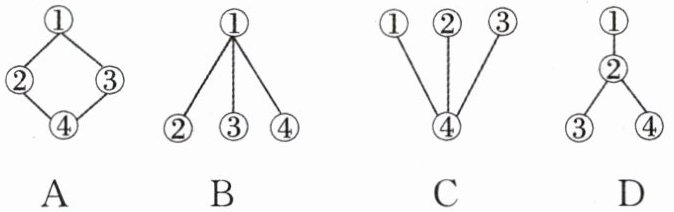
(
5. What does the passage mainly talk about?
A. The importance of time.
B. The development of timekeeping.
C. The inventions of clocks.
D. The history of a digital clock.
(
How do we know the time? A clock, a watch or a mobile phone can help us. However, many years ago there were no clocks and knowing the time was not so easy. Over the centuries people have developed different ways of telling the time.
About 5,500 years ago, the Egyptians invented the sun clock. This was a tall stone building. Its shadow (影子) showed the movement of the sun. So people were able to know midday(正午). The Egyptians made a sundial (日暑) about 3,500 years ago. It was smaller than the sun clock and could let people know the time for half a day. On cloudy days or at night it was impossible to tell the time with a sun clock or a sundial. Water clocks were the first clocks not to use the sun. The idea is simple. Water flows (流动) from one bottle to another. When the water reaches a certain level, it shows the hours. The Egyptians used water clocks about 3,400 years ago. These clocks were popular in the Middle East and China. But they failed to make people know the exact time.
In the 13th century, the mechanical clock was invented. This was more exact, but it was expensive to make one. Over the next few centuries, it was developed. For example, springs(发条) were added. This enabled people to get the exact time and allowed clocks to be smaller. In 1927, the first quartz (石英) watch was developed. Clocks became cheaper to make. It's also cheaper for ordinary people to own a clock. People began depending on them more and more to run businesses, markets and so on. More recently, in 1956, came the digital clock. And nowadays satellites send our mobile phones the time to the exact second.
There has been a lot of progress in timekeeping. Clocks are always changing but some things never change. Many of us still have trouble getting out of bed on time and not being late for school or work.
1. According to the passage, we can't use a ____ to tell the time on a rainy day.
A. water clock
B. sun clock
C. digital clock
D. mechanical clock
(
B
)2. What's the probable meaning of the underlined word “ordinary” in the third paragraph?
A. Modern.
B. Special.
C. Wealthy.
D. Common.
(
D
)3. Which of the following is not TRUE according to the passage?
A. A sundial was made by the Egyptians about 3,500 years ago.
B. Water clocks were the first clocks not to use the sun.
C. The mechanical clock was more exact than a sundial.
D. We couldn't usea digital clock until 1927.
(
D
)4. Which of the following shows the structure (结构) of the passage?
(①= Paragraph 1 ②= Paragraph 2...)
A.
B.
C.
D.
(
A
)5. What does the passage mainly talk about?
A. The importance of time.
B. The development of timekeeping.
C. The inventions of clocks.
D. The history of a digital clock.
(
B
)
答案:
1.B 2.D 3.D 4.A 5.B
查看更多完整答案,请扫码查看

