

 搜索
搜索
2025年星推荐涂教材九年级英语下册人教版
注:目前有些书本章节名称可能整理的还不是很完善,但都是按照顺序排列的,请同学们按照顺序仔细查找。练习册 2025年星推荐涂教材九年级英语下册人教版 答案主要是用来给同学们做完题方便对答案用的,请勿直接抄袭。
第63页
- 第1页
- 第2页
- 第3页
- 第4页
- 第5页
- 第6页
- 第7页
- 第8页
- 第9页
- 第10页
- 第11页
- 第12页
- 第13页
- 第14页
- 第15页
- 第16页
- 第17页
- 第18页
- 第19页
- 第20页
- 第21页
- 第22页
- 第23页
- 第24页
- 第25页
- 第26页
- 第27页
- 第28页
- 第29页
- 第30页
- 第31页
- 第32页
- 第33页
- 第34页
- 第35页
- 第36页
- 第37页
- 第38页
- 第39页
- 第40页
- 第41页
- 第42页
- 第43页
- 第44页
- 第45页
- 第46页
- 第47页
- 第48页
- 第49页
- 第50页
- 第51页
- 第52页
- 第53页
- 第54页
- 第55页
- 第56页
- 第57页
- 第58页
- 第59页
- 第60页
- 第61页
- 第62页
- 第63页
- 第64页
- 第65页
- 第66页
- 第67页
- 第68页
- 第69页
- 第70页
- 第71页
- 第72页
- 第73页
- 第74页
- 第75页
- 第76页
- 第77页
- 第78页
- 第79页
- 第80页
- 第81页
- 第82页
- 第83页
- 第84页
- 第85页
- 第86页
- 第87页
- 第88页
- 第89页
- 第90页
- 第91页
- 第92页
- 第93页
- 第94页
- 第95页
- 第96页
- 第97页
- 第98页
- 第99页
- 第100页
- 第101页
- 第102页
- 第103页
- 第104页
- 第105页
- 第106页
- 第107页
- 第108页
- 第109页
- 第110页
- 第111页
- 第112页
- 第113页
- 第114页
- 第115页
- 第116页
- 第117页
- 第118页
- 第119页
- 第120页
- 第121页
- 第122页
- 第123页
- 第124页
- 第125页
- 第126页
- 第127页
- 第128页
- 第129页
- 第130页
- 第131页
- 第132页
- 第133页
- 第134页
- 第135页
- 第136页
- 第137页
- 第138页
- 第139页
- 第140页
- 第141页
- 第142页
- 第143页
- 第144页
- 第145页
- 第146页
- 第147页
- 第148页
- 第149页
- 第150页
- 第151页
- 第152页
- 第153页
- 第154页
- 第155页
- 第156页
- 第157页
- 第158页
- 第159页
- 第160页
- 第161页
- 第162页
- 第163页
- 第164页
- 第165页
- 第166页
- 第167页
- 第168页
- 第169页
- 第170页
- 第171页
- 第172页
- 第173页
- 第174页
- 第175页
- 第176页
- 第177页
- 第178页
- 第179页
- 第180页
- 第181页
- 第182页
- 第183页
1c Listen again. Match these sentence parts.
______ 1.You’re not supposed to... anyone常用于否定句和疑问句,anyone用于肯定句时意为“任何人”。
______ 2.It’s impolite to... someone常用于肯定句,作主语时谓语动词用单数。
______ 3.You shouldn’t...
a.stick your chopsticks into your food.
b.point at anyone with your chopsticks.
c.start eating first if there are older people at the table②.
[教材问题答案] 1.c 2.a 3.b
______ 1.You’re not supposed to... anyone常用于否定句和疑问句,anyone用于肯定句时意为“任何人”。
______ 2.It’s impolite to... someone常用于肯定句,作主语时谓语动词用单数。
______ 3.You shouldn’t...
a.stick your chopsticks into your food.
b.point at anyone with your chopsticks.
c.start eating first if there are older people at the table②.
[教材问题答案] 1.c 2.a 3.b
答案:
1.c 2.a 3.b
1d Talk about other table manners in your country.
A:We’re supposed to...
B:Yes, and it’s impolite to...
A:We’re supposed to...
B:Yes, and it’s impolite to...
答案:
2a What do you know about customs in foreign countries? What do you think is the biggest challenge when visiting a foreign country?
e.g. My cousin went to America, and she said that learning basic table manners was her biggest challenge. She never knew what she was supposed to do at the dinner table. that引导的宾语从句,主句是一般过去时,从句也用过去时态。
e.g. My cousin went to America, and she said that learning basic table manners was her biggest challenge. She never knew what she was supposed to do at the dinner table. that引导的宾语从句,主句是一般过去时,从句也用过去时态。
答案:
2b Read the letter and answer the questions.
1.Why is Lin Yue in France?
2.Does she enjoy staying with her host family? How do you know? host名词,主人,主持人 host country主办国 host city主办城市 host computer主机 How...feel about...? =How...like...? =What...think of...? ……认为……怎么样? ……对……感觉怎么样?
3.How does she feel about making mistakes when she speaks French?
4. What is the biggest challenge she is facing?
REVIEWING
Taking notes or summarizing the main ideas can help you move language from your short - term to long - term memory.
复习
做笔记或归纳中心思想可以帮助你把语言从短时记忆转变为长期记忆。
Dear Laura, thanks for...为……而感谢 thanks to...多亏,由于
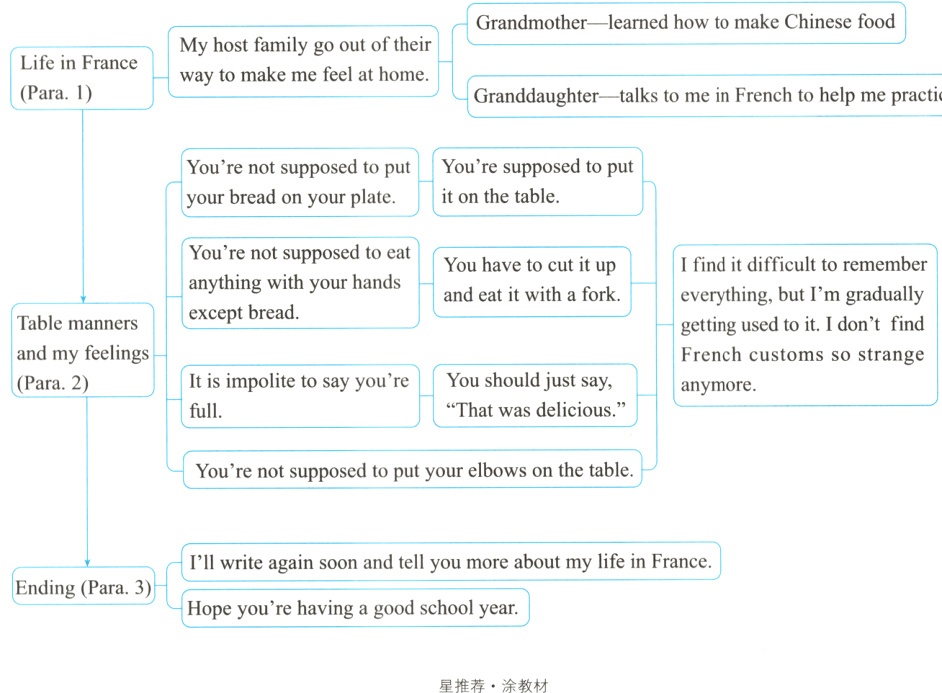
Thanks for your message. Yes, I’m having a great time on my student exchange program in France.③ I was a bit nervous before I arrived here, but there was no reason to be.④ My host family is really nice. They go out of their way to make me feel at home.⑤ The grandmother knows that I miss Chinese food a lot. So she actually learned how to make Chinese food!⑥ She also has a teenage granddaughter about my age who is really kind.⑦ She always talks to me in French to help me practice.⑧ You wouldn’t believe how quickly my French has improved because of that.⑨ I’m very comfortable speaking French now.⑩ Although I still make lots of mistakes, it doesn’t worry me as it used to. be comfortable doing sth.做某事很自如
谢谢你的来信。是的,我在法国的交换生生活过得很愉快。我来这里之前有点儿紧张,但没理由那样的。我的寄宿家庭非常友好。他们尽力使我感到像在家一样。(寄宿家庭的)奶奶知道我非常想念中国食物。她竟然因此去学习如何做中餐! 她还有一个与我年龄差不多的十几岁的(外)孙女,她非常友好。她总是用法语和我交谈来帮助我练习。你简直无法相信我的法语因此提高得有多快。现在我讲法语已经轻松自如了。尽管我仍然犯许多错误,但是它不像以前那样困扰我了。
My biggest challenge is learning how to behave at the dinner table.⑪ As you can imagine, things are very different from the way they are at home.⑫ 反义词组:be the same as...与……相同 省略关系词的定语从句,修饰way. 注意比较对象要一致 be used to+名词/代词/doing 习惯/适应(做)…… except介词,除……之外 except for除了……
For example, you’re not supposed to put your bread on your plate. You’re supposed to put it on the table! I thought that was pretty strange at first, but now I’m used to it. Another example is that you’re not supposed to eat anything with your hands except bread, not even fruit.⑬ You have to cut it up and eat it with a fork. Another thing is that it is impolite to say you’re full. If you don’t want any more food, you should just say, “That was delicious.” Also, you’re not supposed to put your elbows on the table. I have to say that I find it difficult to remember everything, but I’m gradually getting used to it.⑭ gradually副词,逐渐地
我最大的挑战是学习如何在餐桌上举止得体。正如你想象的那样,(在这里)做事情的方式和在国内时截然不同。例如,你不应该把面包放在你的盘子里。你应该把它放在桌子上! 起初我认为那样做非常奇怪,但现在我习惯了。另一个例子是除了面包外你不应该用手拿任何东西吃,即使是水果也不行。你必须把它切开,用叉子吃。还有一件事情是你说吃饱了是不礼貌的。如果你不想再要食物了,你只要说:“这很美味。”而且你不应该把胳膊肘放在桌子上。不得不说我发现记住所有的事情很困难,但是我正在逐渐习惯。我发现法国的习俗不再那么奇怪了。
I’ll write again soon and tell you more about my life in France. Hope you’re having a good school year. hope+从句 希望…… hope to do sth.希望做某事 注意:hope不能跟宾语补足语,可以用wish sb. to do sth.表达“希望某人做某事”。
Yours,
你的,
Lin Yue
林悦
课文 结构框架
[教材问题答案] 1.Because she is on her student exchange program in France. 2.Yes, she does. This can be seen in the way she talks about her host family:that they are nice and they go out of their way to make her feel at home;that the grandmother makes Chinese food for her;that the granddaughter is kind and talks to her in French to help her practice. 3.It doesn’t worry her as it used to. 4.Her biggest challenge is learning how to behave at the dinner table.
1.Why is Lin Yue in France?
2.Does she enjoy staying with her host family? How do you know? host名词,主人,主持人 host country主办国 host city主办城市 host computer主机 How...feel about...? =How...like...? =What...think of...? ……认为……怎么样? ……对……感觉怎么样?
3.How does she feel about making mistakes when she speaks French?
4. What is the biggest challenge she is facing?
REVIEWING
Taking notes or summarizing the main ideas can help you move language from your short - term to long - term memory.
复习
做笔记或归纳中心思想可以帮助你把语言从短时记忆转变为长期记忆。
Dear Laura, thanks for...为……而感谢 thanks to...多亏,由于
Thanks for your message. Yes, I’m having a great time on my student exchange program in France.③ I was a bit nervous before I arrived here, but there was no reason to be.④ My host family is really nice. They go out of their way to make me feel at home.⑤ The grandmother knows that I miss Chinese food a lot. So she actually learned how to make Chinese food!⑥ She also has a teenage granddaughter about my age who is really kind.⑦ She always talks to me in French to help me practice.⑧ You wouldn’t believe how quickly my French has improved because of that.⑨ I’m very comfortable speaking French now.⑩ Although I still make lots of mistakes, it doesn’t worry me as it used to. be comfortable doing sth.做某事很自如
谢谢你的来信。是的,我在法国的交换生生活过得很愉快。我来这里之前有点儿紧张,但没理由那样的。我的寄宿家庭非常友好。他们尽力使我感到像在家一样。(寄宿家庭的)奶奶知道我非常想念中国食物。她竟然因此去学习如何做中餐! 她还有一个与我年龄差不多的十几岁的(外)孙女,她非常友好。她总是用法语和我交谈来帮助我练习。你简直无法相信我的法语因此提高得有多快。现在我讲法语已经轻松自如了。尽管我仍然犯许多错误,但是它不像以前那样困扰我了。
My biggest challenge is learning how to behave at the dinner table.⑪ As you can imagine, things are very different from the way they are at home.⑫ 反义词组:be the same as...与……相同 省略关系词的定语从句,修饰way. 注意比较对象要一致 be used to+名词/代词/doing 习惯/适应(做)…… except介词,除……之外 except for除了……
For example, you’re not supposed to put your bread on your plate. You’re supposed to put it on the table! I thought that was pretty strange at first, but now I’m used to it. Another example is that you’re not supposed to eat anything with your hands except bread, not even fruit.⑬ You have to cut it up and eat it with a fork. Another thing is that it is impolite to say you’re full. If you don’t want any more food, you should just say, “That was delicious.” Also, you’re not supposed to put your elbows on the table. I have to say that I find it difficult to remember everything, but I’m gradually getting used to it.⑭ gradually副词,逐渐地
我最大的挑战是学习如何在餐桌上举止得体。正如你想象的那样,(在这里)做事情的方式和在国内时截然不同。例如,你不应该把面包放在你的盘子里。你应该把它放在桌子上! 起初我认为那样做非常奇怪,但现在我习惯了。另一个例子是除了面包外你不应该用手拿任何东西吃,即使是水果也不行。你必须把它切开,用叉子吃。还有一件事情是你说吃饱了是不礼貌的。如果你不想再要食物了,你只要说:“这很美味。”而且你不应该把胳膊肘放在桌子上。不得不说我发现记住所有的事情很困难,但是我正在逐渐习惯。我发现法国的习俗不再那么奇怪了。
I’ll write again soon and tell you more about my life in France. Hope you’re having a good school year. hope+从句 希望…… hope to do sth.希望做某事 注意:hope不能跟宾语补足语,可以用wish sb. to do sth.表达“希望某人做某事”。
Yours,
你的,
Lin Yue
林悦
课文 结构框架
[教材问题答案] 1.Because she is on her student exchange program in France. 2.Yes, she does. This can be seen in the way she talks about her host family:that they are nice and they go out of their way to make her feel at home;that the grandmother makes Chinese food for her;that the granddaughter is kind and talks to her in French to help her practice. 3.It doesn’t worry her as it used to. 4.Her biggest challenge is learning how to behave at the dinner table.
答案:
1.Because she is on her student exchange program in France. 2.Yes, she does. This can be seen in the way she talks about her host family:that they are nice and they go out of their way to make her feel at home;that the grandmother makes Chinese food for her;that the granddaughter is kind and talks to her in French to help her practice. 3.It doesn’t worry her as it used to. 4.Her biggest challenge is learning how to behave at the dinner table.
2c Read the sentences and replace the underlined words with the phrases in the box. replace取代,替换 replace...with... 用……替换…… be replaced by...被……替换,被……取代
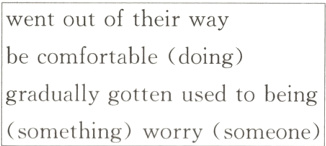
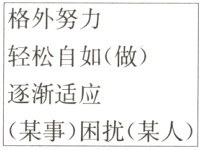
went out of their way
be comfortable (doing)
gradually gotten used to being
(something) worry (someone)
1.Making mistakes in French used to make Lin Yue nervous.
2.It was quite hard for her to feel good about speaking French. feel good about doing sth.轻松自如地做某事
3.The host family tried very hard to help Lin Yue.
4.Lin Yue has slowly learned how to be like her French friends.
[教材问题答案] 1.(something) worry (someone) 2.be comfortable (doing) 3.went out of their way 4.gradually gotten used to being
went out of their way
be comfortable (doing)
gradually gotten used to being
(something) worry (someone)
1.Making mistakes in French used to make Lin Yue nervous.
2.It was quite hard for her to feel good about speaking French. feel good about doing sth.轻松自如地做某事
3.The host family tried very hard to help Lin Yue.
4.Lin Yue has slowly learned how to be like her French friends.
[教材问题答案] 1.(something) worry (someone) 2.be comfortable (doing) 3.went out of their way 4.gradually gotten used to being
答案:
1.(something) worry (someone) 2.be comfortable (doing) 3.went out of their way 4.gradually gotten used to being
2d Review the passage and make notes about French customs in the chart.
Dos Don’ts
You’re expected to put your bread on the table. You’re not supposed to put your bread on your plate.
可以做的事 不可以做的事
你应该把你的面包放在桌子上。 你不应该把你的面包放在你的盘子里。
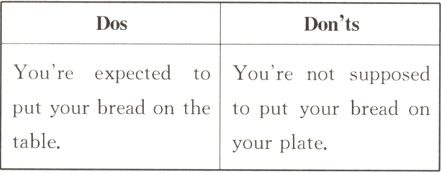
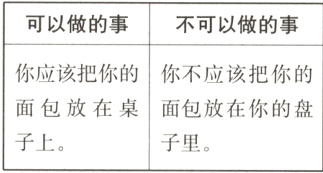
[教材问题答案] Dos:You’re expected to cut up your fruit and eat it with a fork. You’re expected to say, “That was delicious” if you don’t want any more food. Don’ts:You’re not supposed to eat anything with your hands except bread. You’re not supposed to say you’re full. You’re not supposed to put your elbows on the table.
Dos Don’ts
You’re expected to put your bread on the table. You’re not supposed to put your bread on your plate.
可以做的事 不可以做的事
你应该把你的面包放在桌子上。 你不应该把你的面包放在你的盘子里。
[教材问题答案] Dos:You’re expected to cut up your fruit and eat it with a fork. You’re expected to say, “That was delicious” if you don’t want any more food. Don’ts:You’re not supposed to eat anything with your hands except bread. You’re not supposed to say you’re full. You’re not supposed to put your elbows on the table.
答案:
Dos:You’re expected to cut up your fruit and eat it with a fork. You’re expected to say, “That was delicious” if you don’t want any more food. Don’ts:You’re not supposed to eat anything with your hands except bread. You’re not supposed to say you’re full. You’re not supposed to put your elbows on the table.
2e Compare the table manners in France and China in your group. How are they the same or different? Make a list. compare动词, “比较” compare...with... 把……与……作比较 compare...to... 把……比作……
e.g. In France, people put their bread on the table. But in China, we always put our food on a plate or in a bowl. We never put food on the table. 在盘子里,用介词on而不是in.
例如:在法国,人们把面包放在桌子上。但是在中国,我们总是把食物放在盘子里或碗里。我们从不把食物放在桌子上。
e.g. In France, people put their bread on the table. But in China, we always put our food on a plate or in a bowl. We never put food on the table. 在盘子里,用介词on而不是in.
例如:在法国,人们把面包放在桌子上。但是在中国,我们总是把食物放在盘子里或碗里。我们从不把食物放在桌子上。
答案:
查看更多完整答案,请扫码查看

