

 搜索
搜索
第84页
- 第1页
- 第2页
- 第3页
- 第4页
- 第5页
- 第6页
- 第7页
- 第8页
- 第9页
- 第10页
- 第11页
- 第12页
- 第13页
- 第14页
- 第15页
- 第16页
- 第17页
- 第18页
- 第19页
- 第20页
- 第21页
- 第22页
- 第23页
- 第24页
- 第25页
- 第26页
- 第27页
- 第28页
- 第29页
- 第30页
- 第31页
- 第32页
- 第33页
- 第34页
- 第35页
- 第36页
- 第37页
- 第38页
- 第39页
- 第40页
- 第41页
- 第42页
- 第43页
- 第44页
- 第45页
- 第46页
- 第47页
- 第48页
- 第49页
- 第50页
- 第51页
- 第52页
- 第53页
- 第54页
- 第55页
- 第56页
- 第57页
- 第58页
- 第59页
- 第60页
- 第61页
- 第62页
- 第63页
- 第64页
- 第65页
- 第66页
- 第67页
- 第68页
- 第69页
- 第70页
- 第71页
- 第72页
- 第73页
- 第74页
- 第75页
- 第76页
- 第77页
- 第78页
- 第79页
- 第80页
- 第81页
- 第82页
- 第83页
- 第84页
- 第85页
- 第86页
- 第87页
- 第88页
- 第89页
- 第90页
- 第91页
- 第92页
- 第93页
- 第94页
- 第95页
- 第96页
- 第97页
- 第98页
一、李莉的班主任打算在班级的布告栏中设置“班级才艺秀”展示,以下是部分同学的才艺调查,请你帮她完成下列任务。
任务一:认真阅读调查表,用 can 或 can't 完成下列句子,汇报同学们的才艺。
| | | | | | | | |
| Lin Hao | √ | × | √ | × | √ | × | × |
| Amy | × | √ | × | √ | × | × | √ |
| Mike | √ | × | √ | × | √ | × | × |
| Sarah | × | √ | × | √ | × | √ | × |
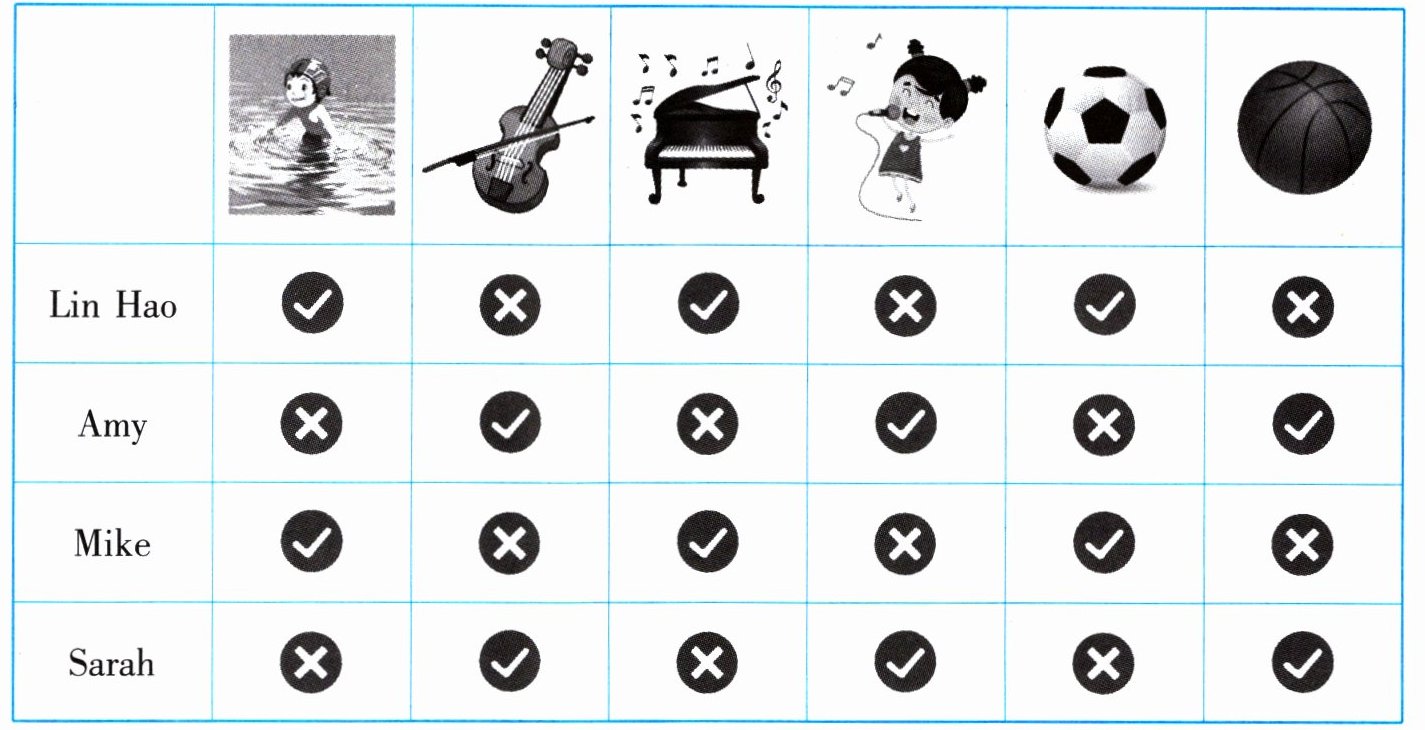
1. Lin Hao ______ swim, but he ______ sing songs.
2. Amy ______ play the violin, but she ______ play football.
3. Mike ______ play the piano, but he ______ play basketball.
4. Sarah ______ sing songs, but she ______ swim.
5. Lin Hao and Mike ______ swim, but they ______ sing songs.
6. Amy and Sarah ______ play the violin, but they ______ play football.
任务二:根据以上内容,总结归纳情态动词 can 的形式、意义和用法。
1. 形式:can 不能独立存在,必须与 ______ 一起构成谓语,它 ______(有/没有)人称和数的变化。
2. 意义和用法:情态动词 can 意为“能,会”,常用来指脑力或体力方面的 ______。例如:Cats can climb the tree, but they can't fly.Birds can fly, but they can't swim.
任务一:认真阅读调查表,用 can 或 can't 完成下列句子,汇报同学们的才艺。
| | | | | | | | |
| Lin Hao | √ | × | √ | × | √ | × | × |
| Amy | × | √ | × | √ | × | × | √ |
| Mike | √ | × | √ | × | √ | × | × |
| Sarah | × | √ | × | √ | × | √ | × |
1. Lin Hao ______ swim, but he ______ sing songs.
2. Amy ______ play the violin, but she ______ play football.
3. Mike ______ play the piano, but he ______ play basketball.
4. Sarah ______ sing songs, but she ______ swim.
5. Lin Hao and Mike ______ swim, but they ______ sing songs.
6. Amy and Sarah ______ play the violin, but they ______ play football.
任务二:根据以上内容,总结归纳情态动词 can 的形式、意义和用法。
1. 形式:can 不能独立存在,必须与 ______ 一起构成谓语,它 ______(有/没有)人称和数的变化。
2. 意义和用法:情态动词 can 意为“能,会”,常用来指脑力或体力方面的 ______。例如:Cats can climb the tree, but they can't fly.Birds can fly, but they can't swim.
答案:
can
can't
can
can't
can
can't
can
can't
can
can't
can
can't
动词原形
没有
能力
can't
can
can't
can
can't
can
can't
can
can't
can
can't
动词原形
没有
能力
二、根据要求完成下列各题,每空一词。
1. They can play chess.(改为一般疑问句)______ ______ ______ ______?
2. —Can your sister dance?(作否定回答)—______, ______ ______.
3. Her father can speak English.(改为否定句)Her father ______ ______ ______.
4. I want to join the chess club.(对画线部分提问)______ ______ ______ ______ want to join?
5. The girl does well in playing volleyball.(改为同义句)The girl ______ ______ ______ playing volleyball.
1. They can play chess.(改为一般疑问句)______ ______ ______ ______?
2. —Can your sister dance?(作否定回答)—______, ______ ______.
3. Her father can speak English.(改为否定句)Her father ______ ______ ______.
4. I want to join the chess club.(对画线部分提问)______ ______ ______ ______ want to join?
5. The girl does well in playing volleyball.(改为同义句)The girl ______ ______ ______ playing volleyball.
答案:
Can
they
play
chess
No
she
can't
can't
speak
English
What/Which
club
do
you
is
good
at
they
play
chess
No
she
can't
can't
speak
English
What/Which
club
do
you
is
good
at
查看更多完整答案,请扫码查看

