

 搜索
搜索
2025年全真模拟试题集六年级英语
注:目前有些书本章节名称可能整理的还不是很完善,但都是按照顺序排列的,请同学们按照顺序仔细查找。练习册 2025年全真模拟试题集六年级英语 答案主要是用来给同学们做完题方便对答案用的,请勿直接抄袭。
第20页
- 第1页
- 第2页
- 第3页
- 第4页
- 第5页
- 第6页
- 第7页
- 第8页
- 第9页
- 第10页
- 第11页
- 第12页
- 第13页
- 第14页
- 第15页
- 第16页
- 第17页
- 第18页
- 第19页
- 第20页
- 第21页
- 第22页
- 第23页
- 第24页
- 第25页
- 第26页
- 第27页
- 第28页
- 第29页
- 第30页
- 第31页
- 第32页
- 第33页
- 第34页
- 第35页
- 第36页
- 第37页
- 第38页
- 第39页
- 第40页
- 第41页
- 第42页
- 第43页
- 第44页
- 第45页
- 第46页
- 第47页
- 第48页
- 第49页
- 第50页
- 第51页
- 第52页
- 第53页
- 第54页
- 第55页
- 第56页
- 第57页
- 第58页
- 第59页
- 第60页
- 第61页
- 第62页
- 第63页
- 第64页
- 第65页
- 第66页
- 第67页
- 第68页
- 第69页
- 第70页
- 第71页
- 第72页
- 第73页
- 第74页
- 第75页
- 第76页
- 第77页
- 第78页
- 第79页
- 第80页
- 第81页
- 第82页
- 第83页
- 第84页
- 第85页
- 第86页
- 第87页
- 第88页
- 第89页
- 第90页
- 第91页
- 第92页
- 第93页
- 第94页
- 第95页
- 第96页
- 第97页
- 第98页
- 第99页
- 第100页
- 第101页
- 第102页
- 第103页
- 第104页
- 第105页
- 第106页
- 第107页
- 第108页
- 第109页
- 第110页
- 第111页
- 第112页
- 第113页
- 第114页
- 第115页
- 第116页
- 第117页
- 第118页
Ⅷ. Gap-filling(短文填空)(共5小题;每小题1分,计5分)
根据短文内容,用括号中所给单词的正确形式填空(每空一词)。
To plant a flower garden, you only need a few things: tools, (61)
根据短文内容,用括号中所给单词的正确形式填空(每空一词)。
To plant a flower garden, you only need a few things: tools, (61)
seeds
(seed), and soil. People can grow (62) many
(much) different flowers, such as roses and daisies (雏菊). They all need water and light to grow, as (63) well
(good) as daily attention (注意力). The size of a garden (64) isn’t
(be not) important. It may be in a large plot of (65) land
(land) in a backyard. It might be in a metre-long box inside a house.
答案:
61. seeds 62. many 63. well 64. isn’t 65. land
Ⅸ. Reading comprehension(阅读理解)(共15小题;每小题1分,计15分)
(A)
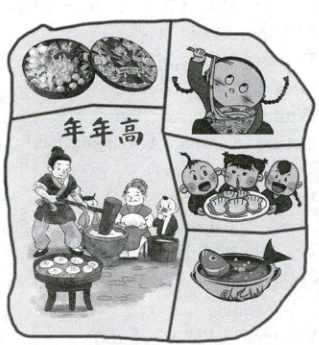
Chinese people eat "lucky" food for the New Year. There are lots of lucky foods to choose from. Here are five of them:
Long Noodles
Keep the noodles as long as possible for long life.
Nian Gao
Nian Gao means "year cake", but in Chinese "gao" sounds the same as the word for "tall" or "high".
Whole Fish
The Chinese word for fish sounds like the word for abundance (充裕). People serve fish with the head and tail to ensure (确保) a good start and finish and to avoid (避免) bad luck through the year.
Sweets
Sweets bring a sweet life in the new year. Children like sweets with peanuts, coconut, and sesame (芝麻).
Jiaozi (Dumplings)
Most of Chinese people like jiaozi. Someone calls them "yuanbao". While making them, families sometimes add good-luck things like peanuts or coins into some of them.
根据短文内容,判断下列句子正(T)误(F)。
66. There are only five "lucky" foods in China.
67. Tall people like eating Nian Gao.
68. People think the whole fish makes a lucky year.
69. In some places, children like sweets with coins in it.
70. Peanuts and coins are good-luck things.
(A)
Chinese people eat "lucky" food for the New Year. There are lots of lucky foods to choose from. Here are five of them:
Long Noodles
Keep the noodles as long as possible for long life.
Nian Gao
Nian Gao means "year cake", but in Chinese "gao" sounds the same as the word for "tall" or "high".
Whole Fish
The Chinese word for fish sounds like the word for abundance (充裕). People serve fish with the head and tail to ensure (确保) a good start and finish and to avoid (避免) bad luck through the year.
Sweets
Sweets bring a sweet life in the new year. Children like sweets with peanuts, coconut, and sesame (芝麻).
Jiaozi (Dumplings)
Most of Chinese people like jiaozi. Someone calls them "yuanbao". While making them, families sometimes add good-luck things like peanuts or coins into some of them.
根据短文内容,判断下列句子正(T)误(F)。
66. There are only five "lucky" foods in China.
67. Tall people like eating Nian Gao.
68. People think the whole fish makes a lucky year.
69. In some places, children like sweets with coins in it.
70. Peanuts and coins are good-luck things.
答案:
66—70 FFTFT
查看更多完整答案,请扫码查看

