

 搜索
搜索
第56页
- 第1页
- 第2页
- 第3页
- 第4页
- 第5页
- 第6页
- 第7页
- 第8页
- 第9页
- 第10页
- 第11页
- 第12页
- 第13页
- 第14页
- 第15页
- 第16页
- 第17页
- 第18页
- 第19页
- 第20页
- 第21页
- 第22页
- 第23页
- 第24页
- 第25页
- 第26页
- 第27页
- 第28页
- 第29页
- 第30页
- 第31页
- 第32页
- 第33页
- 第34页
- 第35页
- 第36页
- 第37页
- 第38页
- 第39页
- 第40页
- 第41页
- 第42页
- 第43页
- 第44页
- 第45页
- 第46页
- 第47页
- 第48页
- 第49页
- 第50页
- 第51页
- 第52页
- 第53页
- 第54页
- 第55页
- 第56页
- 第57页
- 第58页
- 第59页
- 第60页
- 第61页
- 第62页
- 第63页
- 第64页
- 第65页
- 第66页
- 第67页
- 第68页
- 第69页
- 第70页
- 第71页
- 第72页
- 第73页
- 第74页
Ⅳ. 把下列句子翻译成中文。
1. Cooking is a great way for me to share love with others.
2. What wonderful memories I have!
3. Grandmother taught me the secret to cooking: Cook with love.
4. I love to try new food and new recipes from other countries and cultures.
1. Cooking is a great way for me to share love with others.
对于我而言,烹饪是一种向他人表达爱的绝妙方式。
2. What wonderful memories I have!
我有一段多么美好的回忆啊!
3. Grandmother taught me the secret to cooking: Cook with love.
祖母教给我烹饪的秘诀:带着爱烹饪。
4. I love to try new food and new recipes from other countries and cultures.
我喜欢尝试来自其他国家和文化的新食物和新食谱。
答案:
1. 对于我而言,烹饪是一种向他人表达爱的绝妙方式。
2. 我有一段多么美好的回忆啊!
3. 祖母教给我烹饪的秘诀:带着爱烹饪。
4. 我喜欢尝试来自其他国家和文化的新食物和新食谱。
2. 我有一段多么美好的回忆啊!
3. 祖母教给我烹饪的秘诀:带着爱烹饪。
4. 我喜欢尝试来自其他国家和文化的新食物和新食谱。
Ⅰ. 听力理解。
第一节 听句子,根据所听内容选择与句子意思一致的图画。句子读一遍。
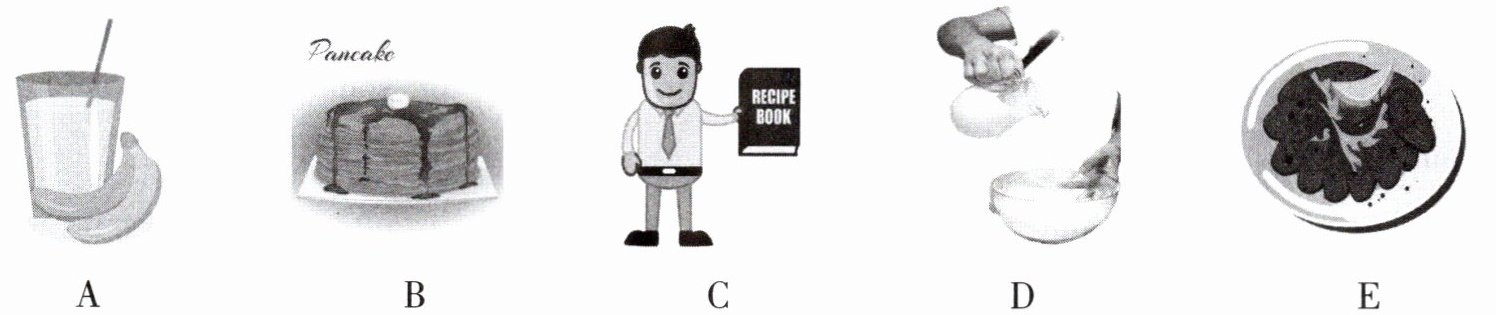
1.
第一节 听句子,根据所听内容选择与句子意思一致的图画。句子读一遍。
1.
D
2. A
3. B
4. E
5. C
答案:
第一节 1—5 DABEC;第二节 6.A;7.C
第二节 听对话,根据所听内容选出能回答所提问题的最佳选项。对话读两遍。
听第一段对话,回答第 6 和 7 小题。
( )6. What is Teng Fei learning to cook?
A. Fried rice. B. Fried meat. C. Fried eggs.
( )7. How does Teng Fei like this cooking?
A. Boring. B. Difficult. C. Fun.
听第一段对话,回答第 6 和 7 小题。
( )6. What is Teng Fei learning to cook?
A. Fried rice. B. Fried meat. C. Fried eggs.
( )7. How does Teng Fei like this cooking?
A. Boring. B. Difficult. C. Fun.
答案:
第二节 6.A;7.C
听第二段对话,回答第 8—10 小题。
(
A. Pancakes and fruit salad. B. Bread and fruit salad. C. Meat and fruit salad.
(
A. One. B. Two. C. Some.
(
A. In a restaurant. B. In an office. C. At home.
(
A
)8. What are they going to have for dinner?A. Pancakes and fruit salad. B. Bread and fruit salad. C. Meat and fruit salad.
(
B
)9. How many apples do they need?A. One. B. Two. C. Some.
(
C
)10. Where are they most probably talking?A. In a restaurant. B. In an office. C. At home.
答案:
8.A;9.B;10.C;第三节 11.C;12.B;13.C;14.C;15.C
第三节 听短文,根据所听内容选择能回答所提问题的最佳选项。短文读两遍。
( )11. What are they learning to make today?
A. Noodles. B. Dumplings. C. Hot pot.
( )12. What meats are the best for hot pot?
A. Beef and chicken. B. Beef and mutton. C. Chicken and mutton.
( )13. How does Mr. Wang get the hot pot soup base?
A. He makes it himself. B. Someone gives it to him. C. He buys it.
( )14. How long should we cook the hot pot soup base with water?
A. 5 minutes. B. 10 minutes. C. 30 minutes.
( )15. What should they do after the soup is ready?
A. Enjoy the hot pot. B. Clean the vegetables. C. Put the food into the soup.
( )11. What are they learning to make today?
A. Noodles. B. Dumplings. C. Hot pot.
( )12. What meats are the best for hot pot?
A. Beef and chicken. B. Beef and mutton. C. Chicken and mutton.
( )13. How does Mr. Wang get the hot pot soup base?
A. He makes it himself. B. Someone gives it to him. C. He buys it.
( )14. How long should we cook the hot pot soup base with water?
A. 5 minutes. B. 10 minutes. C. 30 minutes.
( )15. What should they do after the soup is ready?
A. Enjoy the hot pot. B. Clean the vegetables. C. Put the food into the soup.
答案:
第三节 11.C;12.B;13.C;14.C;15.C
查看更多完整答案,请扫码查看

