

 搜索
搜索
第91页
- 第1页
- 第2页
- 第3页
- 第4页
- 第5页
- 第6页
- 第7页
- 第8页
- 第9页
- 第10页
- 第11页
- 第12页
- 第13页
- 第14页
- 第15页
- 第16页
- 第17页
- 第18页
- 第19页
- 第20页
- 第21页
- 第22页
- 第23页
- 第24页
- 第25页
- 第26页
- 第27页
- 第28页
- 第29页
- 第30页
- 第31页
- 第32页
- 第33页
- 第34页
- 第35页
- 第36页
- 第37页
- 第38页
- 第39页
- 第40页
- 第41页
- 第42页
- 第43页
- 第44页
- 第45页
- 第46页
- 第47页
- 第48页
- 第49页
- 第50页
- 第51页
- 第52页
- 第53页
- 第54页
- 第55页
- 第56页
- 第57页
- 第58页
- 第59页
- 第60页
- 第61页
- 第62页
- 第63页
- 第64页
- 第65页
- 第66页
- 第67页
- 第68页
- 第69页
- 第70页
- 第71页
- 第72页
- 第73页
- 第74页
- 第75页
- 第76页
- 第77页
- 第78页
- 第79页
- 第80页
- 第81页
- 第82页
- 第83页
- 第84页
- 第85页
- 第86页
- 第87页
- 第88页
- 第89页
- 第90页
- 第91页
- 第92页
- 第93页
- 第94页
- 第95页
- 第96页
- 第97页
- 第98页
- 第99页
- 第100页
- 第101页
- 第102页
- 第103页
- 第104页
- 第105页
- 第106页
- 第107页
- 第108页
- 第109页
- 第110页
- 第111页
- 第112页
- 第113页
- 第114页
- 第115页
- 第116页
- 第117页
- 第118页
- 第119页
- 第120页
- 第121页
- 第122页
- 第123页
- 第124页
- 第125页
- 第126页
- 第127页
- 第128页
- 第129页
- 第130页
- 第131页
- 第132页
- 第133页
- 第134页
- 第135页
- 第136页
- 第137页
- 第138页
- 第139页
- 第140页
- 第141页
- 第142页
- 第143页
- 第144页
- 第145页
- 第146页
- 第147页
- 第148页
- 第149页
- 第150页
- 第151页
Answer the big question before learning this unit
Why do we learn different subjects?
____________________
____________________
____________________
Why do we learn different subjects?
Unit 4 My Favourite Subject
____________________
____________________
____________________
答案:
Unit 4 My Favourite Subject
Ⅰ. Write the words, and match their pronunciations.
写出单词,然后与其读音连线。
1. 有趣的 n u f
2. 困难的 d h r a
3. 乏味的 o b g i r n
4. 有用的 s f l u e u
5. 令人激动的 c t e i x n i g
写出单词,然后与其读音连线。
1. 有趣的 n u f
fun
A. /·bɔ:rɪŋ/2. 困难的 d h r a
hard
B. /·ju:sfl/3. 乏味的 o b g i r n
boring
C. /ha:d/4. 有用的 s f l u e u
useful
D. /fʌn/5. 令人激动的 c t e i x n i g
exciting
E. /ɪk·saɪtɪŋ/
答案:
Ⅰ.1. fun D 2. hard C 3. boring A 4. useful B 5. exciting E
Ⅱ. Fill in the chart. 填表。
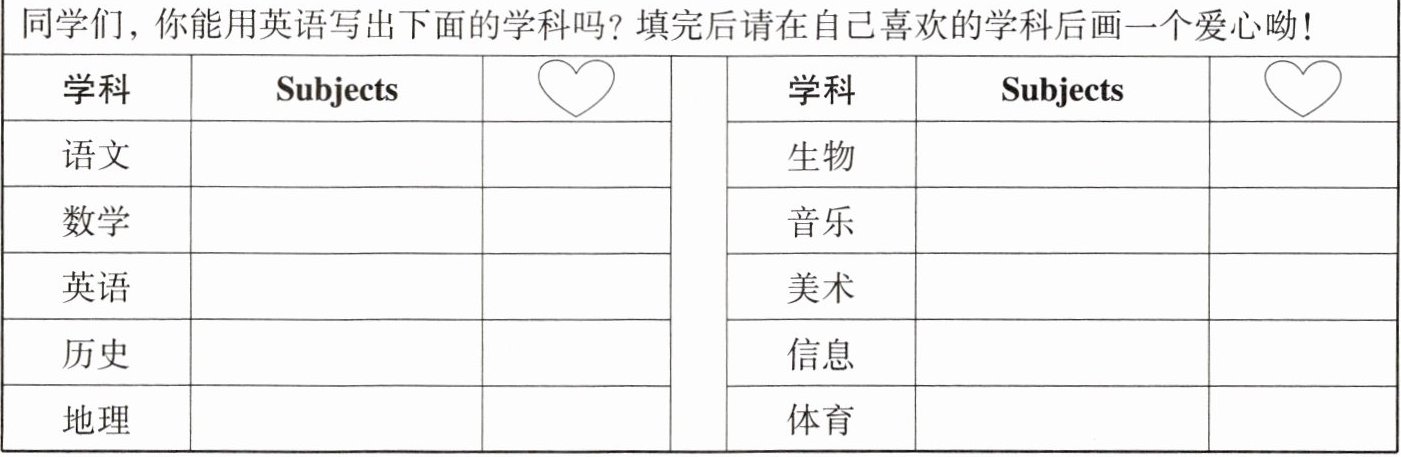
答案:
Ⅱ.
|学科|Subjects|学科|Subjects|
|--|--|--|--|
|语文|Chinese|生物|biology|
|数学|maths|音乐|music|
|英语|English|美术|art|
|历史|history|信息|IT|
|地理|geography|体育|PE|
|学科|Subjects|学科|Subjects|
|--|--|--|--|
|语文|Chinese|生物|biology|
|数学|maths|音乐|music|
|英语|English|美术|art|
|历史|history|信息|IT|
|地理|geography|体育|PE|
Ⅲ. Listen to 1b and 1c, answer the questions and summarize the conversations according to the answers. 听 1b 和 1c 回答下列问题,然后根据答语进行概要。
Conversation One
1. What day is it today?
2. What classes does Ella have?
3. Does Ella like history? Why or why not?
4. What's Ella's favourite subject? And why does she like it?
Conversation Two
5. What classes does Peter have?
6. Does Peter like Chinese and maths? Why or why not?
7. What's Peter's favourite subject? And why does he like it?
Summary:
Conversation One
1. What day is it today?
It’s Tuesday. /Tuesday. /Today is Tuesday.
2. What classes does Ella have?
She has history, art and geography. /History, art and geography.
3. Does Ella like history? Why or why not?
No, she doesn’t. Because it’s hard for her.
4. What's Ella's favourite subject? And why does she like it?
Her favourite subject is maths, because it’s fun.
Conversation Two
5. What classes does Peter have?
He has Chinese, maths, IT and PE.
6. Does Peter like Chinese and maths? Why or why not?
He likes Chinese, because it’s fun. He doesn’t like maths, because it’s boring to him.
7. What's Peter's favourite subject? And why does he like it?
His favourite subject is PE, because it’s exciting.
Summary:
答案:
Ⅲ.1. It’s Tuesday. /Tuesday. /Today is Tuesday.2. She has history, art and geography. /History, art and geography.3. No, she doesn’t. Because it’s hard for her.4. Her favourite subject is maths, because it’s fun. 5. He has Chinese, maths, IT and PE.6. He likes Chinese, because it’s fun. He doesn’t like maths, because it’s boring to him.7. His favourite subject is PE, because it’s exciting.
查看更多完整答案,请扫码查看

