

 搜索
搜索
第68页
- 第1页
- 第2页
- 第3页
- 第4页
- 第5页
- 第6页
- 第7页
- 第8页
- 第9页
- 第10页
- 第11页
- 第12页
- 第13页
- 第14页
- 第15页
- 第16页
- 第17页
- 第18页
- 第19页
- 第20页
- 第21页
- 第22页
- 第23页
- 第24页
- 第25页
- 第26页
- 第27页
- 第28页
- 第29页
- 第30页
- 第31页
- 第32页
- 第33页
- 第34页
- 第35页
- 第36页
- 第37页
- 第38页
- 第39页
- 第40页
- 第41页
- 第42页
- 第43页
- 第44页
- 第45页
- 第46页
- 第47页
- 第48页
- 第49页
- 第50页
- 第51页
- 第52页
- 第53页
- 第54页
- 第55页
- 第56页
- 第57页
- 第58页
- 第59页
- 第60页
- 第61页
- 第62页
- 第63页
- 第64页
- 第65页
- 第66页
- 第67页
- 第68页
- 第69页
- 第70页
- 第71页
- 第72页
- 第73页
- 第74页
- 第75页
- 第76页
- 第77页
- 第78页
- 第79页
- 第80页
- 第81页
- 第82页
- 第83页
- 第84页
- 第85页
- 第86页
- 第87页
- 第88页
- 第89页
- 第90页
- 第91页
- 第92页
- 第93页
- 第94页
- 第95页
- 第96页
- 第97页
- 第98页
- 第99页
- 第100页
- 第101页
- 第102页
- 第103页
- 第104页
- 第105页
- 第106页
- 第107页
- 第108页
- 第109页
- 第110页
- 第111页
- 第112页
- 第113页
- 第114页
- 第115页
- 第116页
- 第117页
- 第118页
- 第119页
- 第120页
- 第121页
- 第122页
- 第123页
- 第124页
- 第125页
- 第126页
- 第127页
- 第128页
- 第129页
- 第130页
- 第131页
- 第132页
- 第133页
- 第134页
- 第135页
- 第136页
- 第137页
- 第138页
- 第139页
- 第140页
- 第141页
- 第142页
- 第143页
- 第144页
- 第145页
- 第146页
- 第147页
- 第148页
- 第149页
- 第150页
- 第151页
- 第152页
- 第153页
- 第154页
- 第155页
- 第156页
- 第157页
- 第158页
- 第159页
- 第160页
- 第161页
- 第162页
- 第163页
- 第164页
C
Now we can see more and more electric cars running on the street. But you’ll probably be as surprised as I was to find that electric cars aren’t a 21st-century invention.
Almost two centuries ago, in 1828, a Hungarian engineer named Nyos Jedlik invented the first electric motor to power a small model car. And he wasn’t the only one with an interest in that sort of technology. In 1834, blacksmith(铁匠)Thomas Davenport created a similar device(设备)that could be driven at short distances using an electric track. It was just like streetcars later on! And over in the Netherlands, university professor Sibrandus Stratingh built a tiny electric car powered with non-rechargeable(不可充电的)batteries. But these primary batteries could be used only once, so people needed too many batteries to run the motor over long distances at such low speeds. It wasn’t until 1859 when French physicist Gaston Plante invented the lead acid(铅酸电池)battery that changed the electric engine game for good. Many countries began producing electric three-wheeled cars until the US made a huge breakthrough(突破). In 1891, they created the first electric vehicle. It was a 6-passenger wagon that could go up to 14 miles per hour. After that the electric car market grew stronger. In the late 1890s, electric-powered taxis filled the streets of London. By the early 1900s, almost one-third of cars in the US were electric-powered. But that wasn’t going to last long.
What happened to the electric cars by the late 1920s? Let’s go on tomorrow.
根据短文内容,选择正确答案。
(
A. Gaston Plante. B. Sibrandus Stratingh. C. Nyos Jedlik.
(
①a small model car powered by the first electric motor
②electric-powered taxis in London
③6-passenger electric wagon
④electric-powered cars in the US
A. ①②③④ B. ①③②④ C. ①④③②
(
A. Because nobody was interested in it.
B. Because they were model cars.
C. Because the batteries were non-rechargeable.
(
A. The electric motor was invented in the 19th century.
B. The high speed of the electric car could reach 15 miles.
C. You could take an electric taxi in London in 1850.
(
A. A science newspaper. B. A travel guidebook.
C. A health website.
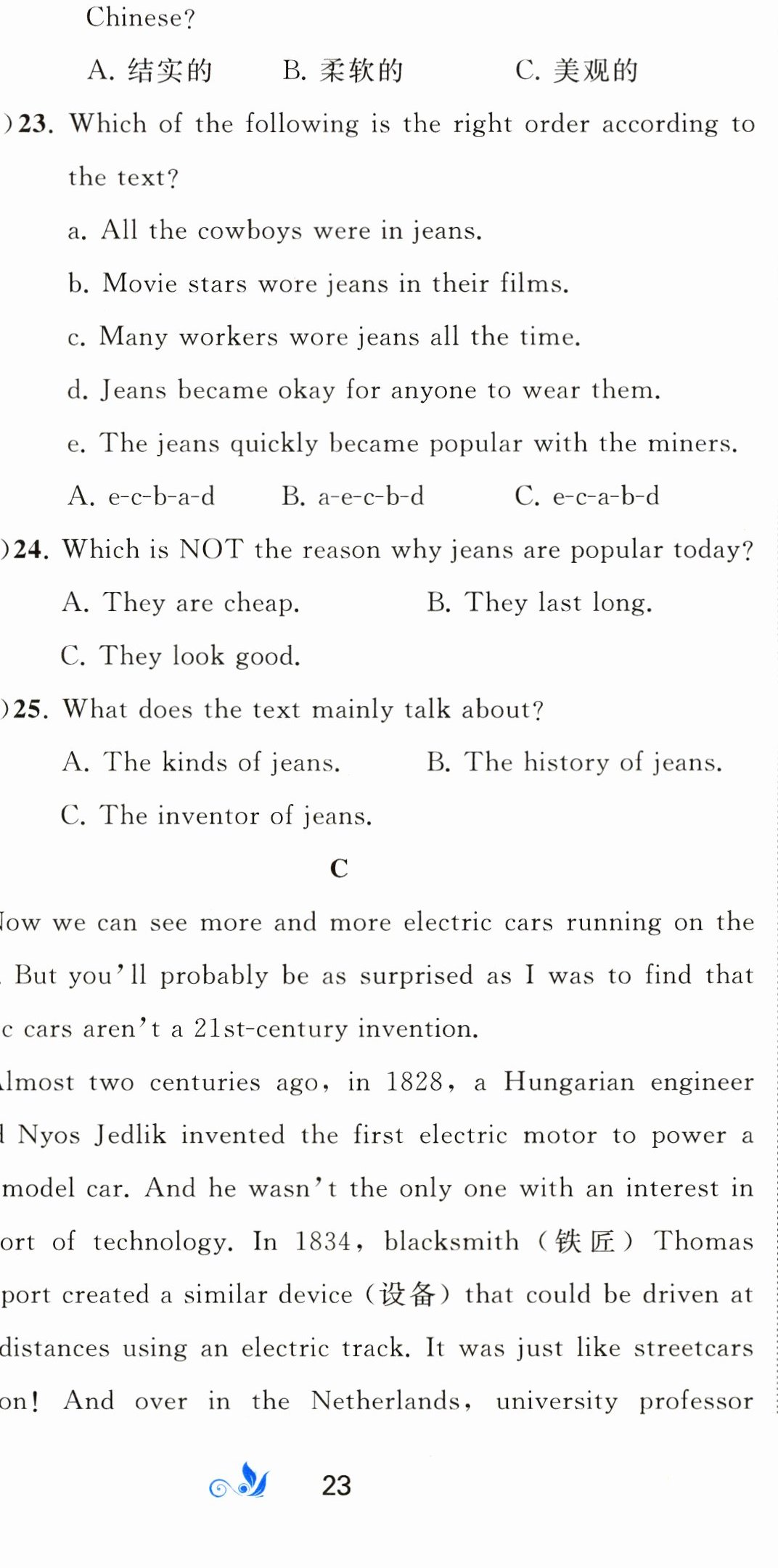
Now we can see more and more electric cars running on the street. But you’ll probably be as surprised as I was to find that electric cars aren’t a 21st-century invention.
Almost two centuries ago, in 1828, a Hungarian engineer named Nyos Jedlik invented the first electric motor to power a small model car. And he wasn’t the only one with an interest in that sort of technology. In 1834, blacksmith(铁匠)Thomas Davenport created a similar device(设备)that could be driven at short distances using an electric track. It was just like streetcars later on! And over in the Netherlands, university professor Sibrandus Stratingh built a tiny electric car powered with non-rechargeable(不可充电的)batteries. But these primary batteries could be used only once, so people needed too many batteries to run the motor over long distances at such low speeds. It wasn’t until 1859 when French physicist Gaston Plante invented the lead acid(铅酸电池)battery that changed the electric engine game for good. Many countries began producing electric three-wheeled cars until the US made a huge breakthrough(突破). In 1891, they created the first electric vehicle. It was a 6-passenger wagon that could go up to 14 miles per hour. After that the electric car market grew stronger. In the late 1890s, electric-powered taxis filled the streets of London. By the early 1900s, almost one-third of cars in the US were electric-powered. But that wasn’t going to last long.
What happened to the electric cars by the late 1920s? Let’s go on tomorrow.
根据短文内容,选择正确答案。
(
C
)26. Who invented the first electric motor?A. Gaston Plante. B. Sibrandus Stratingh. C. Nyos Jedlik.
(
B
)27. Put the following events in the correct order ________.①a small model car powered by the first electric motor
②electric-powered taxis in London
③6-passenger electric wagon
④electric-powered cars in the US
A. ①②③④ B. ①③②④ C. ①④③②
(
C
)28. Why wasn’t the electric car put into use until 1859?A. Because nobody was interested in it.
B. Because they were model cars.
C. Because the batteries were non-rechargeable.
(
A
)29. Which of the following is TRUE according to the passage?A. The electric motor was invented in the 19th century.
B. The high speed of the electric car could reach 15 miles.
C. You could take an electric taxi in London in 1850.
(
A
)30. Where can you probably see the passage?A. A science newspaper. B. A travel guidebook.
C. A health website.
答案:
26.C 27.B 28.C 29.A 30.A
查看更多完整答案,请扫码查看

