

 搜索
搜索
第15页
- 第1页
- 第2页
- 第3页
- 第4页
- 第5页
- 第6页
- 第7页
- 第8页
- 第9页
- 第10页
- 第11页
- 第12页
- 第13页
- 第14页
- 第15页
- 第16页
- 第17页
- 第18页
- 第19页
- 第20页
- 第21页
- 第22页
- 第23页
- 第24页
- 第25页
- 第26页
- 第27页
- 第28页
- 第29页
- 第30页
- 第31页
- 第32页
- 第33页
- 第34页
- 第35页
- 第36页
- 第37页
- 第38页
- 第39页
- 第40页
- 第41页
- 第42页
- 第43页
- 第44页
- 第45页
- 第46页
- 第47页
- 第48页
- 第49页
- 第50页
- 第51页
- 第52页
- 第53页
- 第54页
- 第55页
- 第56页
- 第57页
- 第58页
- 第59页
- 第60页
- 第61页
- 第62页
- 第63页
- 第64页
- 第65页
- 第66页
- 第67页
- 第68页
- 第69页
- 第70页
- 第71页
- 第72页
- 第73页
- 第74页
- 第75页
- 第76页
- 第77页
- 第78页
- 第79页
- 第80页
- 第81页
- 第82页
- 第83页
- 第84页
- 第85页
- 第86页
- 第87页
- 第88页
- 第89页
- 第90页
- 第91页
- 第92页
- 第93页
- 第94页
- 第95页
- 第96页
- 第97页
- 第98页
- 第99页
- 第100页
- 第101页
- 第102页
- 第103页
- 第104页
- 第105页
- 第106页
- 第107页
- 第108页
- 第109页
- 第110页
- 第111页
- 第112页
- 第113页
- 第114页
- 第115页
- 第116页
- 第117页
- 第118页
- 第119页
- 第120页
- 第121页
- 第122页
- 第123页
- 第124页
- 第125页
- 第126页
- 第127页
- 第128页
- 第129页
- 第130页
- 第131页
- 第132页
- 第133页
- 第134页
- 第135页
- 第136页
- 第137页
- 第138页
- 第139页
- 第140页
- 第141页
- 第142页
- 第143页
- 第144页
- 第145页
- 第146页
- 第147页
- 第148页
- 第149页
- 第150页
- 第151页
- 第152页
- 第153页
- 第154页
- 第155页
- 第156页
- 第157页
- 第158页
- 第159页
- 第160页
- 第161页
- 第162页
- 第163页
- 第164页
- 第165页
- 第166页
- 第167页
- 第168页
- 第169页
- 第170页
- 第171页
- 第172页
- 第173页
- 第174页
- 第175页
- 第176页
- 第177页
- 第178页
- 第179页
- 第180页
- 第181页
- 第182页
- 第183页
- 第184页
- 第185页
- 第186页
- 第187页
- 第188页
- 第189页
- 第190页
- 第191页
- 第192页
- 第193页
- 第194页
- 第195页
- 第196页
- 第197页
- 第198页
- 第199页
- 第200页
- 第201页
- 第202页
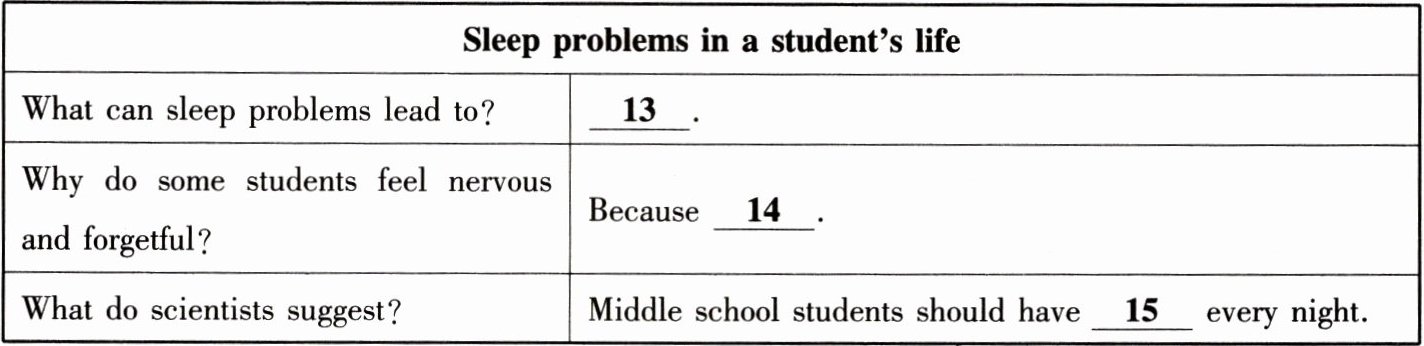
听第一篇短文,回答第 13 至 15 小题。请根据短文内容,选择正确答案,完成信息记录表。答题完毕,请等待“嘀”的信号,进入下一篇短文。
(
B. Arriving late for class
C. Falling asleep in class
(
C. they often get lower grades
(
(
C
)13. A. Quarrelling with his or her parentsB. Arriving late for class
C. Falling asleep in class
(
B
)14. A. they worry about their studies B. they don't get enough sleepC. they often get lower grades
(
B
)15. A. 8 hours' sleep B. 9 hours' sleep C. 10 hours' sleep
答案:
13. C
14. B
15. B
14. B
15. B
听第二篇短文,回答第 16 至 20 小题。
(
A. Sing loudly. B. Chat with a friend. C. Control our feelings.
(
A. We may lose friends. B. We may make some friends.
C. Nobody will wait for us after school.
(
A. He is a doctor. B. He is a teacher. C. He is a singer.
(
A. How to stay calm. B. How to keep cold on hot days.
C. How to show your feelings.
(
A. When a baby falls over. B. When someone is watching us.
C. When we are sure it's the right thing to do.
(
C
)16. What do you need to do when you get angry easily?A. Sing loudly. B. Chat with a friend. C. Control our feelings.
(
A
)17. What will happen if you get angry with people?A. We may lose friends. B. We may make some friends.
C. Nobody will wait for us after school.
(
B
)18. What is Mr Ribet?A. He is a doctor. B. He is a teacher. C. He is a singer.
(
A
)19. What does the book mainly tell us?A. How to stay calm. B. How to keep cold on hot days.
C. How to show your feelings.
(
C
)20. When should you get angry?A. When a baby falls over. B. When someone is watching us.
C. When we are sure it's the right thing to do.
答案:
16.C 17.A 18.B 19.A 20.C
请看下面的情景提示:
迈克一名九年级的学生,长大后他想成为一名艺术家。
(1)
(2)
迈克一名九年级的学生,长大后他想成为一名艺术家。
(1)
He is in Grade Nine.
(2)
He would like to be an artist.
答案:
(1) He is in Grade Nine.
(2) He would like to be an artist.
(1) He is in Grade Nine.
(2) He would like to be an artist.
查看更多完整答案,请扫码查看

