

 搜索
搜索
第47页
- 第1页
- 第2页
- 第3页
- 第4页
- 第5页
- 第6页
- 第7页
- 第8页
- 第9页
- 第10页
- 第11页
- 第12页
- 第13页
- 第14页
- 第15页
- 第16页
- 第17页
- 第18页
- 第19页
- 第20页
- 第21页
- 第22页
- 第23页
- 第24页
- 第25页
- 第26页
- 第27页
- 第28页
- 第29页
- 第30页
- 第31页
- 第32页
- 第33页
- 第34页
- 第35页
- 第36页
- 第37页
- 第38页
- 第39页
- 第40页
- 第41页
- 第42页
- 第43页
- 第44页
- 第45页
- 第46页
- 第47页
- 第48页
- 第49页
- 第50页
- 第51页
- 第52页
- 第53页
- 第54页
- 第55页
- 第56页
- 第57页
- 第58页
- 第59页
- 第60页
- 第61页
- 第62页
- 第63页
- 第64页
- 第65页
- 第66页
- 第67页
- 第68页
- 第69页
- 第70页
- 第71页
- 第72页
- 第73页
- 第74页
一 找出含有与熊猫手里的画线部分相同发音的单词并写到横线上。
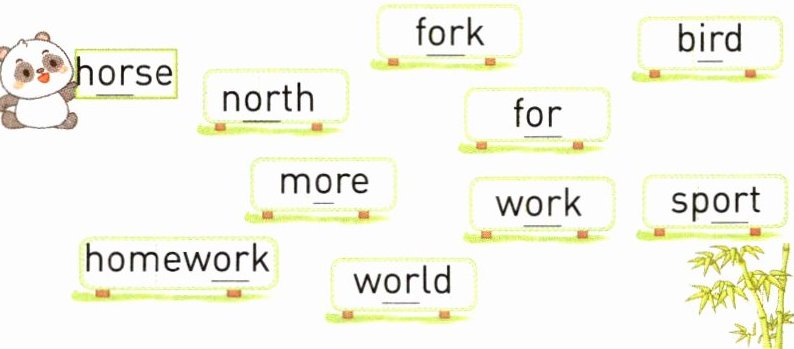
答案:
将 north、more、fork、for 和 sport 写到横线上。
【点拨】horse 中字母组合“or”发音为 /ɔː/。
二 读一读,判断下列每组单词中画线部分的发音是否相同,相同的写“T”,不相同的写“F”。
( )1. horse fork
( )2. homework for
( )3. short forty
( )4. sport word
( )5. morning work
( )1. horse fork
( )2. homework for
( )3. short forty
( )4. sport word
( )5. morning work
答案:
T@@F@@T@@F@@F
三 根据首字母及图片提示,填上含有与画线部分相同发音的单词,补全句子。
1. The boy uses a f___ to eat pork.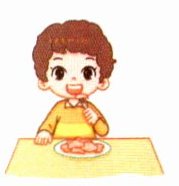
2. My h___ is to read words.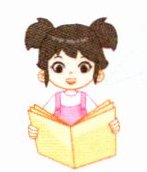
3. The worker stands in front of a w___ map.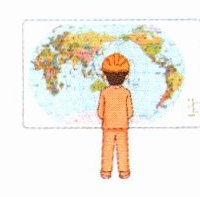
4. Look! The little h___ is short.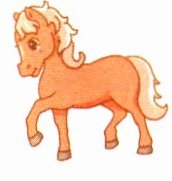
1. The boy uses a f___ to eat pork.
2. My h___ is to read words.
3. The worker stands in front of a w___ map.
4. Look! The little h___ is short.
答案:
fork@@homework@@world@@horse
四【主题情境:York的角】阅读绘本York's Horns,完成下列任务。
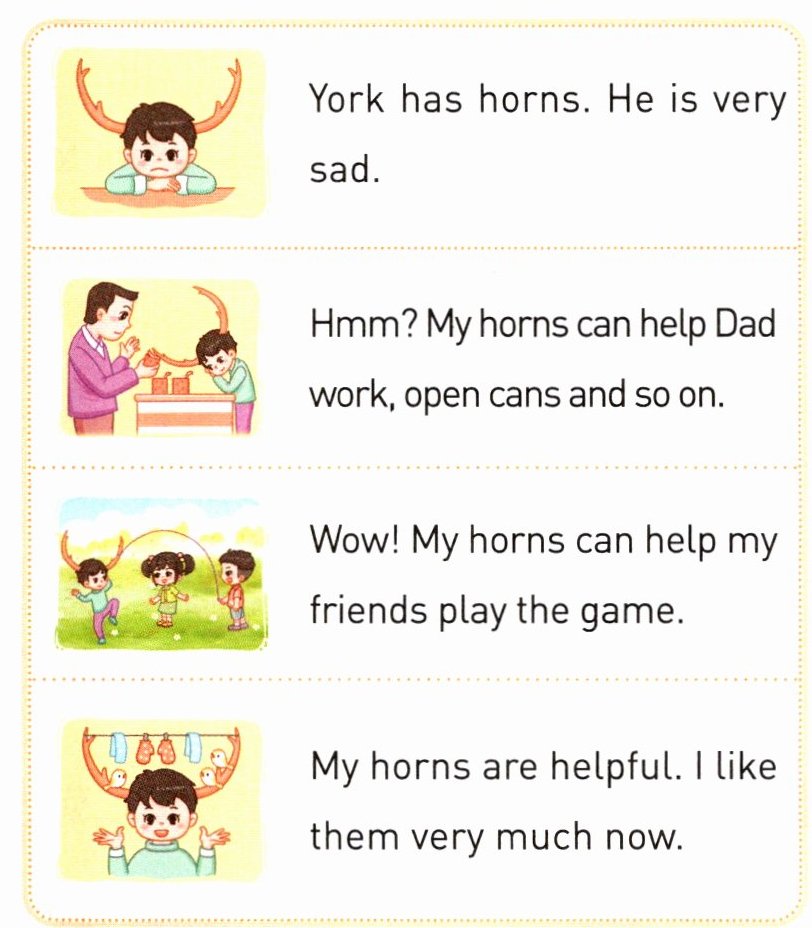
任务一:找出含有与所给单词画线部分相同发音的单词。(重复的算一个)
1. for: ___
2. word: ___
任务二:根据绘本内容,判断下列句子正(T)误(F)。
( )1. York has horns. He is happy at first(最初).
( )2. The horns can help Dad play the game.
( )3. York likes his horns at last(最后).
( )4. The word “horn” means “角”.
任务一:找出含有与所给单词画线部分相同发音的单词。(重复的算一个)
1. for: ___
2. word: ___
任务二:根据绘本内容,判断下列句子正(T)误(F)。
( )1. York has horns. He is happy at first(最初).
( )2. The horns can help Dad play the game.
( )3. York likes his horns at last(最后).
( )4. The word “horn” means “角”.
答案:
York, horns@@work@@F 【点拨】根据“York has horns. He is very sad.”可知 York 最初是伤心的,故答案为 F。@@F 【点拨】根据“My horns can help Dad work, open cans and so on.”可知 York 的角能帮助爸爸工作、开罐头等,故答案为 F。@@T 【点拨】根据“My horns are helpful. I like them very much now.”可知 York 的角很有用,他现在很喜欢,故答案为 T。@@T
查看更多完整答案,请扫码查看

