

 搜索
搜索
第12页
- 第1页
- 第2页
- 第3页
- 第4页
- 第5页
- 第6页
- 第7页
- 第8页
- 第9页
- 第10页
- 第11页
- 第12页
- 第13页
- 第14页
- 第15页
- 第16页
- 第17页
- 第18页
- 第19页
- 第20页
- 第21页
- 第22页
- 第23页
- 第24页
- 第25页
- 第26页
- 第27页
- 第28页
- 第29页
- 第30页
- 第31页
- 第32页
- 第33页
- 第34页
- 第35页
- 第36页
- 第37页
- 第38页
- 第39页
- 第40页
- 第41页
- 第42页
- 第43页
- 第44页
- 第45页
- 第46页
- 第47页
- 第48页
- 第49页
- 第50页
- 第51页
- 第52页
- 第53页
- 第54页
- 第55页
- 第56页
- 第57页
- 第58页
- 第59页
- 第60页
- 第61页
- 第62页
- 第63页
- 第64页
- 第65页
- 第66页
- 第67页
- 第68页
- 第69页
- 第70页
- 第71页
- 第72页
- 第73页
- 第74页
- 第75页
- 第76页
- 第77页
- 第78页
- 第79页
- 第80页
- 第81页
- 第82页
- 第83页
- 第84页
- 第85页
- 第86页
- 第87页
- 第88页
- 第89页
- 第90页
- 第91页
- 第92页
- 第93页
- 第94页
- 第95页
- 第96页
- 第97页
- 第98页
- 第99页
- 第100页
- 第101页
- 第102页
- 第103页
- 第104页
- 第105页
- 第106页
一、用适当的词或括号中所给词的适当形式完成短文。
Many people like animals. So they have animals as pets(宠物). Usually people like 1.______ (
Mr Smith is 5.______ old man. He lives in Shanghai. He is a doctor, not for people 6.______ for animals. He is nice to people and pets. All the people around love him and call 7.______ (
Many people like animals. So they have animals as pets(宠物). Usually people like 1.______ (
to have/having
) dogs, cats, fish and other animals. They think these animals are very interesting. They even think the pets are 2.______ (their
) family members. There 3.______ (are
) a lot of old people having pets today. It is 4.______ their children don't live with them and they are not happy.Mr Smith is 5.______ old man. He lives in Shanghai. He is a doctor, not for people 6.______ for animals. He is nice to people and pets. All the people around love him and call 7.______ (
him
) "Mr Helpful". When 8.______ (people's
) dogs are sick(生病), they often call Mr Smith 9.______ help. He can always help the sick dogs get well soon. So he is always welcome everywhere he 10.______ (goes
).
答案:
1. to have/having 2. their 3. are 4. because 5. an 6. but 7. him 8. people's 9. for 10. goes
二、阅读理解。
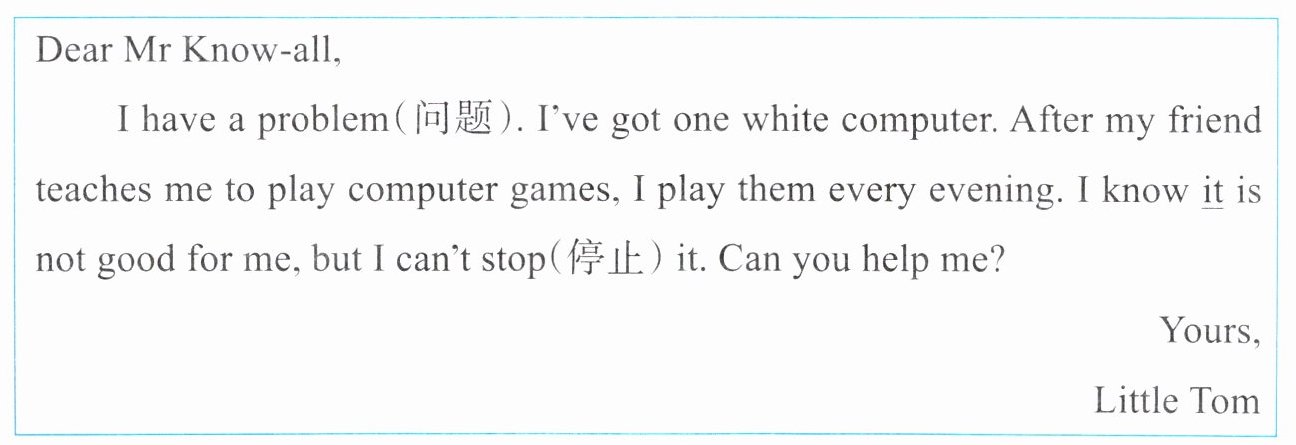
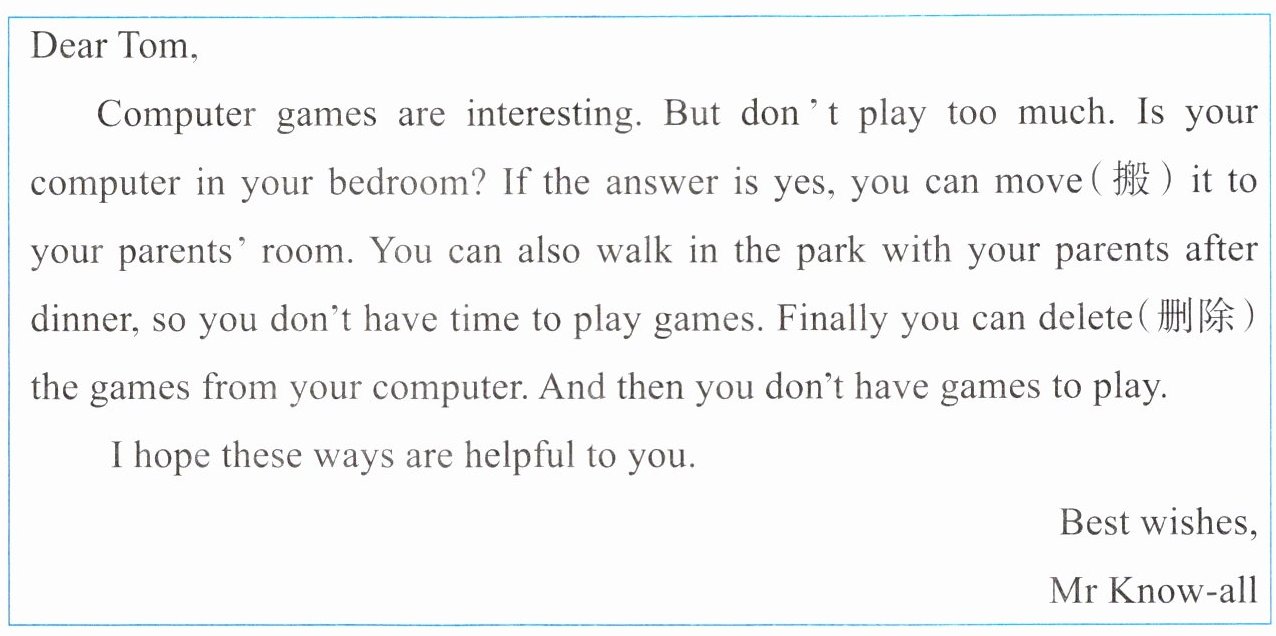
(
A. playing computer games
B. reading books
C. walking in the park
D. watching TV
(
A. He has a lot of homework.
B. He can't stop playing computer games.
C. He can't play computer games.
D. His friends don't play computer games with him.
(
A. In the kitchen.
B. In his bedroom.
C. In the classroom.
D. In his parents' room.
(
A. Five.
B. Four.
C. Three.
D. Two.
(
A. To give the computer to others.
B. To walk with his parents after dinner.
C. To play games only on Saturdays and Sundays.
D. To go to the park with his classmates after dinner.
(
A
)1. The underlined(画线的) word “it” refers to(指代)______.A. playing computer games
B. reading books
C. walking in the park
D. watching TV
(
B
)2. What's Tom's problem?A. He has a lot of homework.
B. He can't stop playing computer games.
C. He can't play computer games.
D. His friends don't play computer games with him.
(
D
)3. Where can Tom keep his computer according to(根据) Mr Know-all's advice(建议)?A. In the kitchen.
B. In his bedroom.
C. In the classroom.
D. In his parents' room.
(
C
)4. How many pieces of advice does Mr Know-all give Tom?A. Five.
B. Four.
C. Three.
D. Two.
(
B
)5. What does Mr Know-all ask Tom to do?A. To give the computer to others.
B. To walk with his parents after dinner.
C. To play games only on Saturdays and Sundays.
D. To go to the park with his classmates after dinner.
答案:
1.A 2.B 3.D 4.C 5.B
查看更多完整答案,请扫码查看

