

 搜索
搜索
第17页
- 第1页
- 第2页
- 第3页
- 第4页
- 第5页
- 第6页
- 第7页
- 第8页
- 第9页
- 第10页
- 第11页
- 第12页
- 第13页
- 第14页
- 第15页
- 第16页
- 第17页
- 第18页
- 第19页
- 第20页
- 第21页
- 第22页
- 第23页
- 第24页
- 第25页
- 第26页
- 第27页
- 第28页
- 第29页
- 第30页
- 第31页
- 第32页
- 第33页
- 第34页
- 第35页
- 第36页
- 第37页
- 第38页
- 第39页
- 第40页
- 第41页
- 第42页
- 第43页
- 第44页
- 第45页
- 第46页
- 第47页
- 第48页
- 第49页
- 第50页
- 第51页
- 第52页
- 第53页
- 第54页
- 第55页
- 第56页
- 第57页
- 第58页
- 第59页
- 第60页
- 第61页
- 第62页
- 第63页
- 第64页
- 第65页
- 第66页
- 第67页
- 第68页
- 第69页
- 第70页
- 第71页
- 第72页
- 第73页
- 第74页
- 第75页
- 第76页
- 第77页
- 第78页
- 第79页
- 第80页
- 第81页
- 第82页
- 第83页
- 第84页
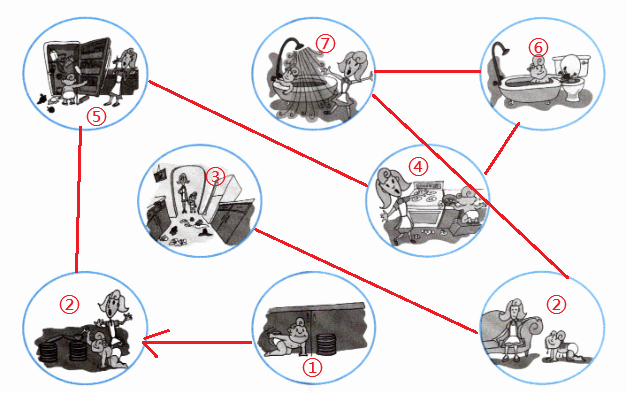
Ⅳ. Read the story and draw lines to follow Baby Becky. 读故事,并根据 Baby Becky 的行动顺序画线。
]
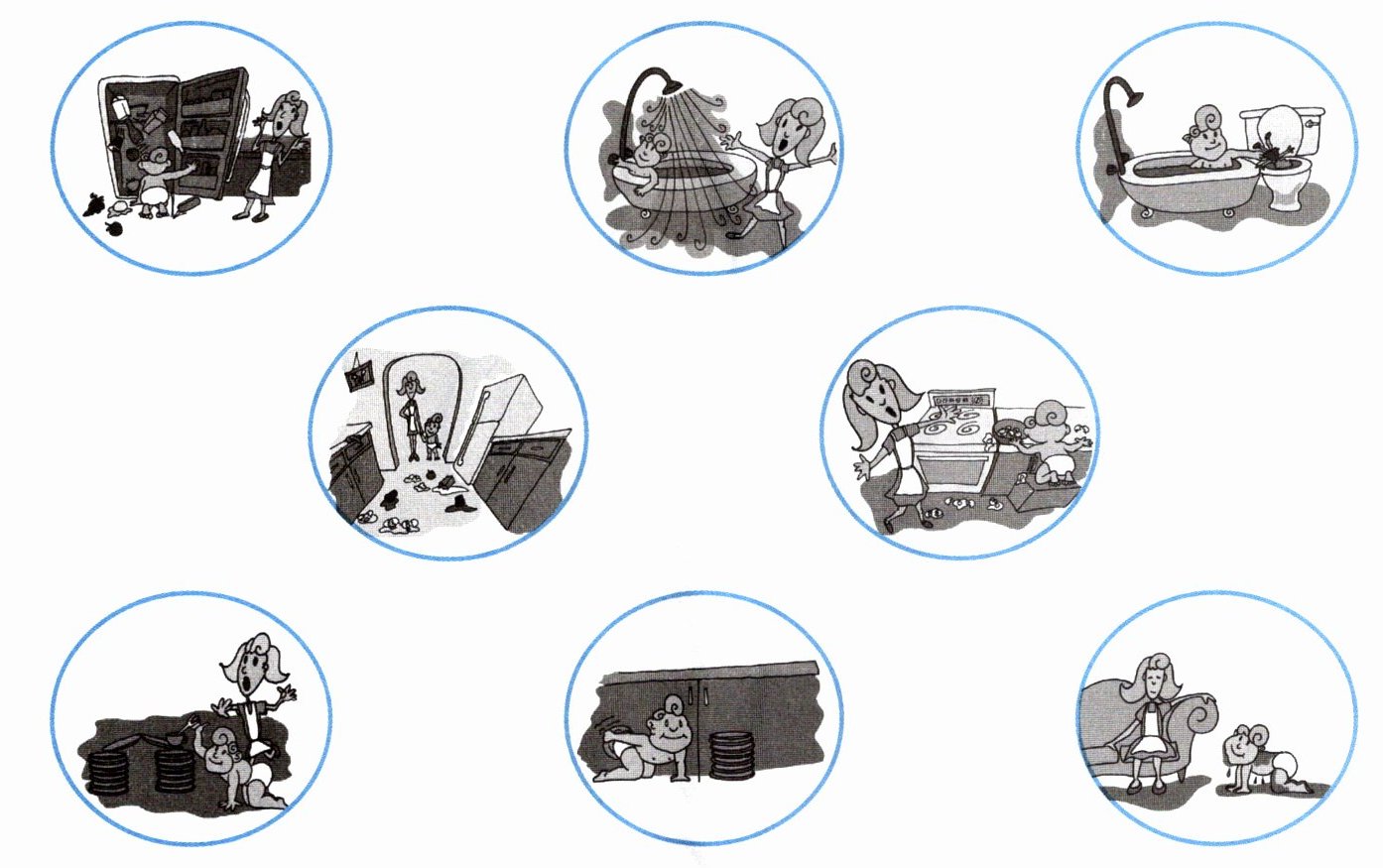
Ⅴ. Read and number. 读一读下面的单词,并把序号标到上图中恰当的位置。
① dishes ② baby ③ woman ④ eggs
⑤ fridge ⑥ toilet ⑦ water ⑧ toy
]
Ⅴ. Read and number. 读一读下面的单词,并把序号标到上图中恰当的位置。
① dishes ② baby ③ woman ④ eggs
⑤ fridge ⑥ toilet ⑦ water ⑧ toy
答案:
Ⅵ. Fill in the blanks. 用所给单词的正确形式填空。
1. Mum
2. I'd like some
3. Where is Tom? He
4. I want to
5. Did you
一般过去时的句子中,谓语动词要用过去式,例如:Jenny was ill last week. I saw Danny yesterday. 疑问句是把 be 动词或助动词 did 提前,如:Was Jenny ill last week? Did you see Danny yesterday? 否定句则由 not 构成,如:Jenny wasn't ill last week. I didn't see Danny yesterday.
1. Mum
is cooking
eggs in the kitchen now. (cook)2. I'd like some
potatoes
for dinner. (potato)3. Where is Tom? He
is writing
a letter at the table. (write)4. I want to
learn
fishing. (learn)5. Did you
have
a good trip? (have)一般过去时的句子中,谓语动词要用过去式,例如:Jenny was ill last week. I saw Danny yesterday. 疑问句是把 be 动词或助动词 did 提前,如:Was Jenny ill last week? Did you see Danny yesterday? 否定句则由 not 构成,如:Jenny wasn't ill last week. I didn't see Danny yesterday.
答案:
1. is cooking
2. potatoes
3. is writing
4. learn
5. have
2. potatoes
3. is writing
4. learn
5. have
查看更多完整答案,请扫码查看

