

 搜索
搜索
第80页
- 第1页
- 第2页
- 第3页
- 第4页
- 第5页
- 第6页
- 第7页
- 第8页
- 第9页
- 第10页
- 第11页
- 第12页
- 第13页
- 第14页
- 第15页
- 第16页
- 第17页
- 第18页
- 第19页
- 第20页
- 第21页
- 第22页
- 第23页
- 第24页
- 第25页
- 第26页
- 第27页
- 第28页
- 第29页
- 第30页
- 第31页
- 第32页
- 第33页
- 第34页
- 第35页
- 第36页
- 第37页
- 第38页
- 第39页
- 第40页
- 第41页
- 第42页
- 第43页
- 第44页
- 第45页
- 第46页
- 第47页
- 第48页
- 第49页
- 第50页
- 第51页
- 第52页
- 第53页
- 第54页
- 第55页
- 第56页
- 第57页
- 第58页
- 第59页
- 第60页
- 第61页
- 第62页
- 第63页
- 第64页
- 第65页
- 第66页
- 第67页
- 第68页
- 第69页
- 第70页
- 第71页
- 第72页
- 第73页
- 第74页
- 第75页
- 第76页
- 第77页
- 第78页
- 第79页
- 第80页
- 第81页
- 第82页
- 第83页
- 第84页
- 第85页
- 第86页
- 第87页
- 第88页
- 第89页
- 第90页
- 第91页
- 第92页
- 第93页
请阅读教材P79的课文,完成下列任务。
一、词汇积累
查词典并写出下列单词的意思。
1. practice /'præktɪs/ n.
2. record /rɪ'kɔːd/ v.
3. line /laɪn/ n.
4. understand /ʌndə'stænd/ v.
5. afraid /ə'freɪd/ adj.
6. brave /breɪv/ adj.
7. enough /ɪ'nʌf/ adv.
一、词汇积累
查词典并写出下列单词的意思。
1. practice /'præktɪs/ n.
训练;实践
2. record /rɪ'kɔːd/ v.
录制;记录
3. line /laɪn/ n.
台词;线;排
4. understand /ʌndə'stænd/ v.
了解;理解
5. afraid /ə'freɪd/ adj.
害怕的;担心(会发生某事)
6. brave /breɪv/ adj.
勇敢的;无畏的
7. enough /ɪ'nʌf/ adv.
足够地;充足地
答案:
1.训练;实践 2.录制;记录 3.台词;线;排 4.了解;理解 5.害怕的;担心(会发生某事) 6.勇敢的;无畏的 7.足够地;充足地
二、短语积累
从文章中找出下列短语并写出相应的中文或英文。
1. 戏剧俱乐部
2. 有很棒的想法
3. 玩得开心
4. 在……前面
5. check out
6. no longer
从文章中找出下列短语并写出相应的中文或英文。
1. 戏剧俱乐部
drama club
2. 有很棒的想法
have great ideas
3. 玩得开心
have a good time
4. 在……前面
in front of ...
5. check out
查看;看一下
6. no longer
不再
答案:
1. drama club 2. have great ideas 3. have a good time 4. in front of ... 5.查看;看一下 6.不再
三、佳句分析
根据教材原句仿写句子。
1. 【教材原句】Welcome to my drama club! 欢迎来到我的戏剧俱乐部!
【亮点】“welcome to + 地点”意为“欢迎来到某地”。
【仿写】欢迎来到我们学校!
2. 【教材原句】I look cute, don't I? 我看起来很可爱,对吗?
【亮点】附加(反意)疑问句的结构:“肯定的陈述句 + 否定的附加疑问句(前肯后否)”或者“否定的陈述句 + 肯定的附加疑问句(前否后肯)”。
【仿写】她喜欢弹钢琴,不是吗?
3. 【教材原句】The drama club can be hard when I have to remember a lot of lines... 当我不得不记住大量台词时,戏剧俱乐部的活动可能会很艰难……
【亮点】句中包含when引导的时间状语从句,表明主句动作发生的时间背景。
【仿写】当我不得不长时间练习钢琴时,音乐俱乐部的活动可能会很艰难。
4. 【教材原句】Now I'm brave enough to talk, and even sing, in front of lots of people. 现在我能足够勇敢地在许多人面前讲话,甚至唱歌。
【亮点】“be + adj. + enough to do sth.”意为“足够……去做某事”。
【仿写】他足够有趣,能逗得他的同学们大笑。
根据教材原句仿写句子。
1. 【教材原句】Welcome to my drama club! 欢迎来到我的戏剧俱乐部!
【亮点】“welcome to + 地点”意为“欢迎来到某地”。
【仿写】欢迎来到我们学校!
Welcome to our school!
2. 【教材原句】I look cute, don't I? 我看起来很可爱,对吗?
【亮点】附加(反意)疑问句的结构:“肯定的陈述句 + 否定的附加疑问句(前肯后否)”或者“否定的陈述句 + 肯定的附加疑问句(前否后肯)”。
【仿写】她喜欢弹钢琴,不是吗?
She likes playing the piano, doesn't she?
3. 【教材原句】The drama club can be hard when I have to remember a lot of lines... 当我不得不记住大量台词时,戏剧俱乐部的活动可能会很艰难……
【亮点】句中包含when引导的时间状语从句,表明主句动作发生的时间背景。
【仿写】当我不得不长时间练习钢琴时,音乐俱乐部的活动可能会很艰难。
The music club can be hard when I have to practise the piano for a long time.
4. 【教材原句】Now I'm brave enough to talk, and even sing, in front of lots of people. 现在我能足够勇敢地在许多人面前讲话,甚至唱歌。
【亮点】“be + adj. + enough to do sth.”意为“足够……去做某事”。
【仿写】他足够有趣,能逗得他的同学们大笑。
He is funny enough to make his classmates laugh.
答案:
1. Welcome to our school! 2. She likes playing the piano, doesn't she? 3. The music club can be hard when I have to practise the piano for a long time. 4. He is funny enough to make his classmates laugh.
四、语篇解构
根据短文信息,完成下面的结构图。(每空一词)
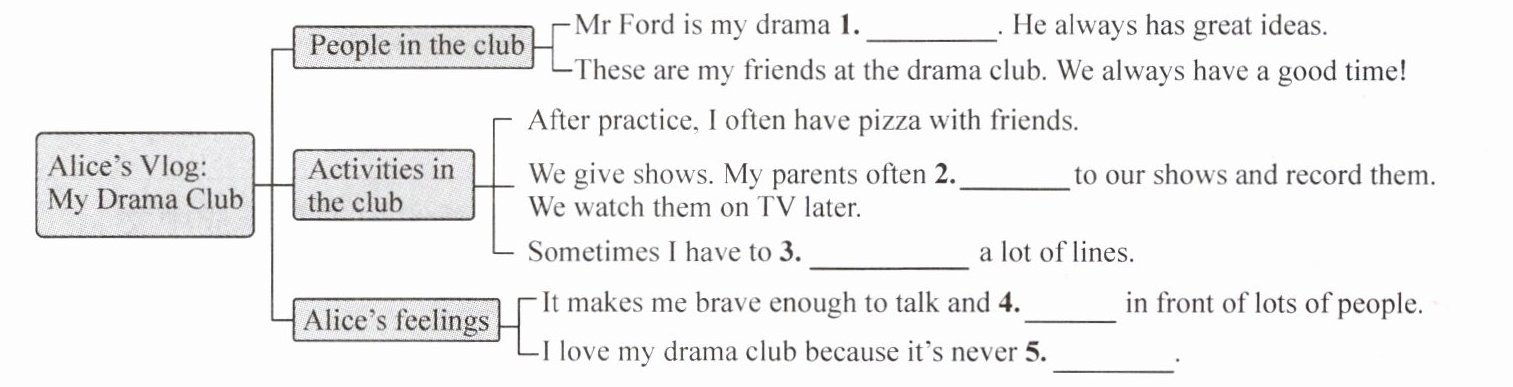
根据短文信息,完成下面的结构图。(每空一词)
答案:
1. teacher
2. come
3. remember
4. perform
5. boring
2. come
3. remember
4. perform
5. boring
查看更多完整答案,请扫码查看

