

 搜索
搜索
第9页
- 第1页
- 第2页
- 第3页
- 第4页
- 第5页
- 第6页
- 第7页
- 第8页
- 第9页
- 第10页
- 第11页
- 第12页
- 第13页
- 第14页
- 第15页
- 第16页
- 第17页
- 第18页
- 第19页
- 第20页
- 第21页
- 第22页
- 第23页
- 第24页
- 第25页
- 第26页
- 第27页
- 第28页
- 第29页
- 第30页
- 第31页
- 第32页
- 第33页
- 第34页
- 第35页
- 第36页
- 第37页
- 第38页
- 第39页
- 第40页
- 第41页
- 第42页
- 第43页
- 第44页
- 第45页
- 第46页
- 第47页
- 第48页
- 第49页
- 第50页
- 第51页
- 第52页
- 第53页
- 第54页
- 第55页
- 第56页
- 第57页
- 第58页
- 第59页
- 第60页
- 第61页
- 第62页
- 第63页
- 第64页
- 第65页
- 第66页
- 第67页
- 第68页
- 第69页
- 第70页
- 第71页
- 第72页
- 第73页
- 第74页
- 第75页
- 第76页
- 第77页
- 第78页
- 第79页
- 第80页
- 第81页
- 第82页
- 第83页
- 第84页
- 第85页
- 第86页
- 第87页
- 第88页
- 第89页
- 第90页
- 第91页
- 第92页
- 第93页
- 第94页
- 第95页
- 第96页
- 第97页
- 第98页
- 第99页
- 第100页
一、用介词 in,on 或 under 填空。
1. Your black schoolbag is
2. Helen's nice glasses are
3. You can find Helen and Emma
4. —Where is my cat? I can't find it.
—Look, it is ______
5. —I can't find my new cap in my schoolbag. Where is it?
—Haha, it is ______
1. Your black schoolbag is
in
Fu Xing's room.2. Helen's nice glasses are
on
her nose.3. You can find Helen and Emma
in
my class.4. —Where is my cat? I can't find it.
—Look, it is ______
under
the bed. Let's call it out.5. —I can't find my new cap in my schoolbag. Where is it?
—Haha, it is ______
on
your head.
答案:
1. in 2. on 3. in 4. under 5. on
二、用括号内所给单词的适当形式填空。
6. Look! There are two pairs of
7. I need
8. Lisa often puts her school
9. A pair of shoes
10. Where are my socks? I can't find
11. You can
6. Look! There are two pairs of
glasses
(glass) and three pens on the desk.7. I need
to clean
(clean) my bedroom every day.8. Lisa often puts her school
things
(thing) in her schoolbag after school.9. A pair of shoes
is
under the bed. The shoes ______are
white. (be)10. Where are my socks? I can't find
them
(they).11. You can
find
(find) many nice foods in Anhui, such as Huangshan baked cakes.
答案:
6. glasses 7. to clean 8. things 9. is; are 10. them 11. find
三、根据汉语意思完成句子,每空一词。
12. ——非常感谢你!
——不用谢。
—Thank you very much!
—
13. 我马上就来!请稍等一会儿。
I'm coming! Please
14. 托尼每天都保持他的房间整洁。
Tony
15. 我有一副新眼镜。
I have
16. 有一些篮球在书桌下面。
Some basketballs are
17. ——我的英语书在哪里?
——在这里。
—
—
12. ——非常感谢你!
——不用谢。
—Thank you very much!
—
You're welcome
.13. 我马上就来!请稍等一会儿。
I'm coming! Please
wait a minute
.14. 托尼每天都保持他的房间整洁。
Tony
keeps
his room tidy
every day.15. 我有一副新眼镜。
I have
a pair of
new glasses.16. 有一些篮球在书桌下面。
Some basketballs are
under the desk
.17. ——我的英语书在哪里?
——在这里。
—
Where is
my English book?—
Here it is
.
答案:
12. You're welcome 13. wait a minute 14. keeps; tidy 15. a pair of 16. under the desk 17. Where is; Here it is
( )18. What does Li Ming like doing?
A. Singing English songs.
B. Listening to English songs.
C. Reading English books.
D. Writing English poems(诗歌).
A. I feel angry.
B. I feel unhappy.
C. I feel quiet.
D. I feel scared.
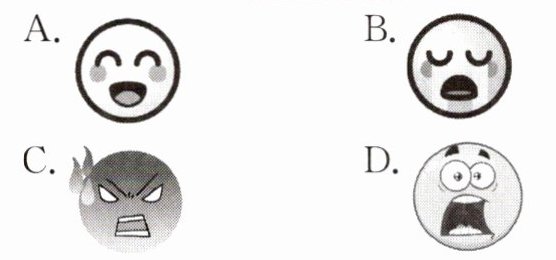
A. A sad colour.
B. A sick colour.
C. A scared colour.
D. A happy colour.
A. Different colours in nature(大自然).
B. How to sing English songs.
C. Colours and feelings.
D. Ways to express feelings(表达情感).
A. Singing English songs.
B. Listening to English songs.
C. Reading English books.
D. Writing English poems(诗歌).
B
( )19. What does the underlined sentence(画线的句子) “I feel blue.” mean?A. I feel angry.
B. I feel unhappy.
C. I feel quiet.
D. I feel scared.
B
( )20. 新考向 图片示意 In English, red may make people ______.C
( )21. In China, what kind of colour is red?A. A sad colour.
B. A sick colour.
C. A scared colour.
D. A happy colour.
D
( )22. What is the conversation mainly about?A. Different colours in nature(大自然).
B. How to sing English songs.
C. Colours and feelings.
D. Ways to express feelings(表达情感).
C
答案:
18. B 19. B 20. C 21. D 22. C
查看更多完整答案,请扫码查看

