

 搜索
搜索
第100页
- 第1页
- 第2页
- 第3页
- 第4页
- 第5页
- 第6页
- 第7页
- 第8页
- 第9页
- 第10页
- 第11页
- 第12页
- 第13页
- 第14页
- 第15页
- 第16页
- 第17页
- 第18页
- 第19页
- 第20页
- 第21页
- 第22页
- 第23页
- 第24页
- 第25页
- 第26页
- 第27页
- 第28页
- 第29页
- 第30页
- 第31页
- 第32页
- 第33页
- 第34页
- 第35页
- 第36页
- 第37页
- 第38页
- 第39页
- 第40页
- 第41页
- 第42页
- 第43页
- 第44页
- 第45页
- 第46页
- 第47页
- 第48页
- 第49页
- 第50页
- 第51页
- 第52页
- 第53页
- 第54页
- 第55页
- 第56页
- 第57页
- 第58页
- 第59页
- 第60页
- 第61页
- 第62页
- 第63页
- 第64页
- 第65页
- 第66页
- 第67页
- 第68页
- 第69页
- 第70页
- 第71页
- 第72页
- 第73页
- 第74页
- 第75页
- 第76页
- 第77页
- 第78页
- 第79页
- 第80页
- 第81页
- 第82页
- 第83页
- 第84页
- 第85页
- 第86页
- 第87页
- 第88页
- 第89页
- 第90页
- 第91页
- 第92页
- 第93页
- 第94页
- 第95页
- 第96页
- 第97页
- 第98页
- 第99页
- 第100页
- 第101页
- 第102页
- 第103页
- 第104页
- 第105页
- 第106页
- 第107页
- 第108页
- 第109页
- 第110页
- 第111页
- 第112页
- 第113页
- 第114页
- 第115页
- 第116页
- 第117页
五、(2025·南通期末)听录音,根据所听短文,完成调查统计图,每空一词。(听两遍)(10 分)
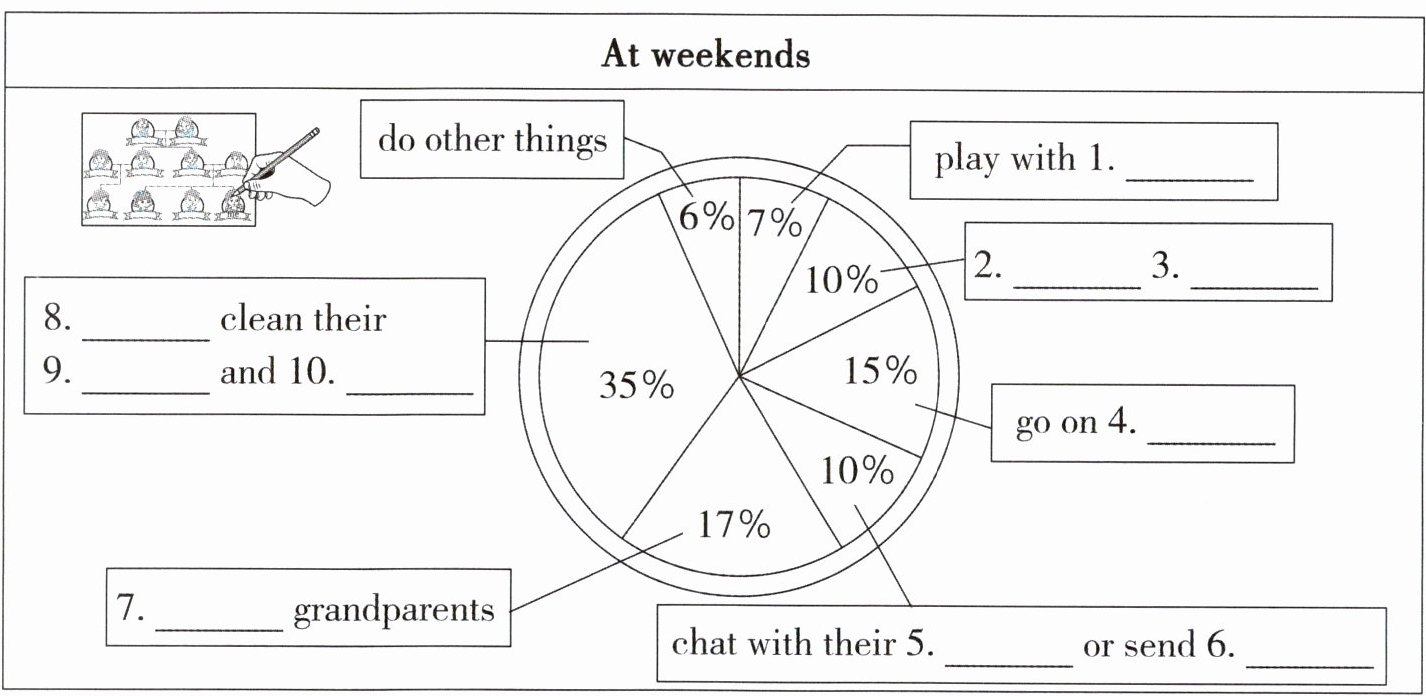
1.
1.
computers
2.read
3.stories
4.studying
5.e-friends
6.emails
7.visit
8.help
9.rooms
10.houses
答案:
1. computers 2. read 3. stories 4. studying 5. e-friends 6. emails 7. visit 8. help 9. rooms 10. houses
六、将每句中画线部分读音不同的单词写在横线上。(5 分)
1. Anne puts a bunch of flowers in the vase. ______
2. We have two Maths lessons on Mondays. ______
3. My cousin drinks some juice in the fridge. ______
4. Mr Rose likes listening to music very much. ______
5. The lovely bird can fly very fast. ______
1. Anne puts a bunch of flowers in the vase. ______
puts
2. We have two Maths lessons on Mondays. ______
Maths
3. My cousin drinks some juice in the fridge. ______
cousin
4. Mr Rose likes listening to music very much. ______
listening
5. The lovely bird can fly very fast. ______
fly
答案:
1. puts 解析:puts/s/; flowers/z/; vase/z/
2. Maths 解析:Maths/s/; lessons/z/; Mondays/z/
3. cousin 解析:cousin/z/; drinks/s/; some/s/
4. listening 解析:Rose/z/; listening/s/; music/z/
5. fly 解析:lovely/i/; fly/aɪ/; very/i/
2. Maths 解析:Maths/s/; lessons/z/; Mondays/z/
3. cousin 解析:cousin/z/; drinks/s/; some/s/
4. listening 解析:Rose/z/; listening/s/; music/z/
5. fly 解析:lovely/i/; fly/aɪ/; very/i/
1. The twins
2. When he's in a bad mood, he always
3. It's warm and sunny today. Would you like to have a
4. Su Yang usually has
5. Bobby always
6.
usually visit
their grandparents on Sundays.2. When he's in a bad mood, he always
chats with
his best friends.3. It's warm and sunny today. Would you like to have a
picnic
in the park?4. Su Yang usually has
dancing
lessons at weekends
.5. Bobby always
flies
a kite with his sister in spring.6.
Does
little Tim usually go
to the cinema on Saturday evening?
答案:
1. usually visit 2. chats with 3. picnic 4. dancing; weekends 5. flies 6. Does; go
(
A.does; do
B.is; doing
C.do; do
D.do; does
C
)1.What ______ the boys usually ______ on Fridays?A.does; do
B.is; doing
C.do; do
D.do; does
答案:
C 解析:考查“What do/does+主语+do+时间状语?”句型,这一句型用于询问某人在某时间做某事。主语 the boys 是复数,故助动词用 do,故选 C。
(
A.play football
B.playing football
C.plays football
D.playing the football
B
)2.—What about ______? —Good idea!A.play football
B.playing football
C.plays football
D.playing the football
答案:
B 解析:what about 后面可以加名词、代词或动名词,球类运动前不加 the,故选 B。
(
A.and
B.in
C.together
D.with
D
)3.We often have dinner ______ our grandparents.A.and
B.in
C.together
D.with
答案:
D 解析:考查介词 with 的用法。with 意为“和,同,与……一起”。此处指和(外)祖父母一起吃饭,故选 D。
(
A.always
B.sometimes
C.seldom
D.never
A
)4.—I ______ help my parents do some cleaning. —You're so helpful!A.always
B.sometimes
C.seldom
D.never
答案:
A 解析:答语赞美对方乐于助人,可推知第一句表达“总是帮我的父母打扫卫生”的意思。B 项意为“有时候”,C 项意为“很少”,D 项意为“从不”,故选 A。
查看更多完整答案,请扫码查看

