

 搜索
搜索
第14页
- 第1页
- 第2页
- 第3页
- 第4页
- 第5页
- 第6页
- 第7页
- 第8页
- 第9页
- 第10页
- 第11页
- 第12页
- 第13页
- 第14页
- 第15页
- 第16页
- 第17页
- 第18页
- 第19页
- 第20页
- 第21页
- 第22页
- 第23页
- 第24页
- 第25页
- 第26页
- 第27页
- 第28页
- 第29页
- 第30页
- 第31页
- 第32页
- 第33页
- 第34页
- 第35页
- 第36页
- 第37页
- 第38页
- 第39页
- 第40页
- 第41页
- 第42页
- 第43页
- 第44页
- 第45页
- 第46页
- 第47页
- 第48页
- 第49页
- 第50页
- 第51页
- 第52页
- 第53页
- 第54页
- 第55页
- 第56页
- 第57页
- 第58页
- 第59页
- 第60页
- 第61页
- 第62页
- 第63页
- 第64页
- 第65页
- 第66页
- 第67页
- 第68页
- 第69页
- 第70页
- 第71页
- 第72页
- 第73页
- 第74页
- 第75页
- 第76页
- 第77页
- 第78页
- 第79页
- 第80页
一、
李瑶想为家人们制作日程表,她正询问爸爸的日常活动。听录音,用数字给图片排序。

(
李瑶想为家人们制作日程表,她正询问爸爸的日常活动。听录音,用数字给图片排序。
(
5
) (4
) (1
) (3
) (2
)
答案:
5 4 1 3 2
二、
李瑶的哥哥李华在外地上学,平时很忙,于是他在网络平台上发了一段语音分享自己的日常生活。听录音,判断下列句子与你所听到的内容是(T)否(F)一致。
(
(
(
(
(
李瑶的哥哥李华在外地上学,平时很忙,于是他在网络平台上发了一段语音分享自己的日常生活。听录音,判断下列句子与你所听到的内容是(T)否(F)一致。
(
T
)1. Li Hua gets up at 7:00 am.(
F
)2. Li Hua has lunch with his teacher.(
F
)3. Li Hua has eight lessons a day.(
T
)4. Li Hua often goes to the library in the evening.(
F
)5. Li Hua sometimes plays football with his friends in the evening.
答案:
1. T 2. F 3. F 4. T 5. F
三、李瑶开始制作手账,她为自己的日常生活设计了一条时间轴。根据图片提示在横线上填写恰当的短语,并将图片序号填到时间轴上的相应圆圈内。
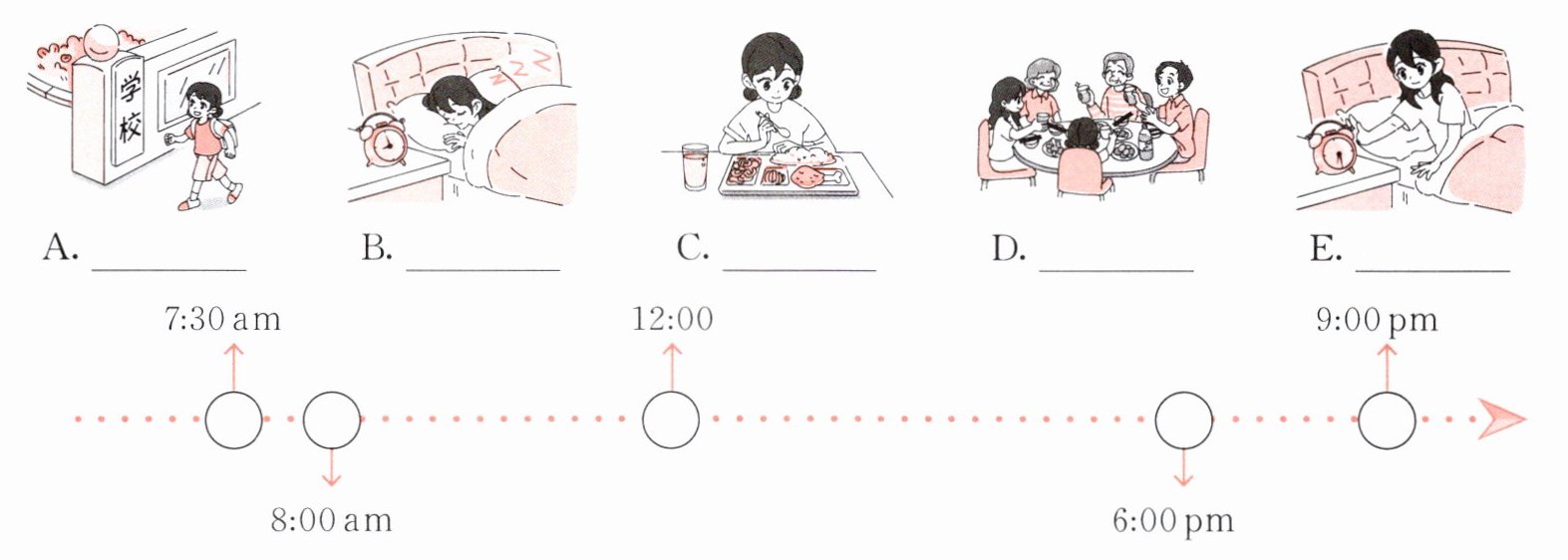
答案:
A. go to school B. go to bed
C. have lunch D. have dinner
E. get up

A. go to school B. go to bed
C. have lunch D. have dinner
E. get up
1. On Saturdays, she usually
2. On Saturdays and Sundays, she always reads books
3. On Saturdays, she often
4. On Sundays, she
5.
waters flowers
in the morning.2. On Saturdays and Sundays, she always reads books
in the afternoon
.3. On Saturdays, she often
plays the piano
in the evening.4. On Sundays, she
often cleans the floor
in the morning.5.
On Sundays, she sometimes sees a film in the evening.
答案:
1. waters flowers
2. in the afternoon
3. plays the piano
4. often cleans the floor
5. On Sundays, she sometimes sees a film in the evening.
2. in the afternoon
3. plays the piano
4. often cleans the floor
5. On Sundays, she sometimes sees a film in the evening.
查看更多完整答案,请扫码查看

