

 搜索
搜索
2024年走进重高培优测试九年级英语全一册人教版
注:目前有些书本章节名称可能整理的还不是很完善,但都是按照顺序排列的,请同学们按照顺序仔细查找。练习册 2024年走进重高培优测试九年级英语全一册人教版 答案主要是用来给同学们做完题方便对答案用的,请勿直接抄袭。
第186页
- 第1页
- 第2页
- 第3页
- 第4页
- 第5页
- 第6页
- 第7页
- 第8页
- 第9页
- 第10页
- 第11页
- 第12页
- 第13页
- 第14页
- 第15页
- 第16页
- 第17页
- 第18页
- 第19页
- 第20页
- 第21页
- 第22页
- 第23页
- 第24页
- 第25页
- 第26页
- 第27页
- 第28页
- 第29页
- 第30页
- 第31页
- 第32页
- 第33页
- 第34页
- 第35页
- 第36页
- 第37页
- 第38页
- 第39页
- 第40页
- 第41页
- 第42页
- 第43页
- 第44页
- 第45页
- 第46页
- 第47页
- 第48页
- 第49页
- 第50页
- 第51页
- 第52页
- 第53页
- 第54页
- 第55页
- 第56页
- 第57页
- 第58页
- 第59页
- 第60页
- 第61页
- 第62页
- 第63页
- 第64页
- 第65页
- 第66页
- 第67页
- 第68页
- 第69页
- 第70页
- 第71页
- 第72页
- 第73页
- 第74页
- 第75页
- 第76页
- 第77页
- 第78页
- 第79页
- 第80页
- 第81页
- 第82页
- 第83页
- 第84页
- 第85页
- 第86页
- 第87页
- 第88页
- 第89页
- 第90页
- 第91页
- 第92页
- 第93页
- 第94页
- 第95页
- 第96页
- 第97页
- 第98页
- 第99页
- 第100页
- 第101页
- 第102页
- 第103页
- 第104页
- 第105页
- 第106页
- 第107页
- 第108页
- 第109页
- 第110页
- 第111页
- 第112页
- 第113页
- 第114页
- 第115页
- 第116页
- 第117页
- 第118页
- 第119页
- 第120页
- 第121页
- 第122页
- 第123页
- 第124页
- 第125页
- 第126页
- 第127页
- 第128页
- 第129页
- 第130页
- 第131页
- 第132页
- 第133页
- 第134页
- 第135页
- 第136页
- 第137页
- 第138页
- 第139页
- 第140页
- 第141页
- 第142页
- 第143页
- 第144页
- 第145页
- 第146页
- 第147页
- 第148页
- 第149页
- 第150页
- 第151页
- 第152页
- 第153页
- 第154页
- 第155页
- 第156页
- 第157页
- 第158页
- 第159页
- 第160页
- 第161页
- 第162页
- 第163页
- 第164页
- 第165页
- 第166页
- 第167页
- 第168页
- 第169页
- 第170页
- 第171页
- 第172页
- 第173页
- 第174页
- 第175页
- 第176页
- 第177页
- 第178页
- 第179页
- 第180页
- 第181页
- 第182页
- 第183页
- 第184页
- 第185页
- 第186页
- 第187页
- 第188页
- 第189页
- 第190页
- 第191页
- 第192页
- 第193页
- 第194页
- 第195页
- 第196页
- 第197页
- 第198页
- 第199页
- 第200页
- 第201页
- 第202页
- 第203页
- 第204页
- 第205页
- 第206页
- 第207页
- 第208页
- 第209页
- 第210页
- 第211页
- 第212页
- 第213页
- 第214页
- 第215页
- 第216页
- 第217页
- 第218页
- 第219页
- 第220页
七、任务型阅读
阅读短文,从方框内选出最佳选项填入文章空白处。
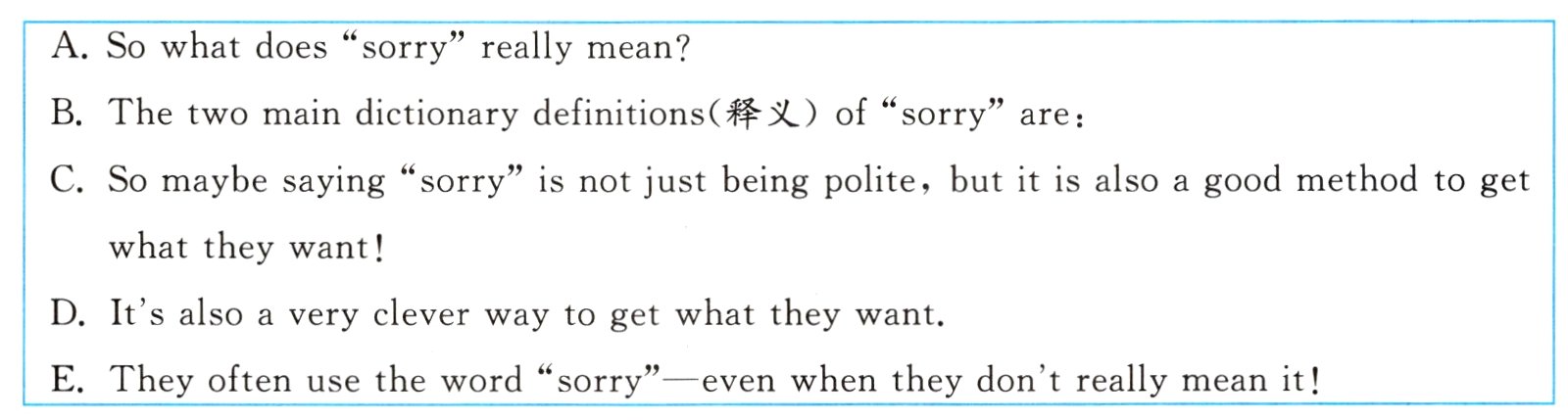
British people pride themselves on their polite manners toward one another in public. (1) _______ Usually, if they want to ask a stranger for the time, they would start by saying “Sorry to bother you. Do you know what time it is?”. If they’re five minutes late for an appointment(约会), they would generally greet the person by saying “Sorry, I’m late!”.
They use the word “sorry” in so many different situations that the meaning of the word has changed a little over time. (2) _______ ①feeling sad for someone else because of their problems or bad luck; ②feeling regret because you’ve done something wrong. Now, think about this. Normally, when they want to ask a stranger a question, they start with “Sorry to bother you.”. In this situation, they aren’t saying sorry because they feel sad for that person or because they feel regret.
(3) _______ And why do British people use it so much? Well, in the British culture, saying “sorry” is a way to be polite, especially to people who they don’t know very well. (4) _______ In a recent experiment, an actor went up to different strangers on a rainy day to ask if he could use their mobile phones in order to make a call. When he went up to one group of strangers and asked them without saying “sorry” first, he was only 9 percent successful in borrowing their phones. However, when he said “sorry” to another group of strangers about the bad weather before asking if he could use their mobile phones, he was 47 percent successful. (5) _______
阅读短文,从方框内选出最佳选项填入文章空白处。
British people pride themselves on their polite manners toward one another in public. (1) _______ Usually, if they want to ask a stranger for the time, they would start by saying “Sorry to bother you. Do you know what time it is?”. If they’re five minutes late for an appointment(约会), they would generally greet the person by saying “Sorry, I’m late!”.
They use the word “sorry” in so many different situations that the meaning of the word has changed a little over time. (2) _______ ①feeling sad for someone else because of their problems or bad luck; ②feeling regret because you’ve done something wrong. Now, think about this. Normally, when they want to ask a stranger a question, they start with “Sorry to bother you.”. In this situation, they aren’t saying sorry because they feel sad for that person or because they feel regret.
(3) _______ And why do British people use it so much? Well, in the British culture, saying “sorry” is a way to be polite, especially to people who they don’t know very well. (4) _______ In a recent experiment, an actor went up to different strangers on a rainy day to ask if he could use their mobile phones in order to make a call. When he went up to one group of strangers and asked them without saying “sorry” first, he was only 9 percent successful in borrowing their phones. However, when he said “sorry” to another group of strangers about the bad weather before asking if he could use their mobile phones, he was 47 percent successful. (5) _______
答案:
1.E 2.B 3.A 4.D 5.C
查看更多完整答案,请扫码查看

