

 搜索
搜索
第75页
- 第1页
- 第2页
- 第3页
- 第4页
- 第5页
- 第6页
- 第7页
- 第8页
- 第9页
- 第10页
- 第11页
- 第12页
- 第13页
- 第14页
- 第15页
- 第16页
- 第17页
- 第18页
- 第19页
- 第20页
- 第21页
- 第22页
- 第23页
- 第24页
- 第25页
- 第26页
- 第27页
- 第28页
- 第29页
- 第30页
- 第31页
- 第32页
- 第33页
- 第34页
- 第35页
- 第36页
- 第37页
- 第38页
- 第39页
- 第40页
- 第41页
- 第42页
- 第43页
- 第44页
- 第45页
- 第46页
- 第47页
- 第48页
- 第49页
- 第50页
- 第51页
- 第52页
- 第53页
- 第54页
- 第55页
- 第56页
- 第57页
- 第58页
- 第59页
- 第60页
- 第61页
- 第62页
- 第63页
- 第64页
- 第65页
- 第66页
- 第67页
- 第68页
- 第69页
- 第70页
- 第71页
- 第72页
- 第73页
- 第74页
- 第75页
- 第76页
- 第77页
- 第78页
- 第79页
- 第80页
- 第81页
- 第82页
- 第83页
- 第84页
- 第85页
- 第86页
- 第87页
- 第88页
- 第89页
- 第90页
- 第91页
- 第92页
- 第93页
- 第94页
- 第95页
- 第96页
- 第97页
- 第98页
- 第99页
- 第100页
1. couple
【感知】
Long ago, there was a couple living in Yunnan Province, China. (教材第 49 页) 很久以前,有一对夫妻住在中国云南省。
The couple was/were married in 2024. 这对夫妇于 2024 年结婚。
A couple of students are on their way to school. 几名学生正在上学的路上。
【探究】
①couple 名词,意为“夫妻;情侣;两人”。作主语时,谓语动词用单数或复数均可。
②
【应用】
完成句子
①篮子里有两三个梨。There are
②那对新婚夫妇现在非常开心。The
【感知】
Long ago, there was a couple living in Yunnan Province, China. (教材第 49 页) 很久以前,有一对夫妻住在中国云南省。
The couple was/were married in 2024. 这对夫妇于 2024 年结婚。
A couple of students are on their way to school. 几名学生正在上学的路上。
【探究】
①couple 名词,意为“夫妻;情侣;两人”。作主语时,谓语动词用单数或复数均可。
②
a couple of
一对;几个【应用】
完成句子
①篮子里有两三个梨。There are
a
couple
of
pears in the basket.②那对新婚夫妇现在非常开心。The
new
couple
is/are
very happy now.
答案:
1.[探究]②a couple of [应用]①a couple of ②new couple is/are
2. separate
【感知】
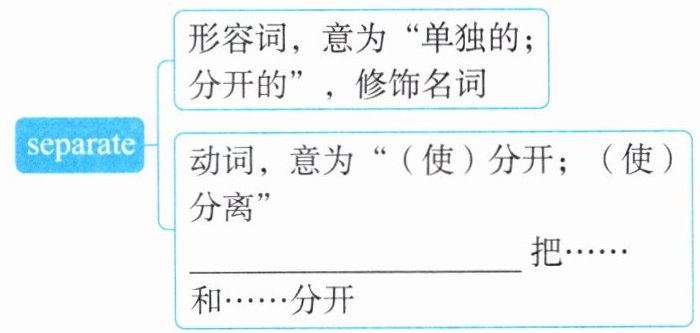
And she kept the ingredients separate. (教材第 49 页) 她将配料分装。
Each student has a separate desk. 每个学生都有一张独立的书桌。
You should separate the good apples from the bad ones. 你应该把好的苹果和坏的苹果分开。
【探究】
```
【应用】
完成句子
①我们有各自的卧室。We have
②很难把他和他的朋友们分开。It's difficult
【感知】
And she kept the ingredients separate. (教材第 49 页) 她将配料分装。
Each student has a separate desk. 每个学生都有一张独立的书桌。
You should separate the good apples from the bad ones. 你应该把好的苹果和坏的苹果分开。
【探究】
```
【应用】
完成句子
①我们有各自的卧室。We have
separate
bedrooms
.②很难把他和他的朋友们分开。It's difficult
to
separate
him from
his friends.
答案:
2.[探究]separate ... from ... [应用]①separate bedrooms ②to separate; from
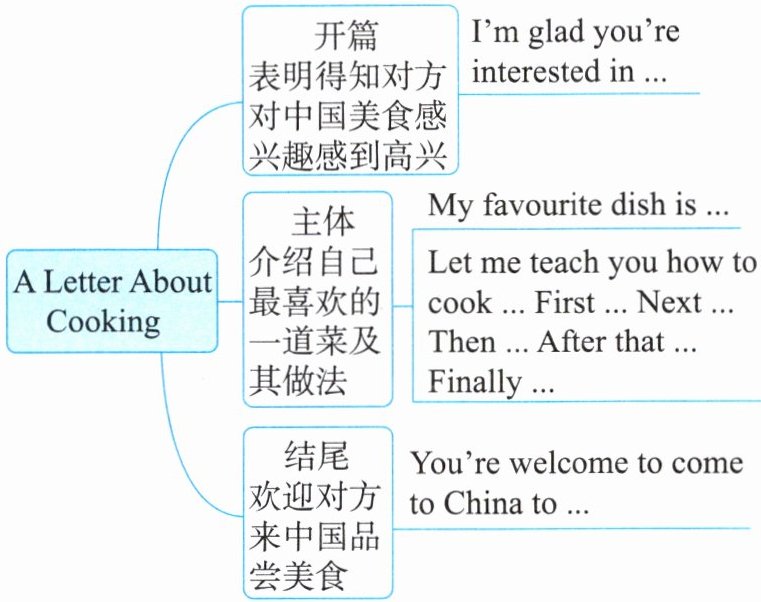
假如你是王凯,你的笔友 Eric 来信说对中国的美食文化很感兴趣,请给他回信介绍你最喜欢的一道菜及其做法,并欢迎他来中国品尝美食。
要求:
1. 条理清晰,语句通顺,语法正确;
2. 书写规范,词数不少于 80。
思路点拨
1. 文体:说明文
2. 人称:第一人称和第二人称
3. 时态:一般现在时
4. 结构:
素材积累
1. 主题词块
①切碎;剁碎
②将……倒入……
③将……切成……
④处理
⑤将……放回
⑥(使)……和……混合
⑦(使)充满;(使)填满
⑧至少
⑨将……添加到……
⑩逐个地;逐一地
2. 句型仿写
①... can you teach me how to cook a popular Chinese dish? (教材 p.43 2a) 句型:teach sb how to do sth 仿写:让我教你如何做它。
②Wash the potatoes and cut them into pieces. (教材 p.42 1c) 句型:Wash... and cut... into pieces. 仿写:清洗西红柿并把它们切成块。
③Put the potatoes in a pot and boil them until they are soft. (教材 p.42 1c) 句型:... until... 仿写:把西红柿放进平底锅里炒,直到它们变软。
连句成篇
__________
要求:
1. 条理清晰,语句通顺,语法正确;
2. 书写规范,词数不少于 80。
思路点拨
1. 文体:说明文
2. 人称:第一人称和第二人称
3. 时态:一般现在时
4. 结构:
素材积累
1. 主题词块
①切碎;剁碎
cut up
②将……倒入……
cut up
③将……切成……
cut up
④处理
cut up
⑤将……放回
cut up
⑥(使)……和……混合
cut up
⑦(使)充满;(使)填满
cut up
⑧至少
cut up
⑨将……添加到……
cut up
⑩逐个地;逐一地
cut up
2. 句型仿写
①... can you teach me how to cook a popular Chinese dish? (教材 p.43 2a) 句型:teach sb how to do sth 仿写:让我教你如何做它。
cut up
②Wash the potatoes and cut them into pieces. (教材 p.42 1c) 句型:Wash... and cut... into pieces. 仿写:清洗西红柿并把它们切成块。
cut up
③Put the potatoes in a pot and boil them until they are soft. (教材 p.42 1c) 句型:... until... 仿写:把西红柿放进平底锅里炒,直到它们变软。
cut up
连句成篇
__________
答案:
【素材积累】1.主题词块 ①cut up ②pour sth into sth ③cut sth in/into sth ④do with ⑤put sth back ⑥mix ... with ... ⑦fill ... with ... ⑧at least ⑨add ... to ... ⑩one by one 2.句型仿写 ①Let me teach you how to cook it. ②Wash the tomatoes and cut them into pieces. ③Put the tomatoes in the pan and fry them until they are soft. 【连句成篇】Dear Eric, I’m glad you’re interested in Chinese food culture. My favourite dish is stir-fried eggs and tomatoes. Let me teach you how to cook it. You need two eggs, two tomatoes, some oil, sugar and salt. First, you should beat the two eggs. Next, wash the tomatoes and cut them into pieces. Then, pour some oil into the pan and heat it. After that, put the eggs into the pan, and stir-fry for one minute. Put the tomatoes in the pan and fry them until they are soft. Finally, don’t forget to add a little salt and sugar to the dish. Now your dish is ready to serve. You’re welcome to come to China to taste the delicious food. Yours, Wang Kai
查看更多完整答案,请扫码查看

