

 搜索
搜索
第2页
- 第1页
- 第2页
- 第3页
- 第4页
- 第5页
- 第6页
- 第7页
- 第8页
- 第9页
- 第10页
- 第11页
- 第12页
- 第13页
- 第14页
- 第15页
- 第16页
- 第17页
- 第18页
- 第19页
- 第20页
- 第21页
- 第22页
- 第23页
- 第24页
- 第25页
- 第26页
- 第27页
- 第28页
- 第29页
- 第30页
- 第31页
- 第32页
- 第33页
- 第34页
- 第35页
- 第36页
- 第37页
- 第38页
- 第39页
- 第40页
- 第41页
- 第42页
- 第43页
- 第44页
- 第45页
- 第46页
- 第47页
- 第48页
- 第49页
- 第50页
- 第51页
- 第52页
- 第53页
- 第54页
- 第55页
- 第56页
- 第57页
- 第58页
- 第59页
- 第60页
- 第61页
- 第62页
- 第63页
- 第64页
- 第65页
- 第66页
- 第67页
- 第68页
- 第69页
- 第70页
- 第71页
- 第72页
- 第73页
- 第74页
- 第75页
- 第76页
- 第77页
- 第78页
- 第79页
- 第80页
- 第81页
- 第82页
- 第83页
- 第84页
- 第85页
- 第86页
- 第87页
- 第88页
- 第89页
- 第90页
- 第91页
- 第92页
- 第93页
- 第94页
- 第95页
- 第96页
- 第97页
- 第98页
- 第99页
- 第100页
1. strange
【感知】
» Yaming saw the Guest-Greeting Pine, the Sea of Clouds, lots of strange rocks, and many ancient buildings. (教材第 2 页) 亚明看到了迎客松、云海、许多奇石和众多古建筑。
» I went to a strange city. 我去了一个陌生的城市。
» Don't speak to strangers. 不要与陌生人交谈。
【探究】
(1)strange 形容词,意为“奇怪的”,还可表示“
(2)其名词形式为
【应用】
①完成句子:昨天我们爬山的时候,我偶然发现了一块奇怪的石头。
I found a
②用所给单词的适当形式填空:Parents often tell their children not to talk to
【感知】
» Yaming saw the Guest-Greeting Pine, the Sea of Clouds, lots of strange rocks, and many ancient buildings. (教材第 2 页) 亚明看到了迎客松、云海、许多奇石和众多古建筑。
» I went to a strange city. 我去了一个陌生的城市。
» Don't speak to strangers. 不要与陌生人交谈。
【探究】
(1)strange 形容词,意为“奇怪的”,还可表示“
陌生的
”。(2)其名词形式为
stranger
,意为“陌生人”。【应用】
①完成句子:昨天我们爬山的时候,我偶然发现了一块奇怪的石头。
I found a
strange
stone
by accident when we climbed the mountain yesterday.②用所给单词的适当形式填空:Parents often tell their children not to talk to
strangers
(strange).
答案:
1.[探究]
(1)陌生的
(2)stranger [应用]①strange stone ②strangers
(1)陌生的
(2)stranger [应用]①strange stone ②strangers
2. vacation
【感知】
» Where did Yaming go on vacation? (教材第 2 页) 亚明去哪儿度假了?
» The thing is, I don't have time to take a vacation. 问题是我没有时间去度假。
» The students of Class 4 will visit Mount Huangshan this winter vacation. 今年寒假,四班的学生将游览黄山。
【探究】
vacation 名词,意为“假期;度假”。
①
②(be) on vacation 在度假(强调状态)
③
④winter/summer vacation 寒/暑假
【应用】
完成句子
①我去度假时,你能照顾我的狗吗?
Could you look after my dog when I
②大多数人会在七月或八月的某个时候休假。
Most people
【感知】
» Where did Yaming go on vacation? (教材第 2 页) 亚明去哪儿度假了?
» The thing is, I don't have time to take a vacation. 问题是我没有时间去度假。
» The students of Class 4 will visit Mount Huangshan this winter vacation. 今年寒假,四班的学生将游览黄山。
【探究】
vacation 名词,意为“假期;度假”。
①
go on vacation
去度假(强调出发度假)②(be) on vacation 在度假(强调状态)
③
take a vacation
去度假(强调安排休假)④winter/summer vacation 寒/暑假
【应用】
完成句子
①我去度假时,你能照顾我的狗吗?
Could you look after my dog when I
go/am
on
vacation
?②大多数人会在七月或八月的某个时候休假。
Most people
take
a
vacation
sometime in July or August.
答案:
2.[探究]①go on vacation ③take a vacation [应用]①go/am on vacation ②take a vacation
3. anywhere
【感知】
» Did you go anywhere interesting? (教材第 3 页) 你去过什么有趣的地方吗?
» I don't have anywhere to stay. 我没有可以待的地方。
» I have seen him somewhere before. 我以前在哪儿见过他。
» Teng Fei is not a tidy boy. His things are everywhere. 滕飞是一个不爱整洁的男孩。他的东西到处都是。
【探究】
(1)anywhere 作不定副词,意为“在任何地方”,当 anywhere 等不定副词与形容词连用时,形容词必须
(2)anywhere 还可作不定代词,意为“任何地方”。
(3)anywhere,somewhere 与 everywhere 的用法辨析
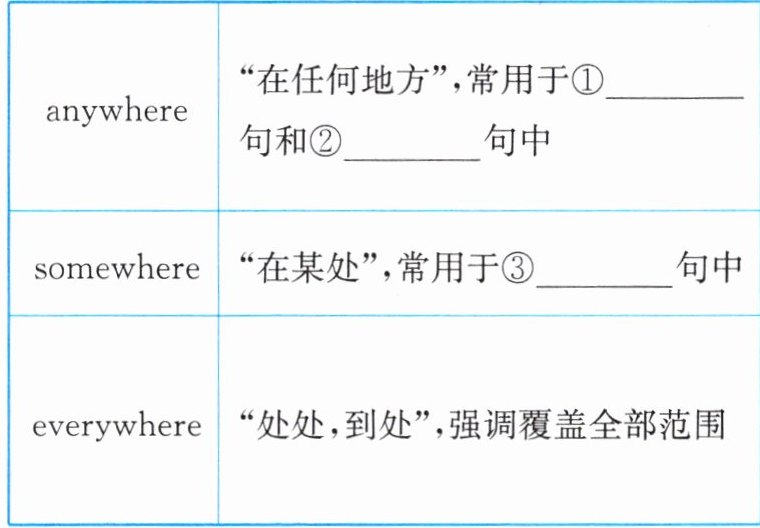
【应用】
完成句子或对话
①I'm considering going
②—Where did you go last night?
—I
③Don't let your pet
【感知】
» Did you go anywhere interesting? (教材第 3 页) 你去过什么有趣的地方吗?
» I don't have anywhere to stay. 我没有可以待的地方。
» I have seen him somewhere before. 我以前在哪儿见过他。
» Teng Fei is not a tidy boy. His things are everywhere. 滕飞是一个不爱整洁的男孩。他的东西到处都是。
【探究】
(1)anywhere 作不定副词,意为“在任何地方”,当 anywhere 等不定副词与形容词连用时,形容词必须
后置
(前置/后置)。(2)anywhere 还可作不定代词,意为“任何地方”。
(3)anywhere,somewhere 与 everywhere 的用法辨析
【应用】
完成句子或对话
①I'm considering going
somewhere
beautiful
(某个美丽的地方) for the summer holiday.②—Where did you go last night?
—I
didn’t
go
anywhere
(哪儿都没去). I only stayed at home.③Don't let your pet
run
everywhere
(到处跑).
答案:
3.[探究]
(1)后置
(3)①否定 ②疑问 ③肯定 [应用]①somewhere beautiful ②didn’t go anywhere ③run everywhere
(1)后置
(3)①否定 ②疑问 ③肯定 [应用]①somewhere beautiful ②didn’t go anywhere ③run everywhere
查看更多完整答案,请扫码查看

