

 搜索
搜索
第39页
- 第1页
- 第2页
- 第3页
- 第4页
- 第5页
- 第6页
- 第7页
- 第8页
- 第9页
- 第10页
- 第11页
- 第12页
- 第13页
- 第14页
- 第15页
- 第16页
- 第17页
- 第18页
- 第19页
- 第20页
- 第21页
- 第22页
- 第23页
- 第24页
- 第25页
- 第26页
- 第27页
- 第28页
- 第29页
- 第30页
- 第31页
- 第32页
- 第33页
- 第34页
- 第35页
- 第36页
- 第37页
- 第38页
- 第39页
- 第40页
- 第41页
- 第42页
- 第43页
- 第44页
- 第45页
- 第46页
- 第47页
- 第48页
- 第49页
- 第50页
- 第51页
- 第52页
- 第53页
- 第54页
- 第55页
- 第56页
- 第57页
- 第58页
- 第59页
- 第60页
- 第61页
- 第62页
- 第63页
- 第64页
- 第65页
- 第66页
- 第67页
- 第68页
- 第69页
- 第70页
- 第71页
- 第72页
- 第73页
- 第74页
- 第75页
- 第76页
- 第77页
- 第78页
- 第79页
- 第80页
- 第81页
- 第82页
- 第83页
- 第84页
- 第85页
- 第86页
- 第87页
- 第88页
- 第89页
- 第90页
- 第91页
- 第92页
- 第93页
- 第94页
- 第95页
- 第96页
- 第97页
- 第98页
- 第99页
- 第100页
- 第101页
- 第102页
- 第103页
- 第104页
- 第105页
- 第106页
- 第107页
- 第108页
- 第109页
- 第110页
- 第111页
- 第112页
典例微课 1 thanks to 的用法
thanks to 意为“归功于;由于;因为”,相当于 because of。
Thanks to his help, I can get success. 多亏了他的帮助,我才能获得成功。
[知识拓展]
thanks for 意为“因……感谢”,相当于“thank you for...”,后接名词、代词或动词 -ing 形式。
Thanks for your dictionary. 谢谢你的词典。
Thanks for helping me study English. 谢谢你帮助我学习英语。
【情境应用】
1. Thanks for
2. 多亏了老师的指导,我在学习上取得了巨大的进步。
thanks to 意为“归功于;由于;因为”,相当于 because of。
Thanks to his help, I can get success. 多亏了他的帮助,我才能获得成功。
[知识拓展]
thanks for 意为“因……感谢”,相当于“thank you for...”,后接名词、代词或动词 -ing 形式。
Thanks for your dictionary. 谢谢你的词典。
Thanks for helping me study English. 谢谢你帮助我学习英语。
【情境应用】
1. Thanks for
waiting
(wait) for me after school.2. 多亏了老师的指导,我在学习上取得了巨大的进步。
Thanks
to
the teacher's guidance, I made great progress in my study.
答案:
1. waiting 2. Thanks to
典例微课 2 less 的用法
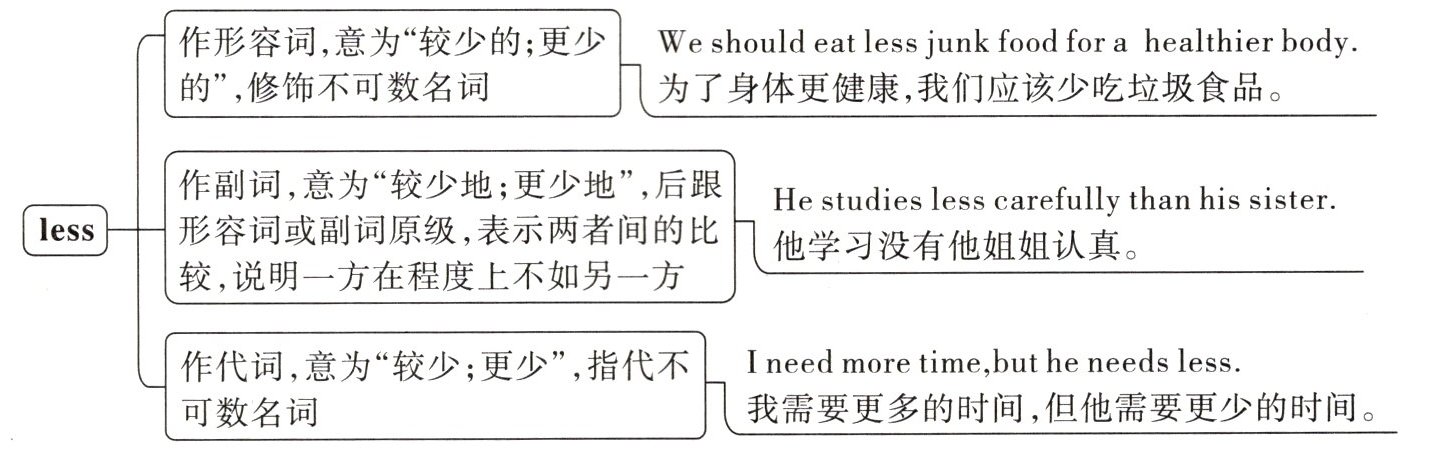
less
作形容词,意为“较少的;更少的”,修饰不可数名词
We should eat less junk food for a healthier body. 为了身体更健康,我们应该少吃垃圾食品。
作副词,意为“较少地;更少地”,后跟形容词或副词原级,表示两者间的比较,说明一方在程度上不如另一方
He studies less carefully than his sister. 他学习没有他姐姐认真。
作代词,意为“较少;更少”,指代不可数名词
I need more time, but he needs less. 我需要更多的时间,但他需要更少的时间。
【情境应用】
1. He runs
2. 我的时间比你少。
I have
less
作形容词,意为“较少的;更少的”,修饰不可数名词
We should eat less junk food for a healthier body. 为了身体更健康,我们应该少吃垃圾食品。
作副词,意为“较少地;更少地”,后跟形容词或副词原级,表示两者间的比较,说明一方在程度上不如另一方
He studies less carefully than his sister. 他学习没有他姐姐认真。
作代词,意为“较少;更少”,指代不可数名词
I need more time, but he needs less. 我需要更多的时间,但他需要更少的时间。
【情境应用】
1. He runs
less
(little) quickly than his brother.2. 我的时间比你少。
I have
less
time
than you.
答案:
1. less 2. less time
典例微课 3 expect 的用法
expect 动词,意为“预料;期待”。expect (sb) to do sth 表示“期待/期望(某人)做某事”。
I expect to finish my homework before dinner. 我预计在晚饭前完成作业。
The teacher expects us to finish the project by Friday. 老师期望我们在周五之前完成这个项目。
【情境应用】
1. They expect
2. 老师期望我在课堂讨论中更积极些。
The teacher
expect 动词,意为“预料;期待”。expect (sb) to do sth 表示“期待/期望(某人)做某事”。
I expect to finish my homework before dinner. 我预计在晚饭前完成作业。
The teacher expects us to finish the project by Friday. 老师期望我们在周五之前完成这个项目。
【情境应用】
1. They expect
to visit
(visit) their grandparents this weekend.2. 老师期望我在课堂讨论中更积极些。
The teacher
expects
me
to
be more active in class discussions.
答案:
1. to visit 2. expects me to
查看更多完整答案,请扫码查看

