

 搜索
搜索
第25页
- 第1页
- 第2页
- 第3页
- 第4页
- 第5页
- 第6页
- 第7页
- 第8页
- 第9页
- 第10页
- 第11页
- 第12页
- 第13页
- 第14页
- 第15页
- 第16页
- 第17页
- 第18页
- 第19页
- 第20页
- 第21页
- 第22页
- 第23页
- 第24页
- 第25页
- 第26页
- 第27页
- 第28页
- 第29页
- 第30页
- 第31页
- 第32页
- 第33页
- 第34页
- 第35页
- 第36页
- 第37页
- 第38页
- 第39页
- 第40页
- 第41页
- 第42页
- 第43页
- 第44页
- 第45页
- 第46页
- 第47页
- 第48页
- 第49页
- 第50页
- 第51页
- 第52页
- 第53页
- 第54页
- 第55页
- 第56页
- 第57页
- 第58页
- 第59页
- 第60页
- 第61页
- 第62页
- 第63页
- 第64页
- 第65页
- 第66页
- 第67页
- 第68页
- 第69页
- 第70页
- 第71页
- 第72页
- 第73页
- 第74页
- 第75页
- 第76页
- 第77页
- 第78页
- 第79页
- 第80页
- 第81页
- 第82页
- 第83页
- 第84页
- 第85页
- 第86页
- 第87页
- 第88页
- 第89页
- 第90页
- 第91页
- 第92页
- 第93页
- 第94页
- 第95页
- 第96页
- 第97页
- 第98页
- 第99页
- 第100页
- 第101页
- 第102页
- 第103页
- 第104页
- 第105页
- 第106页
- 第107页
- 第108页
- 第109页
- 第110页
- 第111页
- 第112页
典例微课 1 joke 的用法
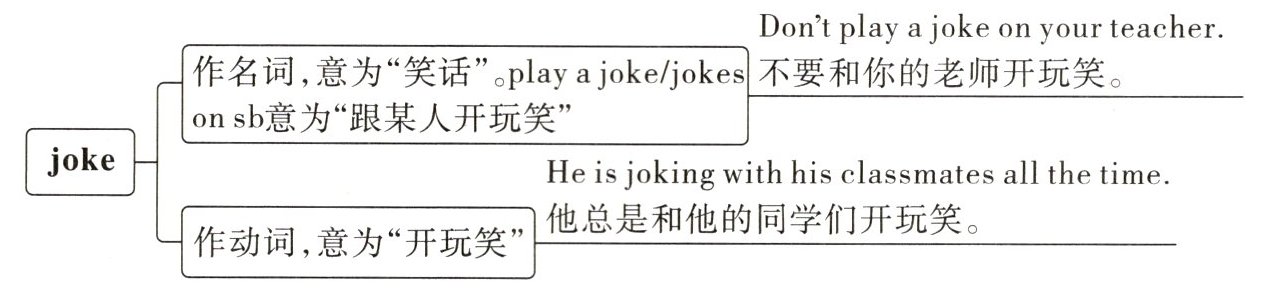
joke
作名词,意为“笑话”。play a joke/jokes on sb 意为“跟某人开玩笑”
Don't play a joke on your teacher.
不要和你的老师开玩笑。
作动词,意为“开玩笑”
He is joking with his classmates all the time.
他总是和他的同学们开玩笑。
【情境应用】
1. She
2. 汤姆经常跟他的弟弟开玩笑。
Tom often
joke
作名词,意为“笑话”。play a joke/jokes on sb 意为“跟某人开玩笑”
Don't play a joke on your teacher.
不要和你的老师开玩笑。
作动词,意为“开玩笑”
He is joking with his classmates all the time.
他总是和他的同学们开玩笑。
【情境应用】
1. She
joked
(joke) with her friends during lunchtime.2. 汤姆经常跟他的弟弟开玩笑。
Tom often
plays
jokes
on
his brother.
答案:
1.joked 2.plays jokes on
典例微课 2 matter 的用法
1. matter 作动词,意为“要紧”;作名词,意为“问题”。
It doesn't matter. 不要紧。
I have some important matters to ask you. 我有几件重要的事情要问你。
2. no matter 意为“不论;不要紧”,通常与 what, which, who, how, when, where 等特殊疑问词连用,引导让步状语从句,此时,“no matter + 特殊疑问词”相当于“特殊疑问词 + -ever”。
No matter what/Whatever happens to the children, their parents will always be there.
无论孩子们发生什么事,父母总会在他们身边。
【情境应用】
( )1. —I lost the pen you lent me yesterday. I'm so sorry. —______
A. You are kind.
B. It is true.
C. It doesn't matter.
D. I am sorry too.
2. Whoever you are, you have to follow the rules of your school as a student. (改为同义句)
______________ ________ you are, you have to follow the rules of your school as a student.
1. matter 作动词,意为“要紧”;作名词,意为“问题”。
It doesn't matter. 不要紧。
I have some important matters to ask you. 我有几件重要的事情要问你。
2. no matter 意为“不论;不要紧”,通常与 what, which, who, how, when, where 等特殊疑问词连用,引导让步状语从句,此时,“no matter + 特殊疑问词”相当于“特殊疑问词 + -ever”。
No matter what/Whatever happens to the children, their parents will always be there.
无论孩子们发生什么事,父母总会在他们身边。
【情境应用】
( )1. —I lost the pen you lent me yesterday. I'm so sorry. —______
A. You are kind.
B. It is true.
C. It doesn't matter.
D. I am sorry too.
2. Whoever you are, you have to follow the rules of your school as a student. (改为同义句)
______________ ________ you are, you have to follow the rules of your school as a student.
答案:
1.C 2.No matter who
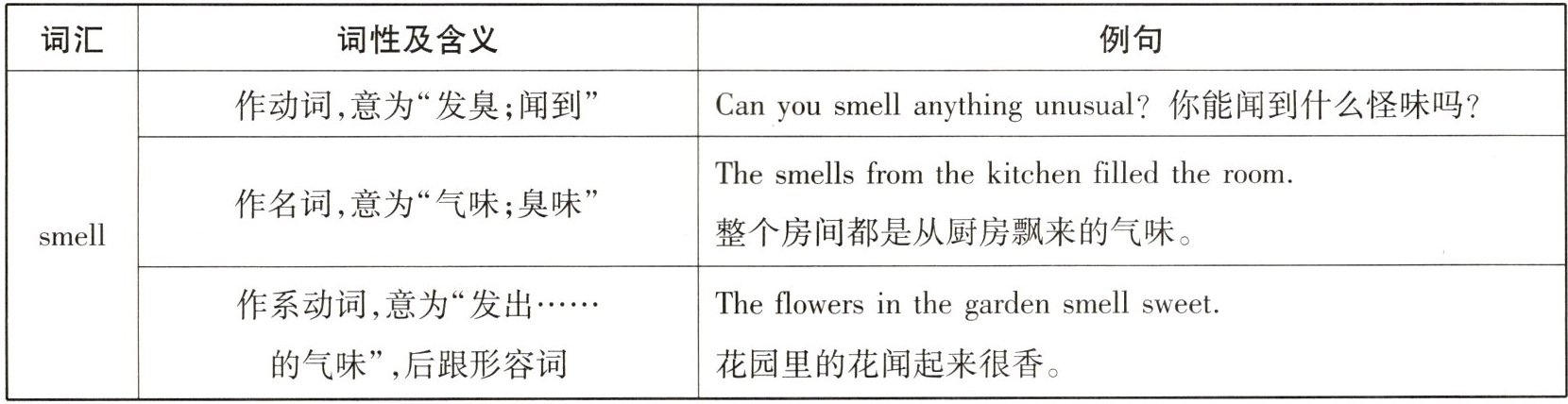
典例微课 3 smell 的用法
【情境应用】
(
A. tastes
B. feels
C. sounds
D. smells
2. Your body
3. The flowers smell
【情境应用】
(
D
)1. The cheese cake ______ so good that I can't wait to eat it.A. tastes
B. feels
C. sounds
D. smells
2. Your body
smells
(发臭), so you should take a shower.3. The flowers smell
good
(well).
答案:
1.D 2.smells 3.good
查看更多完整答案,请扫码查看

