

 搜索
搜索
第2页
- 第1页
- 第2页
- 第3页
- 第4页
- 第5页
- 第6页
- 第7页
- 第8页
- 第9页
- 第10页
- 第11页
- 第12页
- 第13页
- 第14页
- 第15页
- 第16页
- 第17页
- 第18页
- 第19页
- 第20页
- 第21页
- 第22页
- 第23页
- 第24页
- 第25页
- 第26页
- 第27页
- 第28页
- 第29页
- 第30页
- 第31页
- 第32页
- 第33页
- 第34页
- 第35页
- 第36页
- 第37页
- 第38页
- 第39页
- 第40页
- 第41页
- 第42页
- 第43页
- 第44页
- 第45页
- 第46页
- 第47页
- 第48页
- 第49页
- 第50页
- 第51页
- 第52页
- 第53页
- 第54页
- 第55页
- 第56页
- 第57页
- 第58页
- 第59页
- 第60页
- 第61页
- 第62页
- 第63页
- 第64页
- 第65页
- 第66页
- 第67页
- 第68页
- 第69页
- 第70页
- 第71页
- 第72页
- 第73页
- 第74页
- 第75页
- 第76页
- 第77页
- 第78页
- 第79页
- 第80页
- 第81页
- 第82页
- 第83页
- 第84页
- 第85页
- 第86页
- 第87页
- 第88页
- 第89页
- 第90页
- 第91页
- 第92页
- 第93页
- 第94页
- 第95页
- 第96页
- 第97页
- 第98页
- 第99页
- 第100页
- 第101页
- 第102页
- 第103页
- 第104页
- 第105页
- 第106页
- 第107页
- 第108页
- 第109页
- 第110页
- 第111页
- 第112页
Ⅲ. 核心句式(能根据汉语提示补全下列英语句子)
1. ——你的假期怎么样? —
——太棒了。 —
2. ——你去了什么有趣的地方吗? —
——是的,我去了云南。 —Yes, I
3. 一切尝起来都很好,尤其是汽锅鸡。
Everything
4. 我只是待在家里读书、玩游戏和放松,但仍然很有趣。
I
1. ——你的假期怎么样? —
How
was
your holiday?——太棒了。 —
It
was
fantastic.2. ——你去了什么有趣的地方吗? —
Did
you go
anywhere
interesting
?——是的,我去了云南。 —Yes, I
went
to Yunnan.3. 一切尝起来都很好,尤其是汽锅鸡。
Everything
tasted
good
, especially
the steamed chicken soup.4. 我只是待在家里读书、玩游戏和放松,但仍然很有趣。
I
just
stayed
at
home to read, play games, and relax, but it was still fun.
答案:
Ⅲ.1.How was;It was 2.Did;go anywhere interesting; went 3.tasted good;especially 4.just stayed at
典例微课 1 camp 的用法
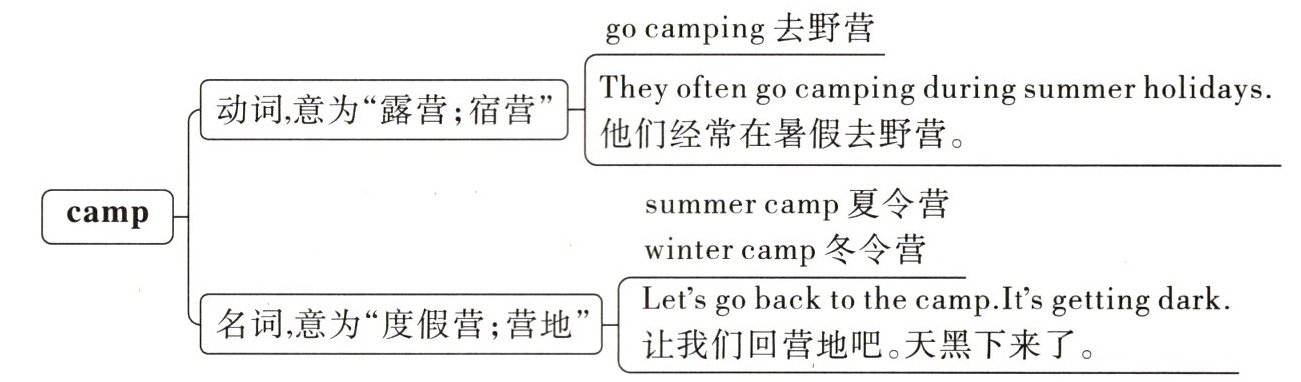
go camping 去野营
They often go camping during summer holidays.
他们经常在暑假去野营。
summer camp 夏令营
winter camp 冬令营
Let's go back to the camp. It's getting dark.
让我们回营地吧。天黑下来了。
【情境应用】
1. In autumn, Lily's family often go
2. Mary wants to take part in the art class at the school
3. Bob
go camping 去野营
They often go camping during summer holidays.
他们经常在暑假去野营。
summer camp 夏令营
winter camp 冬令营
Let's go back to the camp. It's getting dark.
让我们回营地吧。天黑下来了。
【情境应用】
1. In autumn, Lily's family often go
camping
(camp) at the weekend.2. Mary wants to take part in the art class at the school
summer camp
(夏令营) this year.3. Bob
camped
(camp) in the mountains with his friends last weekend and they took lots of photos.
答案:
典例微课1 1.camping 2.summer camp 3.camped
典例微课 2 nothing 的用法
nothing 是不定代词,意为“没有事;没有任何东西”。
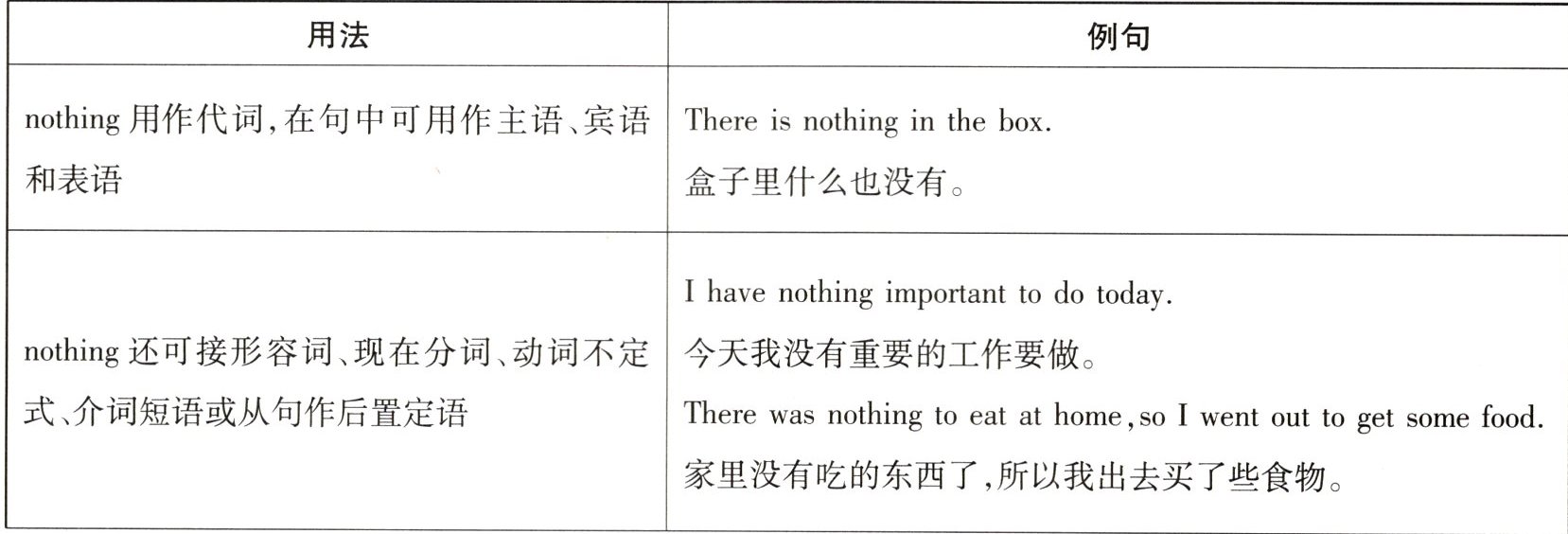

今天我没有重要的工作要做。
There was nothing to eat at home, so I went out to get some food.
【情境应用】
(
A. nothing
B. everything
C. anything
D. something
2. I have nothing
3. 如果你想实现梦想,没有什么比不断尝试更重要了。
nothing 是不定代词,意为“没有事;没有任何东西”。
今天我没有重要的工作要做。
There was nothing to eat at home, so I went out to get some food.
【情境应用】
(
A
)1. (2024 吉林改编) Running is getting popular. It is good for our health and it costs (花费) ______.A. nothing
B. everything
C. anything
D. something
2. I have nothing
to do
(do) tomorrow afternoon.3. 如果你想实现梦想,没有什么比不断尝试更重要了。
Nothing
is
more important than keeping trying if you want to achieve your dreams.
答案:
典例微课2 1.A 2.to do 3.Nothing is
查看更多完整答案,请扫码查看

