

 搜索
搜索
第14页
- 第1页
- 第2页
- 第3页
- 第4页
- 第5页
- 第6页
- 第7页
- 第8页
- 第9页
- 第10页
- 第11页
- 第12页
- 第13页
- 第14页
- 第15页
- 第16页
- 第17页
- 第18页
- 第19页
- 第20页
- 第21页
- 第22页
- 第23页
- 第24页
- 第25页
- 第26页
- 第27页
- 第28页
- 第29页
- 第30页
- 第31页
- 第32页
- 第33页
- 第34页
- 第35页
- 第36页
- 第37页
- 第38页
- 第39页
- 第40页
- 第41页
- 第42页
- 第43页
- 第44页
- 第45页
- 第46页
- 第47页
- 第48页
- 第49页
- 第50页
- 第51页
- 第52页
- 第53页
- 第54页
- 第55页
- 第56页
- 第57页
- 第58页
- 第59页
- 第60页
- 第61页
- 第62页
- 第63页
- 第64页
- 第65页
- 第66页
- 第67页
- 第68页
- 第69页
- 第70页
- 第71页
- 第72页
- 第73页
- 第74页
- 第75页
- 第76页
- 第77页
- 第78页
- 第79页
- 第80页
Ⅲ. Pair work. 画一画,说一说。
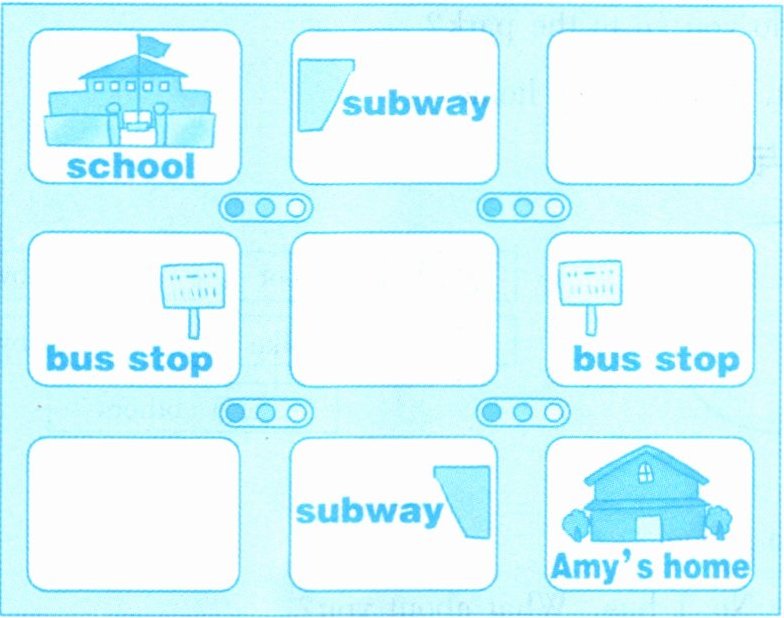
1. First - row empty box: Draw a student taking the subway, write "by subway"
2. Second - row empty box: Draw a bus, write "by bus"
3. Third - row empty box: Draw a person walking, write "walk"
Speaking examples:
For the first row: I go to school by subway.
For the second row: I go to school by bus.
For the third row: Amy goes home by subway and walks.
1. First - row empty box: Draw a student taking the subway, write "by subway"
2. Second - row empty box: Draw a bus, write "by bus"
3. Third - row empty box: Draw a person walking, write "walk"
Speaking examples:
For the first row: I go to school by subway.
For the second row: I go to school by bus.
For the third row: Amy goes home by subway and walks.
答案:
This is a pair work activity from the textbook. Since it requires drawing and speaking, and there is no specific question to solve mathematically, here is how to approach it based on the content of Unit 2 "Ways to go to school":
Step 1: Understand the pictures
The first row shows: school, subway, and an empty box (which can be filled with a way to go to school).
The second row shows: bus stop, an empty box, and bus stop.
The third row shows: an empty box, subway, and Amy’s home.
Step 2: Fill in the empty boxes logically
For the first - row empty box, since the theme is "Ways to go to school", and the first picture is school, the second is subway, we can draw a picture of a student taking the subway to school and write "by subway" below it.
For the second - row empty box, as there are bus stops on both sides, we can draw a bus and write "by bus" below it.
For the third - row empty box, considering the subway and Amy's home, we can draw a picture of Amy getting off the subway and walking home, and write "walk" below it.
Step 3: Speak about the pictures
For the first row: I go to school by subway.
For the second row: I go to school by bus.
For the third row: Amy goes home by subway and then walks.
Since this is a pair - work drawing and speaking activity rather than a traditional mathematical or written - answer - type question, it doesn't fit the standard format of providing a single written answer. But if we have to summarize in a simple way for the "answer" part:
1. First - row empty box: Draw a student taking the subway, write "by subway"
2. Second - row empty box: Draw a bus, write "by bus"
3. Third - row empty box: Draw a person walking, write "walk"
Speaking examples:
For the first row: I go to school by subway.
For the second row: I go to school by bus.
For the third row: Amy goes home by subway and walks.
Step 1: Understand the pictures
The first row shows: school, subway, and an empty box (which can be filled with a way to go to school).
The second row shows: bus stop, an empty box, and bus stop.
The third row shows: an empty box, subway, and Amy’s home.
Step 2: Fill in the empty boxes logically
For the first - row empty box, since the theme is "Ways to go to school", and the first picture is school, the second is subway, we can draw a picture of a student taking the subway to school and write "by subway" below it.
For the second - row empty box, as there are bus stops on both sides, we can draw a bus and write "by bus" below it.
For the third - row empty box, considering the subway and Amy's home, we can draw a picture of Amy getting off the subway and walking home, and write "walk" below it.
Step 3: Speak about the pictures
For the first row: I go to school by subway.
For the second row: I go to school by bus.
For the third row: Amy goes home by subway and then walks.
Since this is a pair - work drawing and speaking activity rather than a traditional mathematical or written - answer - type question, it doesn't fit the standard format of providing a single written answer. But if we have to summarize in a simple way for the "answer" part:
1. First - row empty box: Draw a student taking the subway, write "by subway"
2. Second - row empty box: Draw a bus, write "by bus"
3. Third - row empty box: Draw a person walking, write "walk"
Speaking examples:
For the first row: I go to school by subway.
For the second row: I go to school by bus.
For the third row: Amy goes home by subway and walks.
Ⅳ. Read and judge. 读短文,判断正(√)误(×)。
When you are in England, you must be very careful in the street because the drivers drive on the left side of the road. Before you cross a street, you must look at the right side first and then the left side.
When you go by bus in England, you have to be careful, too. Always remember the traffic moves on the left. So you must be careful. Have a look first or you will go the wrong way.
In many English cities, there are big buses with two floors. You can sit on the second floor. From there you can see the city very well. It’s very interesting.
(
(
(
(
(
When you are in England, you must be very careful in the street because the drivers drive on the left side of the road. Before you cross a street, you must look at the right side first and then the left side.
When you go by bus in England, you have to be careful, too. Always remember the traffic moves on the left. So you must be careful. Have a look first or you will go the wrong way.
In many English cities, there are big buses with two floors. You can sit on the second floor. From there you can see the city very well. It’s very interesting.
(
×
) 1. In England and China, drivers drive on the right side of the road.(
×
) 2. Before crossing a street, you must look at the left side first and then the right side.(
√
) 3. We must be careful when we walk or drive on the road.(
×
) 4. You can’t see the city when you sit on the big buses.(
√
) 5. In England, the traffic moves on the left.
答案:
1. ×
2. ×
3. √
4. ×
5. √
2. ×
3. √
4. ×
5. √
Ⅴ. Read and answer. 阅读对话,回答问题。
Sarah: Tom, let’s go to the park this afternoon.
Tom: Great! But how do we go to the park?
Sarah: It’s easy. You can come to my home by bike. Then we can take a No. 1 bus to the park. The bus stop is near my home.
Tom: Do you live on the fifth floor?
Sarah: No, I don’t. John lives on the fifth floor, I live on the third floor.
Tom: OK! See you at 3 o’clock.
1. When is Sarah going to the park?
2. How does Tom go to Sarah’s home?
3. How do they go to the park?
4. Is the bus stop far from Sarah’s home?
5. Does John live on the third floor?
Sarah: Tom, let’s go to the park this afternoon.
Tom: Great! But how do we go to the park?
Sarah: It’s easy. You can come to my home by bike. Then we can take a No. 1 bus to the park. The bus stop is near my home.
Tom: Do you live on the fifth floor?
Sarah: No, I don’t. John lives on the fifth floor, I live on the third floor.
Tom: OK! See you at 3 o’clock.
1. When is Sarah going to the park?
This afternoon.
2. How does Tom go to Sarah’s home?
By bike.
3. How do they go to the park?
They take a No. 1 bus to the park.
4. Is the bus stop far from Sarah’s home?
No, it isn't.
5. Does John live on the third floor?
No, he doesn't.
答案:
1. This afternoon.
2. By bike.
3. They take a No. 1 bus to the park.
4. No, it isn't.
5. No, he doesn't.
2. By bike.
3. They take a No. 1 bus to the park.
4. No, it isn't.
5. No, he doesn't.
查看更多完整答案,请扫码查看

