

 搜索
搜索
第58页
- 第1页
- 第2页
- 第3页
- 第4页
- 第5页
- 第6页
- 第7页
- 第8页
- 第9页
- 第10页
- 第11页
- 第12页
- 第13页
- 第14页
- 第15页
- 第16页
- 第17页
- 第18页
- 第19页
- 第20页
- 第21页
- 第22页
- 第23页
- 第24页
- 第25页
- 第26页
- 第27页
- 第28页
- 第29页
- 第30页
- 第31页
- 第32页
- 第33页
- 第34页
- 第35页
- 第36页
- 第37页
- 第38页
- 第39页
- 第40页
- 第41页
- 第42页
- 第43页
- 第44页
- 第45页
- 第46页
- 第47页
- 第48页
- 第49页
- 第50页
- 第51页
- 第52页
- 第53页
- 第54页
- 第55页
- 第56页
- 第57页
- 第58页
- 第59页
- 第60页
- 第61页
- 第62页
- 第63页
- 第64页
- 第65页
- 第66页
- 第67页
- 第68页
- 第69页
- 第70页
- 第71页
- 第72页
- 第73页
- 第74页
- 第75页
- 第76页
- 第77页
- 第78页
- 第79页
- 第80页
- 第81页
- 第82页
- 第83页
- 第84页
- 第85页
- 第86页
- 第87页
- 第88页
- 第89页
- 第90页
- 第91页
- 第92页
- 第93页
- 第94页
- 第95页
- 第96页
- 第97页
- 第98页
- 第99页
- 第100页
- 第101页
- 第102页
- 第103页
- 第104页
- 第105页
- 第106页
- 第107页
- 第108页
- 第109页
- 第110页
- 第111页
- 第112页
- 第113页
- 第114页
- 第115页
- 第116页
- 第117页
- 第118页
- 第119页
- 第120页
- 第121页
- 第122页
- 第123页
- 第124页
- 第125页
- 第126页
- 第127页
- 第128页
- 第129页
- 第130页
- 第131页
- 第132页
- 第133页
- 第134页
- 第135页
- 第136页
- 第137页
- 第138页
Ⅱ 完成句子,明确本课重点句型。
1. 你的假期如何?
______
2. 那就是我为什么要去那儿。
That's
3. 我想学习如何放风筝。I want to learn
4. 看哪个风筝能够飞得最高真是有趣。
______
1. 你的假期如何?
______
How
was your vacation?2. 那就是我为什么要去那儿。
That's
why
I went there.3. 我想学习如何放风筝。I want to learn
how to
fly a kite.4. 看哪个风筝能够飞得最高真是有趣。
______
It
was really ______fun
to see which kite could fly the highest.
答案:
1. How
2. why
3. how to
4. It;fun
2. why
3. how to
4. It;fun
课文再现 劳拉正试图找到更多关于它的信息。Laura is trying to
迁移运用 1. 他找了一整天钢笔,但是没有找到。He
2. The teacher wants to
find out
more about it.迁移运用 1. 他找了一整天钢笔,但是没有找到。He
looked for
his pen all day, but he didn't find
it.2. The teacher wants to
find out who
broke the window.
答案:
find out; looked for; didn't find; find out who
课文再现 郑云告诉劳拉如何做一个风筝。Zheng Yun tells Laura
迁移运用 1. 你能告诉我怎样到达火车站吗?Can you tell me
2. 去哪里还是个问题。
how to
make a kite.迁移运用 1. 你能告诉我怎样到达火车站吗?Can you tell me
how to
get to the railway station? (作宾语)2. 去哪里还是个问题。
Where to
go is still a question. (作主语)
答案:
1. how to
2. how I can(或 how to,根据语境,“how to”更符合“疑问词+不定式”作宾语的简洁表达)
3. Where to
2. how I can(或 how to,根据语境,“how to”更符合“疑问词+不定式”作宾语的简洁表达)
3. Where to
Ⅰ 听长对话,选择最佳答案。
1. Which kite does the man like?
A. The one in the shape of a tiger.
B. The one in the shape of a panda.
C. The one in the shape of a cat.
2. When is the kite festival held?
A. From April 19th to 24th.
B. From April 20th to 25th.
C. From May 20th to 25th.
3. What does the woman ask the man to do in the end?
A. Fly a kite with her.
B. Make a kite for her.
C. Go to her hometown with her.
1. Which kite does the man like?
A. The one in the shape of a tiger.
B. The one in the shape of a panda.
C. The one in the shape of a cat.
2. When is the kite festival held?
A. From April 19th to 24th.
B. From April 20th to 25th.
C. From May 20th to 25th.
3. What does the woman ask the man to do in the end?
A. Fly a kite with her.
B. Make a kite for her.
C. Go to her hometown with her.
答案:
ABC
Ⅱ 听短文,用词或词块完成表格内容,每空不超过三个词。
| | The Umbrellas |
| History | They were invented 1.
| Culture | They were a symbol of happiness and social position in ancient times. |
| Uses | They are useful in both 2.
| 3.
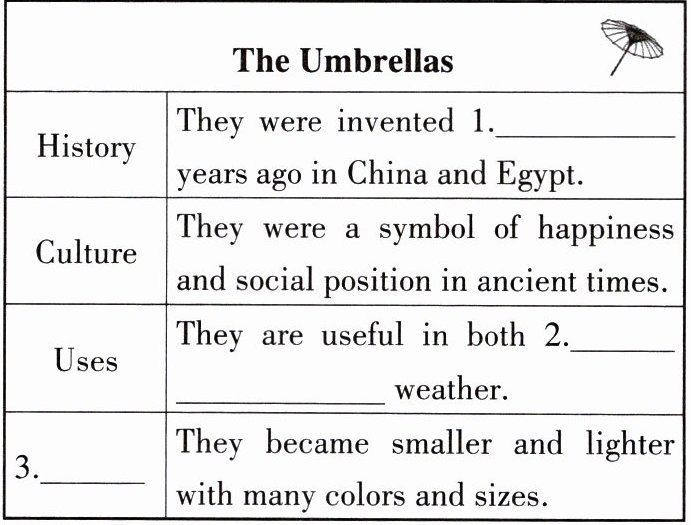
| My Own Thought: | I think the writer wants to tell us an umbrella is more than a useful tool, it has 4.
| | The Umbrellas |
| History | They were invented 1.
thousands of
years ago in China and Egypt. || Culture | They were a symbol of happiness and social position in ancient times. |
| Uses | They are useful in both 2.
sunny and rainy
weather. || 3.
Development
| They became smaller and lighter with many colors and sizes. || My Own Thought: | I think the writer wants to tell us an umbrella is more than a useful tool, it has 4.
cultural meaning
. |
答案:
(听力材料缺失,此答案仅为推测。)1. thousands of 2. sunny and rainy 3. Development 4. cultural meaning
查看更多完整答案,请扫码查看

