

 搜索
搜索
第118页
- 第1页
- 第2页
- 第3页
- 第4页
- 第5页
- 第6页
- 第7页
- 第8页
- 第9页
- 第10页
- 第11页
- 第12页
- 第13页
- 第14页
- 第15页
- 第16页
- 第17页
- 第18页
- 第19页
- 第20页
- 第21页
- 第22页
- 第23页
- 第24页
- 第25页
- 第26页
- 第27页
- 第28页
- 第29页
- 第30页
- 第31页
- 第32页
- 第33页
- 第34页
- 第35页
- 第36页
- 第37页
- 第38页
- 第39页
- 第40页
- 第41页
- 第42页
- 第43页
- 第44页
- 第45页
- 第46页
- 第47页
- 第48页
- 第49页
- 第50页
- 第51页
- 第52页
- 第53页
- 第54页
- 第55页
- 第56页
- 第57页
- 第58页
- 第59页
- 第60页
- 第61页
- 第62页
- 第63页
- 第64页
- 第65页
- 第66页
- 第67页
- 第68页
- 第69页
- 第70页
- 第71页
- 第72页
- 第73页
- 第74页
- 第75页
- 第76页
- 第77页
- 第78页
- 第79页
- 第80页
- 第81页
- 第82页
- 第83页
- 第84页
- 第85页
- 第86页
- 第87页
- 第88页
- 第89页
- 第90页
- 第91页
- 第92页
- 第93页
- 第94页
- 第95页
- 第96页
- 第97页
- 第98页
- 第99页
- 第100页
- 第101页
- 第102页
- 第103页
- 第104页
- 第105页
- 第106页
- 第107页
- 第108页
- 第109页
- 第110页
- 第111页
- 第112页
- 第113页
- 第114页
- 第115页
- 第116页
- 第117页
- 第118页
- 第119页
- 第120页
- 第121页
- 第122页
- 第123页
- 第124页
- 第125页
- 第126页
- 第127页
- 第128页
- 第129页
- 第130页
- 第131页
- 第132页
- 第133页
- 第134页
- 第135页
- 第136页
- 第137页
- 第138页
Ⅰ 听长对话,选择正确答案。
1. Where is Linda from?
A. Brazil. B. Mexico. C. Japan.
2. What are people supposed to do when they meet in Mexico for the first time?
A. Kiss. B. Shake hands. C. Bow.
1. Where is Linda from?
A. Brazil. B. Mexico. C. Japan.
2. What are people supposed to do when they meet in Mexico for the first time?
A. Kiss. B. Shake hands. C. Bow.
答案:
AB
Ⅱ 听短文,用词或词块完成表格内容,每空不超过三个词。
|Culture Shock|1.
| |People|They were very 2.
| |Language|“film” for “movie”|
| | |3. “
|I think the speaker wants to tell us that London, England is 4.
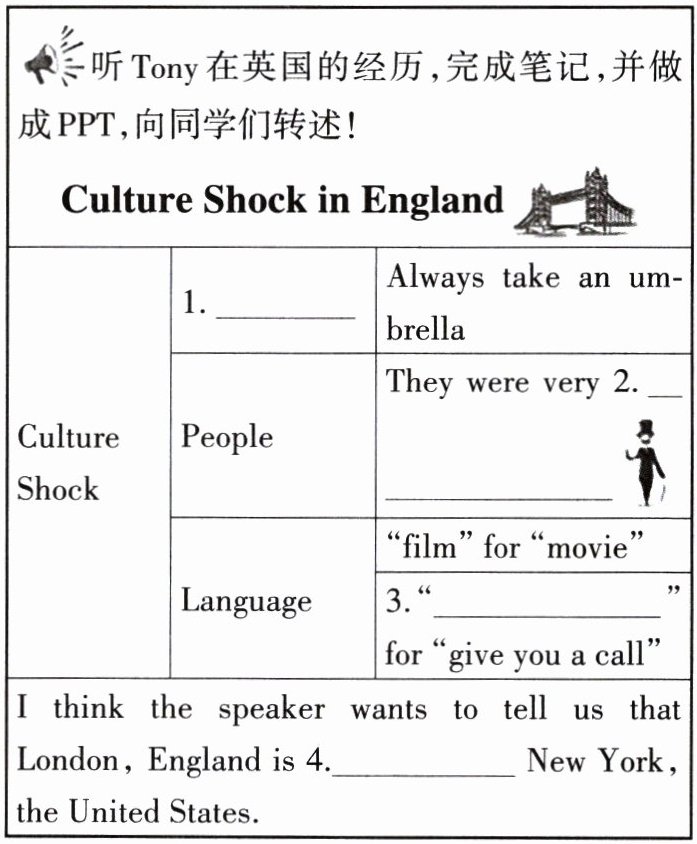
|Culture Shock|1.
Weather
|Always take an umbrella|| |People|They were very 2.
friendly
|| |Language|“film” for “movie”|
| | |3. “
ring you up
” for “give you a call”||I think the speaker wants to tell us that London, England is 4.
different from
New York, the United States.|
答案:
1. Weather
2. friendly
3. ring you up
4. different from
(听力材料缺失,此答案仅为推测。)
2. friendly
3. ring you up
4. different from
(听力材料缺失,此答案仅为推测。)
1. Tina
2. The teacher
3.
4.
didn't cut
herself by chance yesterday.2. The teacher
pointed at
the words and asked the class to read.3.
Tom used to play the guitar in his yard.
4.
Not only
Tom but also
Jim likes
documentaries. Neither
Tom nor
Jim likes
documentaries.
答案:
1. didn't cut
2. pointed at
3. Tom used to play the guitar in his yard.
4. Not only; but also; likes; Neither; nor; likes
2. pointed at
3. Tom used to play the guitar in his yard.
4. Not only; but also; likes; Neither; nor; likes
Ⅳ 阅读理解。
Different countries have different customs in giving presents.
In China you must never give a clock to a Chinese person, because the sound of the word for “clock” is similar to the sound of “death”. Also, don't wrap a present in white, black or blue paper, because they are the colors for funerals (葬礼). Don't give a knife, because something sharp can cut a friendship.
In Russia if you give flowers as presents, you have to give an odd number of them (one, three, five, etc.) because even numbers of flowers are for funerals.
In Germany if you are invited to dinner, flowers are good presents to take to your dinner hostess, but don't take her red roses because it means you are in love with her. Don't take thirteen of anything because it's an unlucky number. Don't take an even number of anything, either. Don't wrap your presents in white, brown, or black paper.
1. According to the passage, what must never be given to Chinese people as presents?
A. Flowers. B. Clothes. C. Food. D. Clocks.
2. In which country do people not wrap presents in black or white paper?
A. Germany. B. China. C. Both China and Germany. D. Both China and Russia.
3. What does the underlined word “even” mean in Chinese in the passage?
A. 偶数 B. 奇数 C. 甚至 D. 平坦
4. What presents can you take to your dinner hostess in Germany?
A. Thirteen of something. B. Flowers except red roses. C. An even number of something. D. Something wrapped in brown paper.
Different countries have different customs in giving presents.
In China you must never give a clock to a Chinese person, because the sound of the word for “clock” is similar to the sound of “death”. Also, don't wrap a present in white, black or blue paper, because they are the colors for funerals (葬礼). Don't give a knife, because something sharp can cut a friendship.
In Russia if you give flowers as presents, you have to give an odd number of them (one, three, five, etc.) because even numbers of flowers are for funerals.
In Germany if you are invited to dinner, flowers are good presents to take to your dinner hostess, but don't take her red roses because it means you are in love with her. Don't take thirteen of anything because it's an unlucky number. Don't take an even number of anything, either. Don't wrap your presents in white, brown, or black paper.
1. According to the passage, what must never be given to Chinese people as presents?
A. Flowers. B. Clothes. C. Food. D. Clocks.
2. In which country do people not wrap presents in black or white paper?
A. Germany. B. China. C. Both China and Germany. D. Both China and Russia.
3. What does the underlined word “even” mean in Chinese in the passage?
A. 偶数 B. 奇数 C. 甚至 D. 平坦
4. What presents can you take to your dinner hostess in Germany?
A. Thirteen of something. B. Flowers except red roses. C. An even number of something. D. Something wrapped in brown paper.
答案:
1. D
2. C
3. A
4. B
2. C
3. A
4. B
查看更多完整答案,请扫码查看

