

 搜索
搜索
第57页
- 第1页
- 第2页
- 第3页
- 第4页
- 第5页
- 第6页
- 第7页
- 第8页
- 第9页
- 第10页
- 第11页
- 第12页
- 第13页
- 第14页
- 第15页
- 第16页
- 第17页
- 第18页
- 第19页
- 第20页
- 第21页
- 第22页
- 第23页
- 第24页
- 第25页
- 第26页
- 第27页
- 第28页
- 第29页
- 第30页
- 第31页
- 第32页
- 第33页
- 第34页
- 第35页
- 第36页
- 第37页
- 第38页
- 第39页
- 第40页
- 第41页
- 第42页
- 第43页
- 第44页
- 第45页
- 第46页
- 第47页
- 第48页
- 第49页
- 第50页
- 第51页
- 第52页
- 第53页
- 第54页
- 第55页
- 第56页
- 第57页
- 第58页
- 第59页
- 第60页
- 第61页
- 第62页
- 第63页
- 第64页
- 第65页
- 第66页
- 第67页
- 第68页
- 第69页
- 第70页
- 第71页
- 第72页
- 第73页
- 第74页
- 第75页
- 第76页
- 第77页
- 第78页
- 第79页
- 第80页
- 第81页
- 第82页
- 第83页
- 第84页
- 第85页
- 第86页
- 第87页
- 第88页
- 第89页
- 第90页
- 第91页
- 第92页
- 第93页
- 第94页
- 第95页
- 第96页
- 第97页
- 第98页
- 第99页
- 第100页
- 第101页
- 第102页
- 第103页
- 第104页
- 第105页
- 第106页
- 第107页
- 第108页
- 第109页
- 第110页
- 第111页
- 第112页
- 第113页
- 第114页
- 第115页
- 第116页
- 第117页
- 第118页
- 第119页
- 第120页
- 第121页
- 第122页
- 第123页
- 第124页
- 第125页
- 第126页
- 第127页
- 第128页
- 第129页
- 第130页
- 第131页
- 第132页
- 第133页
- 第134页
- 第135页
- 第136页
1. —Where did you go on
—I went to London.
A.every
B.an
C.the
D.a
D
vacation last week?—I went to London.
A.every
B.an
C.the
D.a
答案:
D
2. —How can I learn English well?
—I think you should try
A.read
B.to read
C.reads
D.to reading
—I think you should try
B
English every morning.A.read
B.to read
C.reads
D.to reading
答案:
B
3. —I will travel to Mount Tai. Could you tell me something about it?
—Let me help you
A.finds
B.found
C.find out
D.found out
—Let me help you
C
the information about it.A.finds
B.found
C.find out
D.found out
答案:
C
4. Could you tell me
A.solve
B.how can I solve
C.how to solve
D.what to solve
C
the problem?A.solve
B.how can I solve
C.how to solve
D.what to solve
答案:
C
5. Now students in some schools
A.ask
B.asked
C.are asked
D.were asked
C
not to use mobile phones.A.ask
B.asked
C.are asked
D.were asked
答案:
C
Ⅲ. 按要求完成句子
1. People grow tea in many different areas.(改为被动语态)Tea
2. We often hear the girl sing happily in her room.(改为被动语态)The girl
3. Do you clean your classroom every day?(改为被动语态)
4. The trees are watered once a week by them.(改为主动语态)
5. They don't make this kind of watch in Beijing.(改为被动语态)This kind of watch
1. People grow tea in many different areas.(改为被动语态)Tea
is grown
in many different areas by people.2. We often hear the girl sing happily in her room.(改为被动语态)The girl
is
often heard to sing
happily in her room.3. Do you clean your classroom every day?(改为被动语态)
Is
your classroom cleaned
every day?4. The trees are watered once a week by them.(改为主动语态)
They water
the trees once a week.5. They don't make this kind of watch in Beijing.(改为被动语态)This kind of watch
isn't made
in Beijing by them.
答案:
1. is grown 2. is; heard to sing 3. Is; cleaned 4. They water 5. isn't made
Ⅳ. 阅读理解
Information about some great inventions
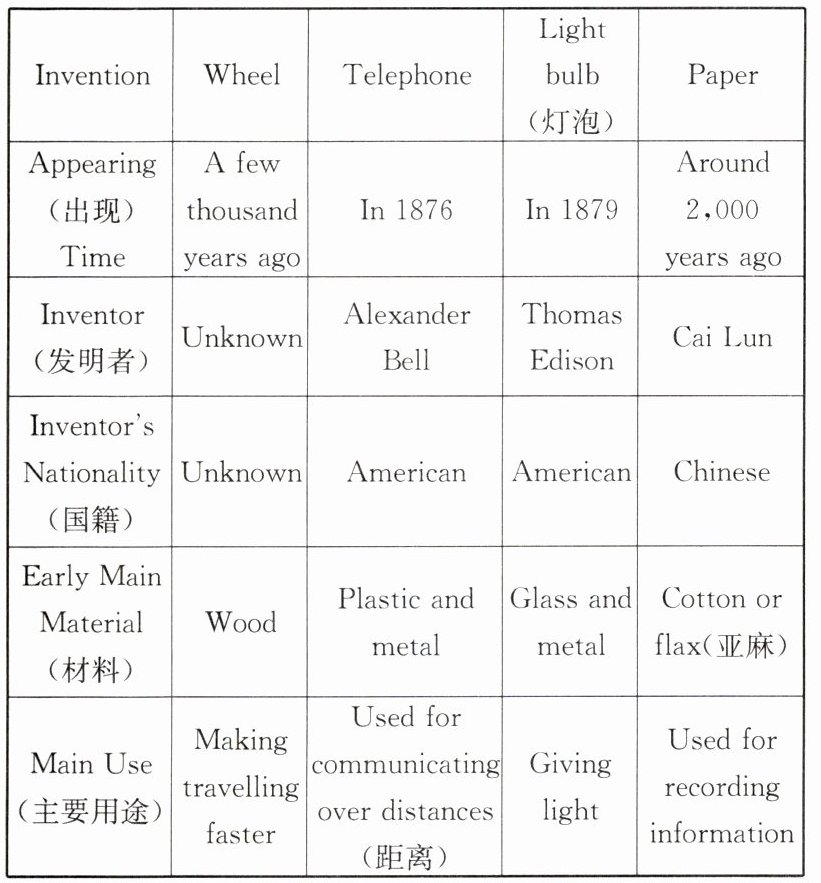
1. What's the form(表格)about?
A. Rules.
B. Movies.
C. Dreams.
D. Inventions.
(
2. What's the latest invention according to the form?
A. The wheel.
B. The paper.
C. The telephone.
D. The light bulb.
(
3. How many Chinese inventions are mentioned in the form?
A. One.
B. Two.
C. Three.
D. None.
(
4. What was the telephone made of according to the form?
A. Wood.
B. Glass and metal.
C. Plastic and metal.
D. Cotton and flax.
(
5. Thanks to the invention of the wheel, people can ____.
A. have enough light to read
B. travel faster
C. communicate over distances
D. have more books to read
(
Information about some great inventions
1. What's the form(表格)about?
A. Rules.
B. Movies.
C. Dreams.
D. Inventions.
(
D
)2. What's the latest invention according to the form?
A. The wheel.
B. The paper.
C. The telephone.
D. The light bulb.
(
D
)3. How many Chinese inventions are mentioned in the form?
A. One.
B. Two.
C. Three.
D. None.
(
A
)4. What was the telephone made of according to the form?
A. Wood.
B. Glass and metal.
C. Plastic and metal.
D. Cotton and flax.
(
C
)5. Thanks to the invention of the wheel, people can ____.
A. have enough light to read
B. travel faster
C. communicate over distances
D. have more books to read
(
B
)
答案:
1.D 2.D 3.A 4.C 5.B
查看更多完整答案,请扫码查看

