

 搜索
搜索
第41页
- 第1页
- 第2页
- 第3页
- 第4页
- 第5页
- 第6页
- 第7页
- 第8页
- 第9页
- 第10页
- 第11页
- 第12页
- 第13页
- 第14页
- 第15页
- 第16页
- 第17页
- 第18页
- 第19页
- 第20页
- 第21页
- 第22页
- 第23页
- 第24页
- 第25页
- 第26页
- 第27页
- 第28页
- 第29页
- 第30页
- 第31页
- 第32页
- 第33页
- 第34页
- 第35页
- 第36页
- 第37页
- 第38页
- 第39页
- 第40页
- 第41页
- 第42页
- 第43页
- 第44页
- 第45页
- 第46页
- 第47页
- 第48页
- 第49页
- 第50页
- 第51页
- 第52页
- 第53页
- 第54页
- 第55页
- 第56页
- 第57页
- 第58页
- 第59页
- 第60页
- 第61页
- 第62页
- 第63页
- 第64页
- 第65页
- 第66页
- 第67页
- 第68页
- 第69页
- 第70页
- 第71页
- 第72页
- 第73页
- 第74页
- 第75页
- 第76页
- 第77页
- 第78页
- 第79页
- 第80页
- 第81页
- 第82页
- 第83页
- 第84页
- 第85页
- 第86页
- 第87页
C

(
A. three
B. four
C. five
D. six
(
A. Interesting.
B. Boring.
C. Expensive.
D. Difficult.
(
A. Once a week.
B. Twice a week.
C. Once a month.
D. Twice a month.
(
A. Jenny will go to London with her parents.
B. Lisa has had her hobby for 3 years.
C. Lisa spent a little time learning to plant flowers.
D. Sam will have a concert in two months.
(
C
)9. Jenny has been to ______ countries.A. three
B. four
C. five
D. six
(
D
)10. What did Lisa think of starting her hobby?A. Interesting.
B. Boring.
C. Expensive.
D. Difficult.
(
B
)11. How often does Sam practise music?A. Once a week.
B. Twice a week.
C. Once a month.
D. Twice a month.
(
B
)12. What can we learn from the passage?A. Jenny will go to London with her parents.
B. Lisa has had her hobby for 3 years.
C. Lisa spent a little time learning to plant flowers.
D. Sam will have a concert in two months.
答案:
9—12: CDBB
解析:
第9题原文依据:
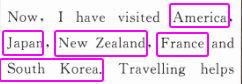
美国,日本,新西兰,法国,韩国。一共是5个国家。
第10题原文依据:

根据原文的“not easy 不容易”,“took me a long time花了我很长时间”可知,这个爱好很难。
第11题原文依据:
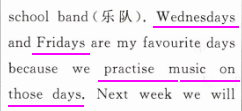
星期三和星期五,练习(弹奏)音乐,可知是一周两次。
第12题原文依据:
选项A 文章并没提到Jenny will go to London with her parents. 珍妮将和她的父母一起去伦敦。因此选项A错误;
选择B 文章提到: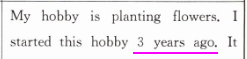 可知,Lisa 开始种花这个爱好有三年了。因此选项B正确;
选项C,文章提到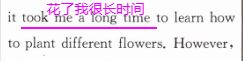 可知,选项C错误;
选项D, 文章提到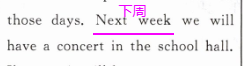 可知,音乐会是下周,而不是两个月后,因此选项D错误。
9—12: CDBB
解析:
第9题原文依据:
美国,日本,新西兰,法国,韩国。一共是5个国家。
第10题原文依据:
根据原文的“not easy 不容易”,“took me a long time花了我很长时间”可知,这个爱好很难。
第11题原文依据:
星期三和星期五,练习(弹奏)音乐,可知是一周两次。
第12题原文依据:
选项A 文章并没提到Jenny will go to London with her parents. 珍妮将和她的父母一起去伦敦。因此选项A错误;
选择B 文章提到:
可知,Lisa 开始种花这个爱好有三年了。因此选项B正确;选项C,文章提到
可知,选项C错误;选项D, 文章提到
可知,音乐会是下周,而不是两个月后,因此选项D错误。D
People may have many different types of hobbies during their lifetime. When we are very young, we spend most of our time playing with toys. We may enjoy playing in a sandbox (沙坑) or playing with wooden blocks. When we get older, we start our first real hobbies.
Some kids go out for sports like football or skating. These new interests can be quite time-consuming. Some children spend a lot of time on them. Some children might get interested in less active activities like reading, painting, or stamp collecting.
Others might enjoy playing an instrument like the piano or the flute.
As we get much older, our hobbies might change or go on. Some people might spend their whole life on stamp collecting. Other people might change their interests every year depending on fashions. Some people are lucky that they have found jobs that are similar to their hobbies, like a person who loves teaching and becomes a teacher.
(
A. A student likes skating.
B. Babies like playing with wooden blocks.
C. An old man likes stamp collecting.
D. A worker likes painting.
(
A. Playing basketball.
B. Collecting stamps.
C. Reading.
D. Writing.
(
A. A boy who enjoys reading and becomes a worker.
B. A girl who likes dancing and becomes a doctor.
C. A girl who loves playing the piano and becomes a pianist.
D. A boy who is interested in computer games and becomes a writer.
(
A. Hobbies and Jobs
B. Jobs and Ages
C. Never Change Hobbies
D. Hobbies and Ages
People may have many different types of hobbies during their lifetime. When we are very young, we spend most of our time playing with toys. We may enjoy playing in a sandbox (沙坑) or playing with wooden blocks. When we get older, we start our first real hobbies.
Some kids go out for sports like football or skating. These new interests can be quite time-consuming. Some children spend a lot of time on them. Some children might get interested in less active activities like reading, painting, or stamp collecting.
Others might enjoy playing an instrument like the piano or the flute.
As we get much older, our hobbies might change or go on. Some people might spend their whole life on stamp collecting. Other people might change their interests every year depending on fashions. Some people are lucky that they have found jobs that are similar to their hobbies, like a person who loves teaching and becomes a teacher.
(
B
)13. Which of the following is NOT a real hobby?A. A student likes skating.
B. Babies like playing with wooden blocks.
C. An old man likes stamp collecting.
D. A worker likes painting.
(
A
)14. Which of the following is the most active hobby?A. Playing basketball.
B. Collecting stamps.
C. Reading.
D. Writing.
(
C
)15. Who does the writer think is lucky?A. A boy who enjoys reading and becomes a worker.
B. A girl who likes dancing and becomes a doctor.
C. A girl who loves playing the piano and becomes a pianist.
D. A boy who is interested in computer games and becomes a writer.
(
D
)16. The title of the passage should be “______”.A. Hobbies and Jobs
B. Jobs and Ages
C. Never Change Hobbies
D. Hobbies and Ages
答案:
13—16: BACD
查看更多完整答案,请扫码查看

