

 搜索
搜索
第48页
- 第1页
- 第2页
- 第3页
- 第4页
- 第5页
- 第6页
- 第7页
- 第8页
- 第9页
- 第10页
- 第11页
- 第12页
- 第13页
- 第14页
- 第15页
- 第16页
- 第17页
- 第18页
- 第19页
- 第20页
- 第21页
- 第22页
- 第23页
- 第24页
- 第25页
- 第26页
- 第27页
- 第28页
- 第29页
- 第30页
- 第31页
- 第32页
- 第33页
- 第34页
- 第35页
- 第36页
- 第37页
- 第38页
- 第39页
- 第40页
- 第41页
- 第42页
- 第43页
- 第44页
- 第45页
- 第46页
- 第47页
- 第48页
- 第49页
- 第50页
- 第51页
- 第52页
- 第53页
- 第54页
- 第55页
- 第56页
- 第57页
- 第58页
- 第59页
- 第60页
- 第61页
- 第62页
- 第63页
- 第64页
- 第65页
- 第66页
- 第67页
- 第68页
- 第69页
- 第70页
- 第71页
- 第72页
- 第73页
- 第74页
- 第75页
- 第76页
- 第77页
- 第78页
- 第79页
- 第80页
- 第81页
- 第82页
- 第83页
- 第84页
- 第85页
- 第86页
- 第87页
- 第88页
- 第89页
- 第90页
- 第91页
- 第92页
- 第93页
- 第94页
- 第95页
- 第96页
- 第97页
- 第98页
- 第99页
- 第100页
- 第101页
- 第102页
- 第103页
- 第104页
- 第105页
- 第106页
- 第107页
- 第108页
- 第109页
四、句型转换
1. I often play with my classmate after class. (对画线部分提问)
2. We have a dining hall on the ground floor as well. (改为否定句)
We
3. My English teacher Mr Liu is very kind to all of us. (对画线部分提问)
4. Both Jim and I are in the school football team. (改为同义句)
Both Jim and I
1. I often play with my classmate after class. (对画线部分提问)
Who
do
you oftenplay
with
after class?2. We have a dining hall on the ground floor as well. (改为否定句)
We
don't
have
a dining hall on the ground floor either
.3. My English teacher Mr Liu is very kind to all of us. (对画线部分提问)
What
is
your English teacher Mr Liu like
?4. Both Jim and I are in the school football team. (改为同义句)
Both Jim and I
are
members of
________ the school football team.
答案:
1. Who do, play with 2. don’t have, either 3. What is, like 4. are members of
五、阅读理解
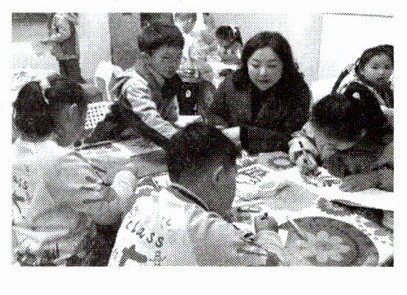
Morning is the most important part of the school day for Mi Ying, the headmaster (校长) of Huishi Primary School in Shanghai.
Ms Mi is always at the school gate when it opens at 7:40 a.m. “I can tell if (是否) the children are happy by saying hello to them and seeing their faces,” she said. “I want every student to enjoy their time at school.”
Huishi, founded (创建) in 1870, is one of the city’s oldest schools. It now has about 2 600 students in 58 classes.
Teachers here have their own ways of teaching. Ms Mi is one of them.
When Ms Mi was a Maths teacher 20 years ago, she took her students to the park or the underground station to have lessons. In 2001, a 100-year-old tree in the school became her teaching tool (工具). She asked her students to think of ways to measure (测量) how tall it was, and they gave more than 20 different answers. Ms Mi knew students could learn better through this way than just reading textbooks.
In the school, the relationship between teachers and students is also great.
For kids with problems, teachers always give them help. Ms Mi says that her office is always open so that students can talk to her when they want.
Besides great teachers, there are interesting after-school activities like Peking opera, paper-cutting, first aid (急救) and many others. “I want to give our children more chances (机会) to learn new things,” Ms Mi said.
(
A. To open the gate. B. To welcome the students.
C. To enjoy a happy time. D. To see if someone is late.
(
A. By teaching Maths to them. B. By giving them more answers.
C. By using a tree as the teaching tool. D. By playing games outside the classroom.
(
A. 时间 B. 梦想 C. 关系 D. 计划
Morning is the most important part of the school day for Mi Ying, the headmaster (校长) of Huishi Primary School in Shanghai.
Ms Mi is always at the school gate when it opens at 7:40 a.m. “I can tell if (是否) the children are happy by saying hello to them and seeing their faces,” she said. “I want every student to enjoy their time at school.”
Huishi, founded (创建) in 1870, is one of the city’s oldest schools. It now has about 2 600 students in 58 classes.
Teachers here have their own ways of teaching. Ms Mi is one of them.
When Ms Mi was a Maths teacher 20 years ago, she took her students to the park or the underground station to have lessons. In 2001, a 100-year-old tree in the school became her teaching tool (工具). She asked her students to think of ways to measure (测量) how tall it was, and they gave more than 20 different answers. Ms Mi knew students could learn better through this way than just reading textbooks.
In the school, the relationship between teachers and students is also great.
For kids with problems, teachers always give them help. Ms Mi says that her office is always open so that students can talk to her when they want.
Besides great teachers, there are interesting after-school activities like Peking opera, paper-cutting, first aid (急救) and many others. “I want to give our children more chances (机会) to learn new things,” Ms Mi said.
(
B
) 1. Why is Ms Mi always at the school gate in the morning?A. To open the gate. B. To welcome the students.
C. To enjoy a happy time. D. To see if someone is late.
(
C
) 2. How did Ms Mi teach students to measure?A. By teaching Maths to them. B. By giving them more answers.
C. By using a tree as the teaching tool. D. By playing games outside the classroom.
(
C
) 3. What does the underlined word “relationship” in Paragraph 6 mean in Chinese?A. 时间 B. 梦想 C. 关系 D. 计划
答案:
1—3 BCC
查看更多完整答案,请扫码查看

