

 搜索
搜索
第72页
- 第1页
- 第2页
- 第3页
- 第4页
- 第5页
- 第6页
- 第7页
- 第8页
- 第9页
- 第10页
- 第11页
- 第12页
- 第13页
- 第14页
- 第15页
- 第16页
- 第17页
- 第18页
- 第19页
- 第20页
- 第21页
- 第22页
- 第23页
- 第24页
- 第25页
- 第26页
- 第27页
- 第28页
- 第29页
- 第30页
- 第31页
- 第32页
- 第33页
- 第34页
- 第35页
- 第36页
- 第37页
- 第38页
- 第39页
- 第40页
- 第41页
- 第42页
- 第43页
- 第44页
- 第45页
- 第46页
- 第47页
- 第48页
- 第49页
- 第50页
- 第51页
- 第52页
- 第53页
- 第54页
- 第55页
- 第56页
- 第57页
- 第58页
- 第59页
- 第60页
- 第61页
- 第62页
- 第63页
- 第64页
- 第65页
- 第66页
- 第67页
- 第68页
- 第69页
- 第70页
- 第71页
- 第72页
(
A.far
B.near
C.nearby
C
) (7)There is a big department store________. We often go shopping there.A.far
B.near
C.nearby
答案:
【解析】:这是一道英语选择题,考查的是副词的用法。题目描述了一个大的百货商店的位置,并提到我们经常去那里购物。我们需要从给定的选项中选择一个最合适的词来描述百货商店的位置。
A选项“far”表示远的,但题目中提到我们经常去那里购物,所以“far”不符合语境。
B选项“near”通常作为介词或形容词使用,表示“在……附近”或“近的”,但此处需要一个副词来修饰整个句子,所以“near”不是最佳选择。
C选项“nearby”是副词,表示“在附近”,符合题目描述的百货商店的位置,并且与后文的“我们经常去那里购物”相呼应。
因此,正确答案是C。
【答案】:C
A选项“far”表示远的,但题目中提到我们经常去那里购物,所以“far”不符合语境。
B选项“near”通常作为介词或形容词使用,表示“在……附近”或“近的”,但此处需要一个副词来修饰整个句子,所以“near”不是最佳选择。
C选项“nearby”是副词,表示“在附近”,符合题目描述的百货商店的位置,并且与后文的“我们经常去那里购物”相呼应。
因此,正确答案是C。
【答案】:C
(
A.weren’t
B.aren’t
C.wasn’t
C
) (8)There________ a garden in the old house before.A.weren’t
B.aren’t
C.wasn’t
答案:
【解析】:
本题考查的是there be句型的过去时态以及主谓一致。题目中提到了“before”,表示过去的时间,因此我们需要使用there be句型的过去时态。同时,题目中的主语“a garden”是单数,所以be动词应该用单数形式的过去时态。
A选项“weren’t”是复数形式的过去时态,不符合主谓一致的原则;
B选项“aren’t”是现在时态,与题目中的“before”不符;
C选项“wasn’t”是单数形式的过去时态,符合题目的要求。
【答案】:
C
本题考查的是there be句型的过去时态以及主谓一致。题目中提到了“before”,表示过去的时间,因此我们需要使用there be句型的过去时态。同时,题目中的主语“a garden”是单数,所以be动词应该用单数形式的过去时态。
A选项“weren’t”是复数形式的过去时态,不符合主谓一致的原则;
B选项“aren’t”是现在时态,与题目中的“before”不符;
C选项“wasn’t”是单数形式的过去时态,符合题目的要求。
【答案】:
C
8. 看图选句子,把其英文大写字母编号写在相应图下的括号内。
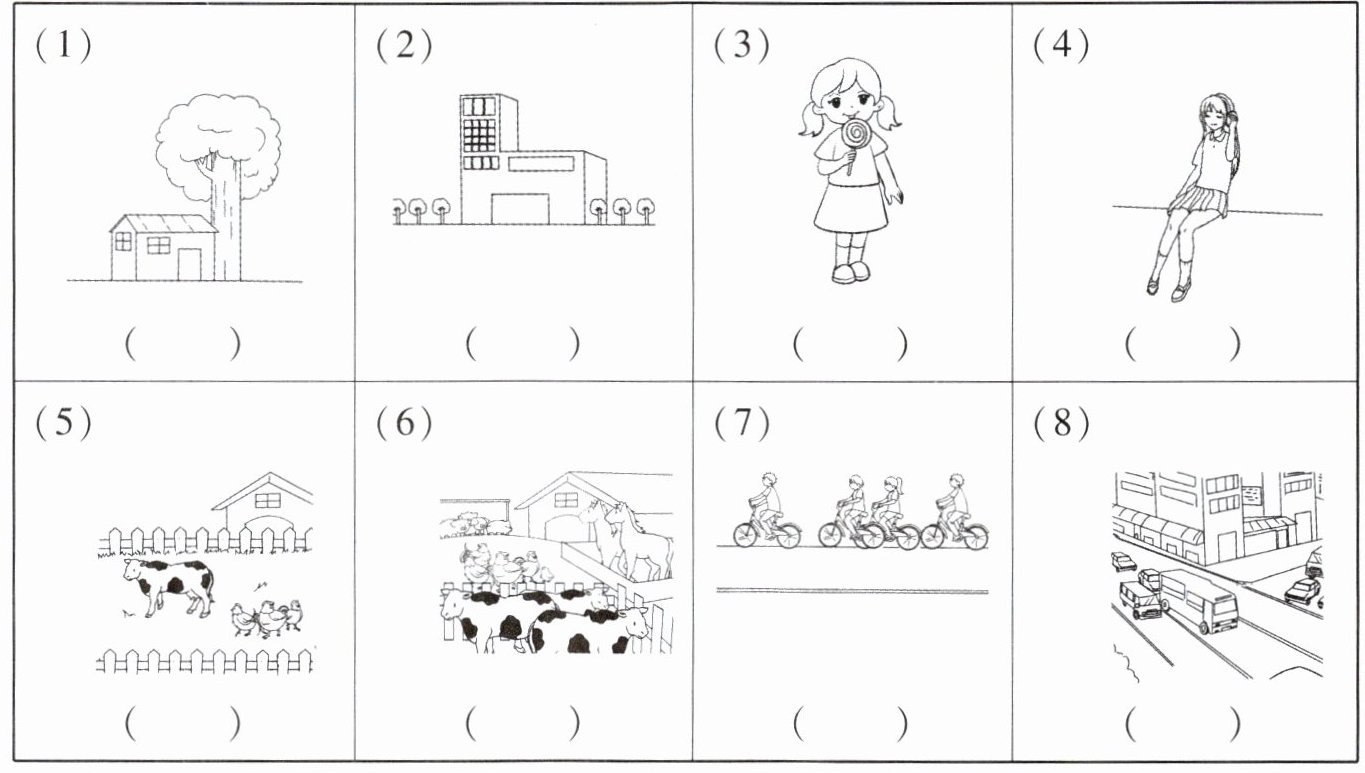
(
(
B
)(F
)(E
)(D
)(H
)(G
)(A
)(C
)
答案:
(1)B
(2)F
(3)E
(4)D
(5)H
(6)G
(7)A
(8)C
(2)F
(3)E
(4)D
(5)H
(6)G
(7)A
(8)C
9. 选词填空,把句子补充完整。
(1) Mr Smith
(2) —How many pupils
—There
(3) Sally liked
(1) Mr Smith
came
(come, came) tolive
(live, lived) in Shanghai five years ago.(2) —How many pupils
were
(are, were) there in your school last year?—There
were
(are, were) 890 pupils. But this year, thereare
(are, were) 986 pupils.(3) Sally liked
singing
(singing, sang) songs when she was a little girl, but now shedoesn’t
(doesn’t, didn’t) like singing, shelikes
(likes, liked) dancing.
答案:
(1) came; live
(2) were; were; are
(3) singing; doesn’t; likes
(1) came; live
(2) were; were; are
(3) singing; doesn’t; likes
查看更多完整答案,请扫码查看

