

 搜索
搜索
第22页
- 第1页
- 第2页
- 第3页
- 第4页
- 第5页
- 第6页
- 第7页
- 第8页
- 第9页
- 第10页
- 第11页
- 第12页
- 第13页
- 第14页
- 第15页
- 第16页
- 第17页
- 第18页
- 第19页
- 第20页
- 第21页
- 第22页
- 第23页
- 第24页
- 第25页
- 第26页
- 第27页
- 第28页
- 第29页
- 第30页
- 第31页
- 第32页
- 第33页
- 第34页
- 第35页
- 第36页
- 第37页
- 第38页
- 第39页
- 第40页
- 第41页
- 第42页
- 第43页
- 第44页
- 第45页
- 第46页
- 第47页
- 第48页
- 第49页
- 第50页
- 第51页
- 第52页
- 第53页
- 第54页
- 第55页
- 第56页
- 第57页
- 第58页
- 第59页
- 第60页
- 第61页
- 第62页
- 第63页
- 第64页
- 第65页
- 第66页
- 第67页
- 第68页
- 第69页
- 第70页
- 第71页
- 第72页
基础1. 读课本第20页短文,判断下列句子是否符合短文内容,如符合,在括号内写“T”,否则写“F”。
(
(
(
(
(
(
F
) (1) Li Wei doesn't like the city because the traffic is very heavy.(
F
) (2) Li Wei can't sleep well at night because there are many people.(
T
) (3) Li Wei likes the supermarkets and the buildings in the city.(
T
) (4) Li Wei thinks there are more interesting things to do in the city than in the countryside.(
F
) (5) Li Wei wants to live in the city and play all day.
答案:
(1)F
(2)F
(3)T
(4)T
(5)F
(1)F
(2)F
(3)T
(4)T
(5)F
基础2. 听句子,在图片下写出相应句子的英文大写字母编号。
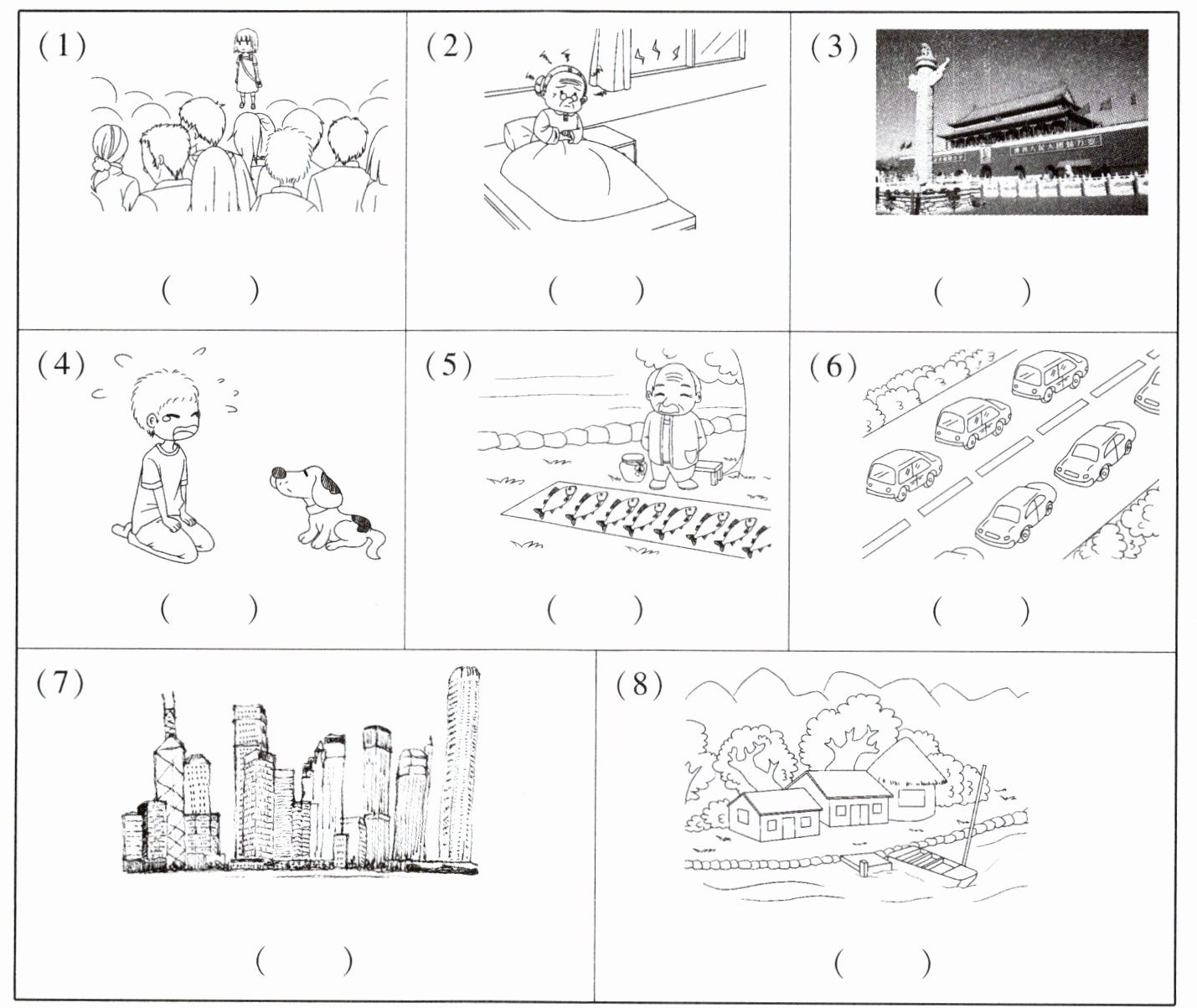
(1)
(1)
D
(2)H
(3)E
(4)B
(5)G
(6)A
(7)F
(8)C
答案:
(1)D
(2)H
(3)E
(4)B
(5)G
(6)A
(7)F
(8)C
(1)D
(2)H
(3)E
(4)B
(5)G
(6)A
(7)F
(8)C
查看更多完整答案,请扫码查看

