

 搜索
搜索
第100页
- 第1页
- 第2页
- 第3页
- 第4页
- 第5页
- 第6页
- 第7页
- 第8页
- 第9页
- 第10页
- 第11页
- 第12页
- 第13页
- 第14页
- 第15页
- 第16页
- 第17页
- 第18页
- 第19页
- 第20页
- 第21页
- 第22页
- 第23页
- 第24页
- 第25页
- 第26页
- 第27页
- 第28页
- 第29页
- 第30页
- 第31页
- 第32页
- 第33页
- 第34页
- 第35页
- 第36页
- 第37页
- 第38页
- 第39页
- 第40页
- 第41页
- 第42页
- 第43页
- 第44页
- 第45页
- 第46页
- 第47页
- 第48页
- 第49页
- 第50页
- 第51页
- 第52页
- 第53页
- 第54页
- 第55页
- 第56页
- 第57页
- 第58页
- 第59页
- 第60页
- 第61页
- 第62页
- 第63页
- 第64页
- 第65页
- 第66页
- 第67页
- 第68页
- 第69页
- 第70页
- 第71页
- 第72页
- 第73页
- 第74页
- 第75页
- 第76页
- 第77页
- 第78页
- 第79页
- 第80页
- 第81页
- 第82页
- 第83页
- 第84页
- 第85页
- 第86页
- 第87页
- 第88页
- 第89页
- 第90页
- 第91页
- 第92页
- 第93页
- 第94页
- 第95页
- 第96页
- 第97页
- 第98页
- 第99页
- 第100页
- 第101页
- 第102页
- 第103页
- 第104页
- 第105页
- 第106页
- 第107页
- 第108页
- 第109页
- 第110页
- 第111页
- 第112页
- 第113页
- 第114页
- 第115页
- 第116页
- 第117页
- 第118页
- 第119页
- 第120页
- 第121页
- 第122页
- 第123页
- 第124页
- 第125页
- 第126页
- 第127页
- 第128页
- 第129页
- 第130页
- 第131页
- 第132页
二、阅读理解

①Do you wear clothes with colourful patterns(图案)? People usually use machines to make these patterns in modern times. But how did people in old times make them?
②People in old times used tie-dye(扎染). Tie-dye is a very old way of dyeing clothes in China—it's more than 1,000 years old! It is popular in Yunnan. People first put cloth(布料) into the blue dye(染料). Some parts of the cloth become blue, but other parts have a lighter colour. When you open out the cloth, you'll see beautiful patterns.
③Now, the tie-dye skill is China's national intangible cultural heritage(国家级非物质文化遗产). Anning in Yunnan is famous for tie-dye.
④Yang Cheng got the old skills from his mother in the 1980s. At the same time, he studied tie-dye in other countries, such as Japan, India and France. It once took Yang two years to make two tie-dyed dresses! He used many skills of Anning tie-dye. Some patterns on the dresses are traditional, while some are modern. He used images of Dianchi Lake and eight popular flowers in Yunnan. “I want to put all the beautiful things into tie-dye works,” he said.
⑤Now Yang is still dyeing and teaches his daughter tie-dye. “We have the duty to pass down the skill to younger generations,” Yang says. Yang now teaches tie-dye in schools, communities, and companies. More than 100,000 people learn from him.
⑥Some worry that tie-dye may die out because using machines is fast and cheap. But Yang says, “Machines can't take the place of our creative hands.”
(
A. Make cloth. B. Grow popular flowers.
C. Make colourful patterns. D. Practise skills.
(
A. Tie-dye is going to die out.
B. We can find tie-dye only in China.
C. Yang Cheng not only uses traditional patterns but also modern ones.
D. Younger generations learn tie-dye to make beautiful clothes for themselves.
(
A. not so useful as before B. popular with young people
C. hard to see in other places D. still meaningful(有意义的) to us
(
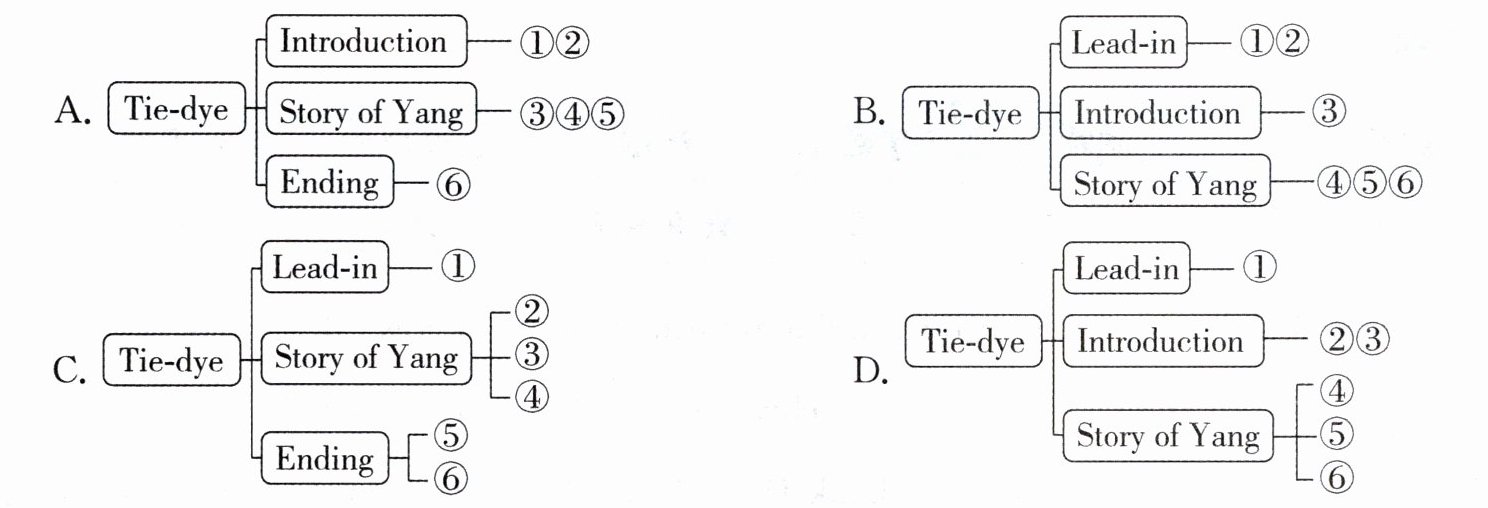
①Do you wear clothes with colourful patterns(图案)? People usually use machines to make these patterns in modern times. But how did people in old times make them?
②People in old times used tie-dye(扎染). Tie-dye is a very old way of dyeing clothes in China—it's more than 1,000 years old! It is popular in Yunnan. People first put cloth(布料) into the blue dye(染料). Some parts of the cloth become blue, but other parts have a lighter colour. When you open out the cloth, you'll see beautiful patterns.
③Now, the tie-dye skill is China's national intangible cultural heritage(国家级非物质文化遗产). Anning in Yunnan is famous for tie-dye.
④Yang Cheng got the old skills from his mother in the 1980s. At the same time, he studied tie-dye in other countries, such as Japan, India and France. It once took Yang two years to make two tie-dyed dresses! He used many skills of Anning tie-dye. Some patterns on the dresses are traditional, while some are modern. He used images of Dianchi Lake and eight popular flowers in Yunnan. “I want to put all the beautiful things into tie-dye works,” he said.
⑤Now Yang is still dyeing and teaches his daughter tie-dye. “We have the duty to pass down the skill to younger generations,” Yang says. Yang now teaches tie-dye in schools, communities, and companies. More than 100,000 people learn from him.
⑥Some worry that tie-dye may die out because using machines is fast and cheap. But Yang says, “Machines can't take the place of our creative hands.”
(
C
)1. What can tie-dye help people do?A. Make cloth. B. Grow popular flowers.
C. Make colourful patterns. D. Practise skills.
(
C
)2. According to the passage, which of the following is TRUE?A. Tie-dye is going to die out.
B. We can find tie-dye only in China.
C. Yang Cheng not only uses traditional patterns but also modern ones.
D. Younger generations learn tie-dye to make beautiful clothes for themselves.
(
D
)3. The last paragraph mainly shows that tie-dye is ______.A. not so useful as before B. popular with young people
C. hard to see in other places D. still meaningful(有意义的) to us
(
B
)4. Which of the following is the structure(结构) of this passage?
答案:
1. C 2. C 3. D 4. B
查看更多完整答案,请扫码查看

